
1688 Buying Agent for Shopify and DTC Brands
If you run a Shopify store or a direct-to-consumer brand, the fastest way to wreck your margins is to buy the wrong unit, from the wrong supplier, at the wrong minimum. A 1688 buying agent for Shopify exists to stop exactly that: it finds and negotiates with 1688 suppliers, buys your goods, checks them, consolidates orders from several sellers into one shipment, and delivers them to your door. The point is not that an agent can always buy cheaper than you could — it is that an agent can buy reliably, at minimums a small brand can actually absorb, with the consistency a repeatable product line depends on. This guide walks through how that works for a DTC brand specifically, what it costs in structure, and what to prepare before you start.
Why Shopify and DTC Brands Source from 1688
1688 is a domestic Chinese wholesale platform owned by Alibaba Group, and it is where many factories and trading companies list goods at factory-adjacent prices. For a DTC brand, that pricing matters because your unit cost has to leave room for marketing, payment processing, and returns — every cent of product cost you save flows straight to contribution margin.
But 1688 is not built for overseas buyers the way an export marketplace is. Listings are in Chinese, sellers expect domestic payment methods, and many are not set up to ship internationally. That gap is the whole reason a buying agent exists for this market. Our 1688 buying agent overview explains the service itself in more depth; here we focus on what it means for a Shopify operator.
What a 1688 Buying Agent Does for a DTC Brand
A buying agent sits between you and the sellers on 1688 (and often Taobao) and handles the purchasing-stage work you would otherwise have to do in Chinese, across time zones, with local payment. For a DTC brand, the useful tasks break down like this:
- Supplier shortlisting. Turning your product idea or reference image into a shortlist of sellers who actually make that category, so you compare quality and price instead of guessing.
- Price and MOQ negotiation. Confirming unit price, minimum order quantity, and whether a seller will do a small first order at all.
- Sample orders. Buying one or two units so you can photograph them, test them, and decide before committing to bulk.
- Order placement and payment. Paying domestic suppliers on your behalf and collecting the goods into the agent’s China warehouse.
- Order checking. Confirming the items received match what you ordered before they are packed and shipped.
- Consolidation. Combining orders from several suppliers into one shipment so you pay one shipping bill instead of many.
- International shipping. Arranging the courier, air, or sea leg and tracking it to your door, with options like DDP shipping where duties are handled for you.
The first three items are the ones that make or break a DTC brand. Finding the right supplier and getting a sample into your hands before you commit capital is the difference between a launch and a costly write-off.
The DTC-Specific Problems an Agent Solves
General importers care about price. DTC brands care about a set of problems that are more specific to selling directly to consumers.
Low minimums that fit a first run
Many 1688 suppliers advertise low unit prices on large volumes, but a first-run DTC brand rarely wants to buy 5,000 units of an unproven product. A buying agent negotiates for the smallest workable order — often a sample order followed by a modest first batch — so you can test demand before you over-commit. What the seller will actually accept depends on the category, so treat any specific MOQ you see online as a starting point, not a promise.
Consistency across reorders
A DTC product lives on repeat customers. If your second batch is a slightly different shade or build than your first, your reviews will tell you about it. An agent that records your exact spec and reorders from the same supplier — and flags the seller when a batch drifts — protects that consistency. This is purchasing-stage work, not transport work, and it is exactly where a buying agent earns its fee.
Packaging and light customization
If you want your logo on a hang tag, a specific box, or branded inserts, that has to be coordinated with the supplier before production. An agent relays those specs in Chinese, gets a sample of the packaging, and confirms it before the run. It is a small job that quietly breaks launches when it is skipped.
Multi-SKU orders and consolidation
A typical Shopify store sells several products, often from different suppliers. If you order from five sellers, you have five domestic parcels. An agent receives all of them, checks them in, and consolidates them into fewer boxes so you ship once instead of five times. For a small brand, that is where the real shipping savings live.

How the Order Flow Works for a Shopify Store
Here is the path a typical DTC order takes, end to end. Notice how much of it happens before anything ships.
| Stage | What happens | Who owns it |
|---|---|---|
| 1. Product spec | You share a product idea, reference links, target price, and quantity range. | You + agent |
| 2. Supplier shortlist | The agent finds candidate sellers and quotes unit price, MOQ, and sample availability. | Agent |
| 3. Sample order | One or two units are bought, photographed, and shipped to you for approval. | Agent |
| 4. Bulk order | You approve the sample; the agent places the main order and pays the supplier. | Agent |
| 5. Receiving and checking | Goods arrive at the agent’s China warehouse and are checked against your spec. | Agent |
| 6. Consolidation | Multiple supplier orders are combined into fewer parcels. | Agent |
| 7. International shipping | The consolidated shipment is sent by courier, air, or sea, with duties handled depending on the incoterm. | Agent + carrier |
| 8. Delivery | Goods arrive at your warehouse or 3PL, ready to list. | Carrier |
Stage 1 through 6 is the buying agent’s territory. Stage 7 and 8 are logistics, which many buying agents — including us — fold into the same order flow so you do not hand your goods between two companies. If you are weighing the difference between these roles, our buying agent vs freight forwarder comparison covers the boundary in detail.
Cost Structure for a DTC Order
Pricing is the question everyone asks first, and the honest answer is that the number depends on your order. What is useful is the structure of the cost, because that is the same regardless of the final figure.
| Cost component | What it covers | What makes it vary |
|---|---|---|
| Product cost | The unit price paid to the 1688 supplier. | Category, quantity, spec, and negotiation |
| Buying agent fee | The service fee for purchasing, communication, checking, and consolidation. | Order value, order complexity, and the provider’s pricing model (percentage or flat fee) |
| Domestic shipping | Delivery from the supplier to the agent’s China warehouse. | Distance, weight, and number of parcels |
| Consolidation and repacking | Combining and repacking parcels into fewer boxes. | Number of suppliers and final carton count |
| International freight | Courier, air, or sea freight to your destination. | Weight or volume, speed, and destination |
| Duties and taxes | Import duties and VAT at destination, if not already included. | Destination country, product value, and HS classification |
Because every line in that table moves with your specific order, we will not print a fake price list here. The right move is to get a written quote for your actual product and quantity. What you should hold a provider to is transparency about which of those components are included and which are extra. For how the freight number itself is built, see our shipping cost from China breakdown.
Shipping Choices for a DTC Brand
Once the goods exist, the shipping decision changes your landed cost and your lead time at the same time. There is no single “best” method — the right choice depends on how fast you need inventory and how the freight cost hits your margin.
- Courier (express). Fast and simple for small, high-value orders. Good for samples and small first runs, but the per-kilogram cost rises fast as volume grows.
- Air freight. Faster than sea, slower than courier, and cheaper than courier at moderate weight. A common middle ground when you need to restock quickly.
- Sea freight. The cheapest per unit at volume, but the slowest. Best once a product is proven and you can plan weeks ahead.
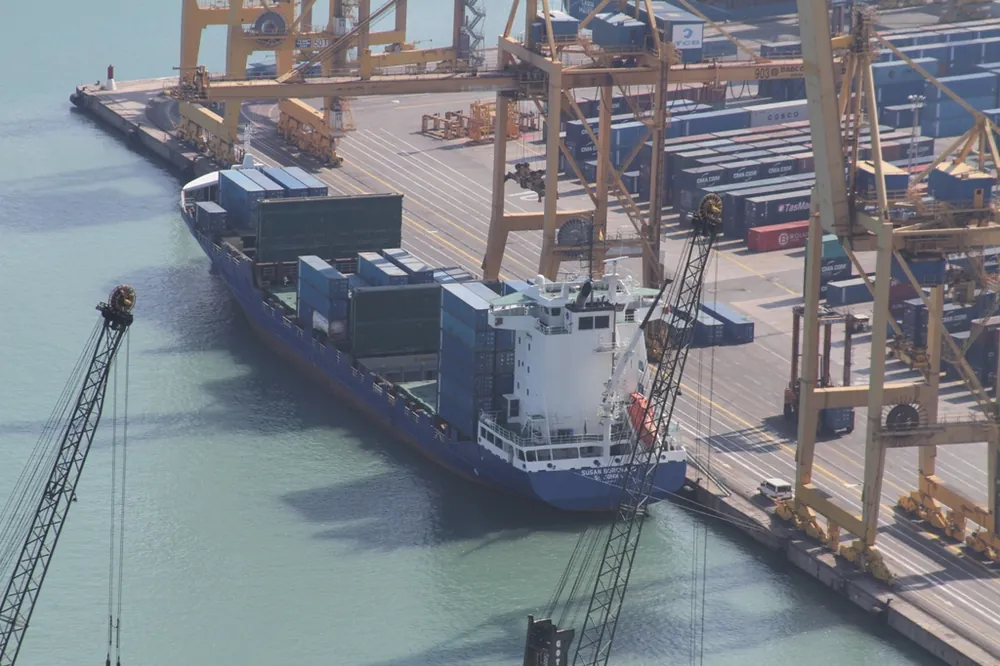
Beyond the method, you choose an incoterm that decides who pays duties and when risk transfers. For a DTC brand that wants one predictable landed cost, DDP shipping from China is often worth the premium because duties are handled for you. The full comparison of methods is in our shipping from China guide. One caveat applies no matter what you choose: destination-country compliance and any import duties are ultimately the buyer’s responsibility, so confirm the rules for your market before you commit.
1688 Buying Agent vs Other Sourcing Paths
A DTC founder effectively has three ways to get product, and they are not equally suited to a small brand.
| Approach | Best for | Where it falls short for a DTC brand |
|---|---|---|
| Buy direct from 1688 yourself | Buyers who read Chinese, have a local payment method, and can manage the process | You own supplier vetting, sample coordination, payment risk, and every misstep in a foreign process. |
| Buy from an export marketplace | Standard products where a markup for English support and platform protection is acceptable | You pay a premium, and you still may not get the low MOQ and sample flexibility a new brand needs. |
| Use a 1688 buying agent | Brands that want factory-adjacent pricing without owning the sourcing operation | There is a service fee — the trade for not doing the work yourself and for de-risking the purchase. |
If you want a deeper look at the first option versus hiring help, our sourcing agent vs buying direct guide breaks down when doing it yourself makes sense and when it does not.
What to Prepare Before You Contact an Agent
The quality of your first order depends almost entirely on how clear your spec is. Before you reach out, gather these things and the whole process moves faster and costs less in back-and-forth.
- A clear product description — what the item is, what it is made of, and the exact features that matter to your customer.
- Reference images or links — a competitor product or an existing listing gives the agent a target to match, which beats a paragraph of description.
- A target unit price and quantity range — even a rough range lets the agent filter sellers that are far outside your budget.
- Any packaging or branding requirements — logo, hang tag, box, or inserts, and whether you need a sample of it.
- Your destination country and preferred speed — this drives the shipping quote and whether DDP makes sense.
None of this needs to be perfect. A good agent will help you refine it. But having it in one place means the first conversation is about your order, not about basic discovery.
Cash Flow and Payment Timing
Cash flow, not price, is what usually constrains a small brand. Understanding when money leaves your account matters as much as how much leaves it.
In a typical flow, you pay for the sample first — a small amount that buys you certainty. Then you pay for the bulk order when you place it, and the international shipping cost before the goods dispatch. In other words, most of the cash is committed before the inventory lands, which is why a first run should stay deliberately small. The good news is that the cost is staged: you do not pay the full landed cost on day one, so a problem caught at the sample stage is cheap to catch.
Ask your agent for the payment schedule up front — what you pay, when, and what each payment covers — so the timing is never a surprise. This is the same discipline we describe in our buying agent for new sellers guide, and it applies just as much to an established brand testing a new product.
How to Keep Quality Consistent Across Batches
This is the DTC-specific worry that trips up founders who have never imported before. Your first batch arrives, it is good, and you assume the second will be identical. It is not guaranteed.
A buying agent protects consistency in three concrete ways. First, it records your approved sample as the reference and reorders against it, so “same as last time” actually means something. Second, it stays in contact with the seller between orders, so a material substitution or a price change surfaces before it ships rather than after. Third, it checks the incoming goods against your spec, so an obvious drift gets caught at the warehouse instead of at your customer’s doorstep.
There is one thing a buying agent does not do, and it is worth being precise about it. A basic incoming order check is not the same as an independent quality inspection, which is a separate discipline with its own sampling standards and reporting. If your brand lives or dies on a tight quality tolerance — apparel, electronics, anything safety-adjacent — you would pair a buying agent with a dedicated pre-shipment inspection service for that layer. The two roles complement each other; they are not substitutes.
Will a 1688 buying agent inspect my products for quality?
An agent does a basic incoming order check against your spec, which is not a full independent quality inspection. For a strict tolerance, pair the agent with a dedicated pre-shipment inspection service so the sampling and reporting are handled by inspection specialists rather than the party that bought the goods.
Common Mistakes DTC Brands Make
- Ordering bulk before approving a sample. The sample is cheap relative to a bad bulk order. Never skip it.
- Chasing the lowest unit price while ignoring MOQ. A low unit price on a high MOQ ties up cash in inventory you cannot sell through.
- Ignoring landed cost in the margin math. Product cost is not landed cost. Freight, duties, and consolidation all land on your margin, so model the full number.
- Skipping packaging spec. The product can be perfect and the unboxing still underwhelming if packaging was an afterthought.
- Treating a buying agent’s order check as full QC. As above, a check is not an inspection. Know which one you are paying for.
Frequently Asked Questions
What does a 1688 buying agent do for a Shopify store?
It finds and negotiates with 1688 suppliers, buys and checks your goods, consolidates orders from multiple sellers, and ships them to your door — so you run the store without owning the sourcing process.
Can a 1688 buying agent handle Shopify order fulfillment?
No. A buying agent handles sourcing, purchasing, consolidation, and shipping to your warehouse or 3PL, not day-to-day fulfillment of customer orders. Fulfillment is a separate function after your inventory lands.
How much does a 1688 buying agent cost for a DTC brand?
The fee depends on order value, complexity, and the provider’s model. Total landed cost is made up of product cost, the agent fee, domestic shipping, consolidation, international freight, and duties. Ask for a written quote for your specific order rather than relying on a generic price list.
Can I buy samples from 1688 through an agent before committing?
Yes. Buying one or two sample units before a bulk order is standard practice and strongly recommended. It lets you test the product and confirm quality before committing capital to a larger run.
Will a 1688 buying agent inspect my products for quality?
An agent does a basic incoming order check against your spec, which is not the same as an independent quality inspection. For a strict quality tolerance, pair the agent with a dedicated pre-shipment inspection service.
Does a buying agent help with branding and packaging for my store?
Yes. The agent relays your packaging and branding specs to the supplier, gets a sample for approval, and confirms it before the production run.
Is a 1688 Buying Agent Right for Your DTC Brand?
The short answer is that a buying agent pays for itself the first time it prevents a bad order. On a small first run, the fee is a modest line item compared to the cost of buying the wrong unit, or of tying up cash in a minimum you cannot move.
If you are sourcing for a Shopify store and want the product work handled by people who do it every day — supplier shortlisting, samples, consolidation, and shipping in one flow — describe your product and where it needs to go. We will tell you whether a 1688 buying agent is the right fit, what a realistic first order looks like for your category, and give you a clear quote for the part you actually need. Contact us with your product details, or review our shipping page to understand the transport options first.