China Sourcing Agent vs Buying Direct: Which Is Right for Your Business?
There are two ways to buy goods from China, and the right one depends on how much of the process you are willing to run yourself. A sourcing agent handles the whole sequence — finding, negotiating, paying, inspecting and shipping — for a service fee. Buying direct means you take all of it on. Neither is universally better; each wins in a specific situation, and this guide explains which is yours. By the end you will know which side of the line your next order falls on, and what each path actually involves when you look past the sales pitch.
What a Sourcing Agent Actually Does
A sourcing agent is a local partner who runs the China side of a purchase on your behalf. The scope can be narrow or full, but a full-service agent covers the entire chain from supplier to your door.
| Stage | What the agent does | What you do |
|---|---|---|
| Supplier finding | Shortlists and verifies factories against your specification | Provide the product link, photo or spec |
| Negotiation | Confirms price, MOQ and terms in Chinese | Approve or push back on the numbers |
| Purchasing | Pays the supplier domestically | Approve the itemised quote in writing |
| Receiving and inspection | Receives at a warehouse, checks and photographs | Review the evidence, decide on issues |
| Consolidation and shipping | Combines parcels and arranges freight | Confirm the route and the final cost |
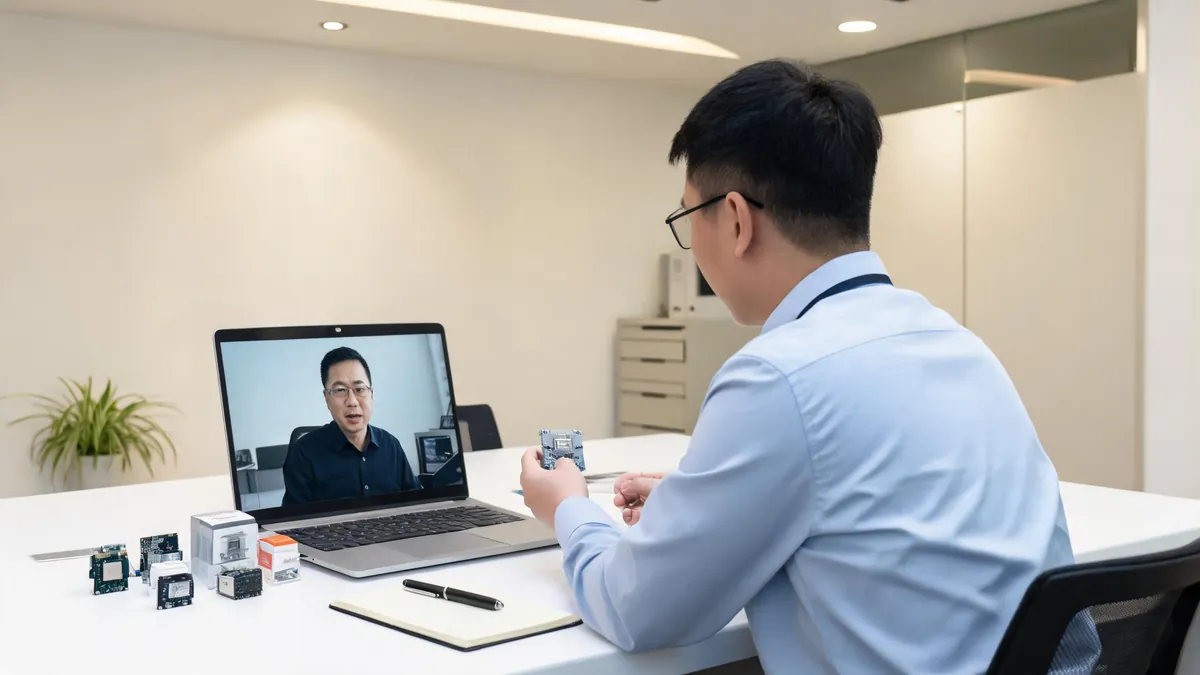
The through-line is that you keep the decisions and the agent carries the execution. That split is what makes the model work — and it is the first thing to test when you evaluate an agent.
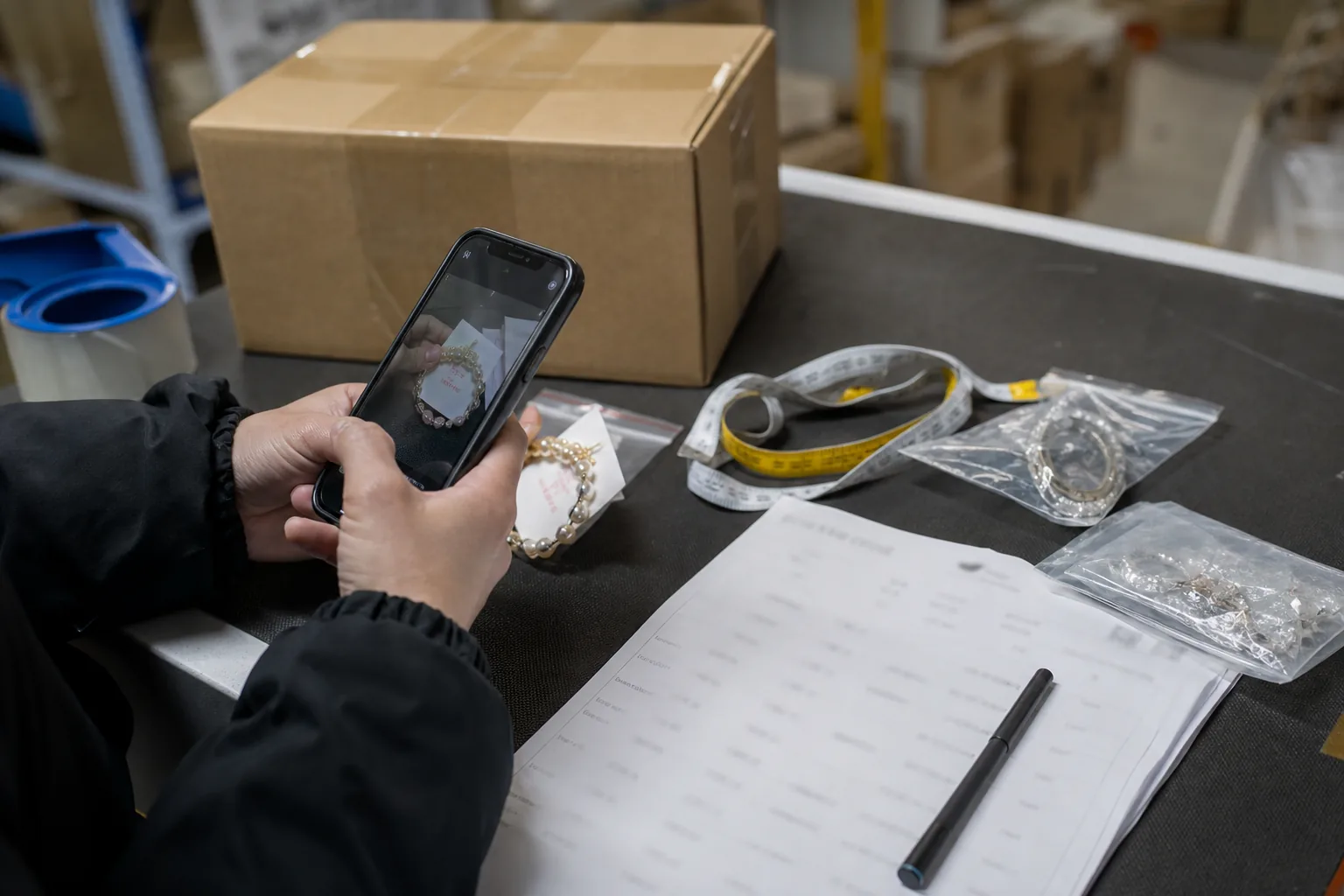
The Six Services in a Full-Service Agent
Full-service agents do not all offer the same scope, but the complete package breaks down into six services. Knowing the list helps you see where an agent is genuinely full-service and where it is really just a freight forwarder with a nicer website.
| Service | What it actually involves |
|---|---|
| Factory finding | Shortlisting real factories from your product spec, not just the first listing that matches a keyword |
| B2B procurement | Negotiating price and MOQ, then buying on your behalf after written approval |
| Factory audit | Checking a factory is real and capable before you commit a large order |
| Quality inspection | Checking quantity, appearance, size and colour against the order, with photo evidence |
| Product sourcing | Finding a product from a photo or a link when you do not have a supplier yet |
| Consolidation and shipping | Combining parcels from several suppliers and arranging international freight |
Our sourcing and purchasing services cover all six, but you do not have to take the whole package — a buyer with an existing supplier can use only the inspection or consolidation part. The point of the list is that “agent” is a spectrum, and you should know exactly where on it you are buying.
Buying Direct: What You Take On
Buying direct means the supplier relationship is yours to build and maintain. For a buyer who already has that relationship — or a Chinese-speaking team on the ground — this is efficient and removes a layer of cost. For everyone else, the workload hides in the details.
The three hardest parts of buying direct from outside China are the same three every time: negotiating in Chinese against a supplier who knows the market better than you do, paying a domestic account without a domestic payment rail, and catching a quality or quantity problem before the goods leave the country. Each is manageable in isolation; together they are why so many first direct orders end with an overpay, a delayed shipment or a carton of goods that does not match the sample.
The Direct-Buying Sequence, Step by Step
To see whether direct buying is realistic for you, run through what a single order actually demands. Each step below is simple; the cumulative weight is the point.
1. Find and shortlist suppliers
Search the platform, filter out resellers from real factories, and check licences and store history. This is several hours per category, in Chinese, before you have even quoted a price.
2. Negotiate price, MOQ and terms
Negotiate in chat, in Chinese, where the final number depends on quantity, customisation and payment terms. A buyer who cannot read the nuance in the reply is leaving margin on the table.
3. Pay a domestic supplier
Arrange a payment route that a domestic seller will accept. International cards are often declined, and a bank transfer to an unverified account is money you may never see again.
4. Arrange domestic freight to a warehouse
Provide a China delivery address, then coordinate multiple suppliers arriving at one place if you want to consolidate.
5. Inspect and photograph the goods
Get someone to check the goods against your order and photograph the result before they ship overseas. If you skip this, you are accepting whatever was packed.
6. Consolidate and ship internationally
Combine parcels, confirm the packed weight or volume, choose a route and arrange export freight. The final cost is only known once the cartons are measured.
None of this is impossible — millions of orders run this way. The question is not whether it can be done, but whether you want to own all six steps, or hand the China-side execution to someone who runs it every day. Our how-to-order guide shows the same process from the buyer’s side, whether you run it yourself or through an agent.
Side-by-Side Comparison
| Dimension | Sourcing agent | Buying direct |
|---|---|---|
| Language | Handled for you | You need Chinese capability |
| Payment | Agent pays domestically | You arrange an overseas payment route |
| Supplier verification | Done by the agent | Your responsibility |
| Inspection | Included or optional | You arrange it, or skip it |
| Cost structure | Product cost + a visible service fee | Product cost + your own time and risk |
| Control | You approve each decision | Full control, full responsibility |
| Best when | First orders, new categories, no local team | Established suppliers, repeat orders, in-house capability |
Cost Comparison: Visible Fees vs Hidden Costs
The most common objection to an agent is “why pay a service fee when I can buy direct?” The answer is that direct buying is not free — its costs are just less visible, and they surface as mistakes rather than line items.
| Cost type | Sourcing agent | Buying direct |
|---|---|---|
| Service fee | Explicit, quoted up front | None |
| Negotiation | Covered | Your time, or a worse price you did not know to push back on |
| Payment | Domestic rails, low risk | Transfer fees and the risk of paying an unverified account |
| Inspection | Covered or clearly priced | Arranged separately, or skipped at your own risk |
| Mistakes | Caught before dispatch | Caught after the goods ship, when they are expensive |
The honest framing is not “agent costs more” — it is “direct buying costs differently.” A service fee is a known, controllable number. The cost of a bad supplier, a missed inspection or a botched freight consolidation is not known until it happens, and it is usually larger than the fee it replaced.
When an Agent Is Worth It
An agent earns its fee in situations where the risk of a mistake is high and your ability to catch it is low. These are the clearest cases:
- Your first order in a new category. You are paying to learn the market without paying for the mistakes that usually come with learning it.
- No Chinese-speaking staff. Negotiation and supplier vetting both happen in Chinese, in real time.
- Multiple suppliers, one shipment. Coordinating several factories, one warehouse and one consolidation is where the most freight money is saved or lost.
- Anything custom or private-label. Custom orders have more ways to go wrong, and the cost of a mistake is highest.
- You value predictability over the last point of margin. An agent converts uncertain outcomes into a confirmed quote you can plan around.
When Buying Direct Makes Sense
Direct buying is the right call when you already have what the agent provides. That typically means:
- An established supplier relationship. If you have reordered from the same factory several times, the verification and negotiation risk has largely gone.
- An in-house Chinese-speaking team or a local office. The language and payment barriers are already solved.
- Repeat commodity orders. When the product, spec and quality are locked and only the price and quantity move.
- Very high volume where the service fee is material. At a certain scale, hiring your own sourcing staff becomes cheaper than a per-order fee.
Notice the pattern: direct buying wins when the risk is already retired. It is a state you grow into, not a shortcut for a first order.
The Hybrid Option Most Buyers Overlook
The agent-vs-direct choice is usually framed as all-or-nothing, but most experienced buyers land somewhere in the middle. You keep your supplier relationship and your negotiation, and you hand over only the parts that are structurally hard from outside China: the domestic payment, the warehouse receiving, the inspection or the consolidation and freight.
A hybrid arrangement is common in three shapes:
- Supplier already found, inspection only. You buy direct, ship to the agent’s warehouse, and pay for a check with photos before dispatch.
- Buying direct, consolidation only. Several of your suppliers ship to one warehouse, and the agent combines them into a single freight.
- Everything except negotiation. You keep the supplier relationship and price, and the agent handles payment, receiving and shipping.
The benefit is that you only pay for the execution you actually need, rather than a full service fee or the full risk of doing everything yourself. If you already buy direct and the pain points are inspection and freight rather than finding suppliers, a hybrid is usually the cheapest way to fix them. Our shipping and fees page explains how consolidation and freight are priced, and the services page shows each piece you can take on its own.
How to Choose a Sourcing Agent
Not all agents are equal, and the difference is rarely visible on a website. What separates a good agent from a reseller calling themselves one is the same three things every time: itemised quotes, written confirmation before purchase, and honesty about what a check will and will not confirm.
| What to look for | Why it matters |
|---|---|
| Itemised quotes with every cost separated | A single “all-in” price hides what you are actually paying for |
| Written approval before any purchase | You should never discover money was spent after the fact |
| Clear inspection scope, stated honestly | A check that “covers everything” is a red flag, not a reassurance |
| A domestic warehouse and payment rails | These are the infrastructure that makes the model work at all |
| Direct answers to direct questions | Vague responses predict vague handling of your order |
Red Flags to Watch For
A few signals should end the conversation before it starts. They are consistent across the industry and rarely wrong.
| Red flag | What it usually means |
|---|---|
| Refuses to itemise the quote | There is a margin being hidden, or the agent does not actually control the costs |
| Promises “guaranteed” delivery times or “100%” pass rates | No legitimate operator guarantees freight timing or inspection outcomes |
| Claims an inspection certifies safety and compliance | A visual check does not certify either — this is a compliance trap |
| Wants full payment before any written quote | You should approve the terms before the money moves, not after |
| Cannot tell you which factory will produce your item | You may be dealing with a reseller, not someone managing your supplier |
A Simple Way to Decide
If you are stuck between the two, run the decision through a single question: where does the risk sit, and who is equipped to carry it? For most first orders, the risk sits with you and you are not equipped to carry it from overseas — so an agent earns its fee. Once you have a proven supplier and repeat orders, the risk is retired and direct buying becomes the cheaper path.
| Your situation | Lean toward |
|---|---|
| First order in a new category | Sourcing agent |
| No Chinese-speaking staff or local office | Sourcing agent |
| Multiple suppliers, one consolidated shipment | Agent or hybrid |
| Custom or private-label product | Sourcing agent |
| Established supplier, repeat commodity order | Buying direct |
| Supplier found, but no local logistics | Hybrid |
The Math on a First Order
People often ask which option “costs less,” as if it had a single answer. It does not, because the two options carry cost in different places. A sourcing agent charges a visible service fee on top of the product cost, separated from the freight and confirmed before you commit. Buying direct has no service fee, but it moves the cost into your own time and into risk: the negotiation you cannot run as well, the payment route you have to improvise, the inspection you might skip, and the mistake that gets caught only after the goods have shipped.
The useful comparison is not “fee versus no fee.” It is “a known, quoted number versus an unknown that shows up later.” For a first order, the unknown is usually larger than the fee. As you reorder and the unknowns become knowns, the calculation flips, and that is exactly when direct buying starts to make sense. If you are weighing this for a real order, the fastest way to resolve it is to get an itemised quote and compare it against what doing it yourself would actually cost you in time and risk — our guide to buying from 1688 walks the direct process so you can price the workload honestly.
How to Run a Small Test Order Before Committing
If you are trying an agent for the first time, the lowest-risk way to start is a small order, not a container-load. A test order does two things at once: it proves the product is what you expect, and it reveals how the agent actually works under real conditions, which no website or sales conversation can show you.
Watch four things on a test order:
- Quote transparency. Is every line item separated, or is it one number with no explanation?
- Written approval. Did you approve the purchase in writing before any money moved?
- Inspection evidence. Did you receive photos that let you confirm what was packed?
- Communication. Could you get a clear answer about the stage of your order at any point?
A test order that clears these four is a strong signal the relationship scales. One that stumbles on the first two is not going to get better with a bigger order — it will get more expensive. Starting small is the cheapest way to find out which kind of partner you are dealing with.
Frequently Asked Questions
How much does a sourcing agent cost?
An agent charges a service fee on top of the product cost, quoted up front and separated from the freight. The exact figure depends on the product, order size and services included, which is why any serious agent itemises it rather than bundling it into one number.
Is it cheaper to buy direct from a Chinese supplier?
Only when nothing goes wrong. Direct buying removes the service fee, but you carry the negotiation, payment, inspection and freight risk yourself. A single bad supplier or a missed inspection can cost far more than the fee it replaced.
Can I switch from buying direct to using an agent?
Yes. You can keep your existing supplier and hand over the parts you want help with — inspection, consolidation or shipping — rather than the whole order. A hybrid arrangement is common for buyers who have suppliers but lack local logistics.
What does an agent do that I cannot do myself?
The three things that are hardest from outside China: negotiating in Chinese, paying a domestic supplier account, and catching a quality or quantity problem before the goods leave the country. An agent already has all three in place.
How do I know an agent is trustworthy?
Ask for an itemised quote, written approval before purchase, and a clear statement of what an inspection will and will not confirm. An agent who answers those three questions precisely is worth working with; one who avoids them is not.
When is buying direct the better choice?
When you already have an established supplier, an in-house Chinese-speaking team, or repeat commodity orders where the product and quality are locked. Direct buying is a state you grow into once the risk is already retired.
What should I look for in a quote?
An itemised quote that separates the product cost, domestic freight, service fee, inspection and packing, international freight, and destination charges. If a quote arrives as one number with no breakdown, ask for the split — a refusal tells you more than the number ever would.
What is the difference between a sourcing agent and a freight forwarder?
A freight forwarder moves goods that are already bought and packed; it does not find suppliers, negotiate prices, pay them or inspect the goods. A sourcing agent can handle the whole chain, including the freight. If all you need is shipping for goods you already own, a forwarder is enough — but it will not catch a supplier or quality problem.
Related Reading
- How to buy from 1688 — the full buying sequence, whether you run it yourself or through an agent
- China sourcing and purchasing services — the six services a full-service agent provides
- Shipping and fees from China — how courier, air and sea costs are broken down
- Sourcing, MOQ and shipping FAQ — quick answers to common questions
The Bottom Line
The decision between a sourcing agent and buying direct is not really about cost — it is about where the risk sits and who is equipped to carry it. For a first order, a new category or a custom product, the risk sits with the buyer, and an agent is the mechanism that moves it to someone with the language, the payment rails and the warehouse to actually manage it. Once you have a proven supplier and repeat orders, direct buying becomes the cheaper path because the risk has already been retired.
If you are deciding which path fits your next order, send your product link or buying list and we will come back with an itemised quote that shows exactly what each stage costs — so you can compare it against doing it yourself on real numbers, not assumptions.