How to Buy from 1688: A Complete Guide for International Buyers
1688 is where Chinese factories actually sell — not the polished export storefronts you see on Alibaba.com, but the raw supplier listings with factory prices and minimum order quantities. If you are a business buyer outside China, you have three ways in: do it yourself, pay a purchasing agent to handle the order, or mix both depending on what you are buying. This guide runs through each path and, more importantly, shows where the process usually breaks for a first-time buyer.
What 1688 Is (and Why International Buyers Use It)
1688 is Alibaba’s domestic wholesale platform. It was built for Chinese businesses selling to other Chinese businesses, which is why the pricing, the language and the buying conventions are all domestic. The same factory that quotes you one price on Alibaba.com will often list a lower unit price on 1688, because the 1688 listing is not set up for export: no overseas shipping, no English support, no escrow built for a foreign card.
That lower price is the entire reason international buyers go there. The trade-off is that everything an export platform handles for you — translation, payment, freight, returns — becomes your problem on 1688. How much of that you want to carry yourself decides which of the three buying paths fits.
Three Ways to Buy from 1688
| Path | Best for | What you handle yourself | Main risk |
|---|---|---|---|
| Buy direct | Buyers with Chinese-speaking staff or an existing supplier relationship | Finding, negotiating, paying, inspecting and shipping | Language, payment methods, fake or unverified suppliers |
| Use a purchasing agent | First-time buyers or anyone without staff in China | Almost nothing — you approve the quote and confirm the order | Agent fees, and choosing an agent you can trust |
| Hybrid | Buyers who have suppliers but want help with inspection or freight only | The parts you keep in-house | Unclear responsibility at the hand-off points |
Most international buyers land on the middle option once they see what buying direct actually involves. The sections below walk the full direct sequence so you can judge the workload for yourself.
What to Buy from 1688 (and What to Skip)
1688 is excellent for a specific kind of purchase and the wrong tool for others. Knowing the difference before you start saves you from buying something that becomes a compliance or warranty headache later.
| Good fit for 1688 | Why it works |
|---|---|
| Standard consumer goods — homeware, phone cases, storage, tote bags, accessories | Commodity products with many competing suppliers and no certification barrier |
| Packaging, labels and printed materials | Low unit cost, high repeat volume, easy to specify |
| Custom and private-label products | Factories will adapt an existing product to your logo, colour or packaging |
| Components and hardware | Defined specifications make quoting and inspection straightforward |
| Poor fit for 1688 | Why it is risky |
|---|---|
| Products that require certification in your market — medical devices, food-contact items, children’s toys | Compliance is your responsibility, and a 1688 listing proves nothing about it |
| High-value or fragile goods without an inspection plan | A mistake is expensive to fix after the goods have shipped |
| Anything that needs after-sales service or easy returns | Cross-border returns to a Chinese factory are slow and uncertain |
How to Buy from 1688 Yourself: The Full Sequence
Step 1 — Find and verify the supplier
A 1688 search returns hundreds of listings for the same product. Price is the wrong first filter. Look instead for how long the store has been trading, whether it shows a real business licence, and whether the photos are original rather than copied from a competitor. Copy the store name and check it against the supplier’s own factory information before you commit any money.
Step 2 — Negotiate price and MOQ
Every listing has a minimum order quantity, and the unit price usually drops as the quantity rises. Negotiation on 1688 happens in Chinese, in chat, and the final number depends on quantity, customisation and payment terms. A buyer without a Chinese speaker is negotiating blind, which is the single most common way to overpay.
Step 3 — Pay (without getting stuck)
Paying a domestic supplier from outside China is the part that catches people. International cards are not universally accepted, bank transfers carry fees and slow down the order, and sending money to an account that turns out to be a scammer is unrecoverable in practice. Payment method and who holds the risk need to be agreed before anything else moves.
Step 4 — Get the goods to a warehouse
1688 sellers ship domestically, which means the goods need a Chinese delivery address. If you do not have one, you use a warehouse or freight forwarder. Once goods from several suppliers arrive at one address, you have the option to consolidate them into a single international shipment instead of paying freight on many small parcels.
Step 5 — Inspect and consolidate
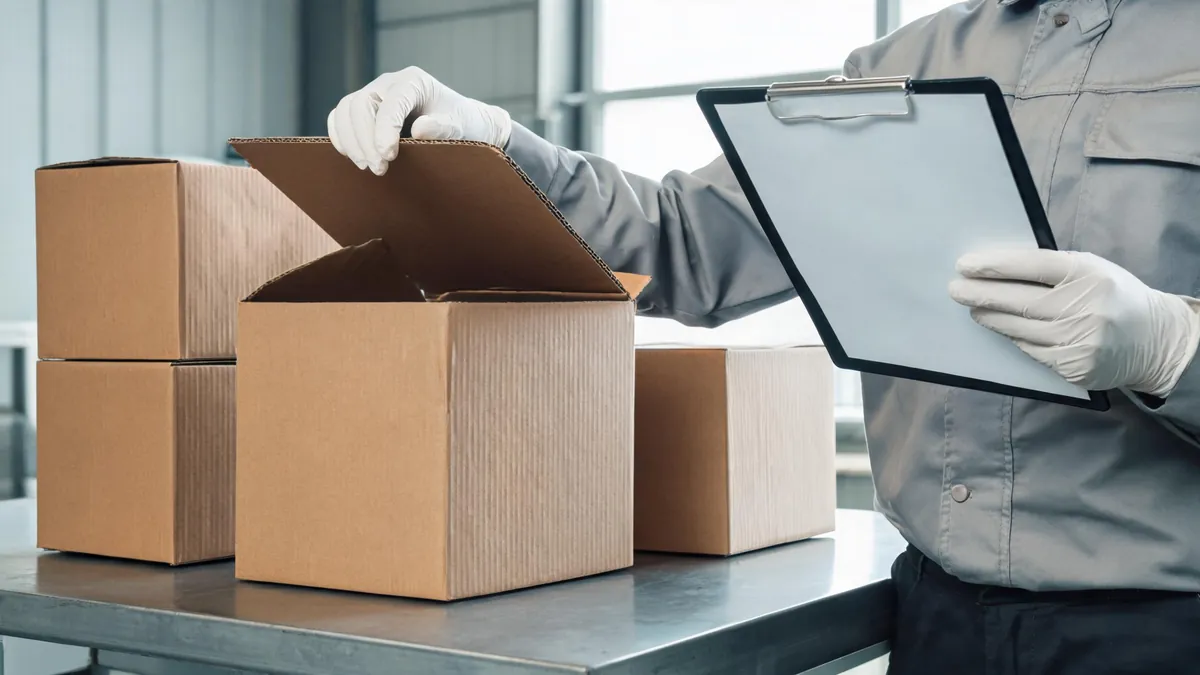
Before the goods leave China is the last point where a mistake is cheap to fix. A check covers the visible basics — carton count, quantity, size, colour, appearance — and produces photos you can review against what you ordered. It does not certify safety or regulatory compliance; that is a separate, product-specific step and remains your responsibility in the destination market.
Step 6 — Ship internationally
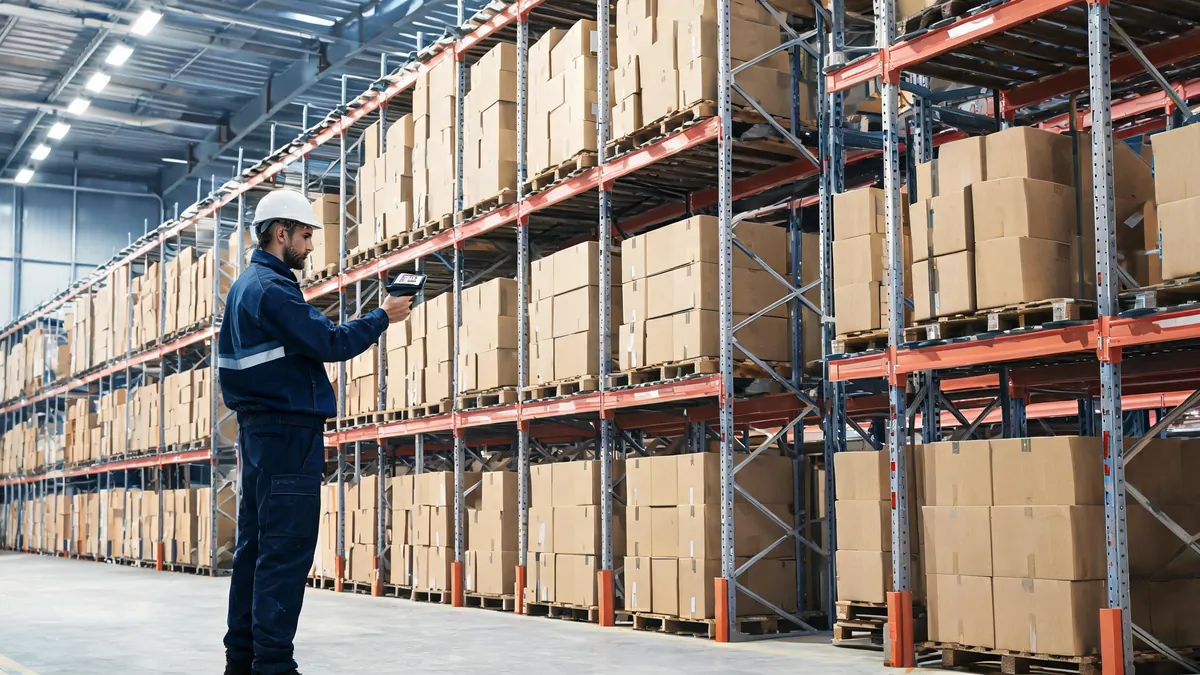
Courier, air and sea each suit a different order size and deadline. The right route depends on the actual packed weight or volume, the destination and whether the goods contain batteries or liquids. Freight is an estimate until the cartons are measured, so the final number can move from the early quote. Our shipping and fees page explains how the cost is broken down across courier, air and sea.
How to Vet a 1688 Supplier
Most “1688 scam” stories are really supplier-selection failures. A supplier that looks legitimate on a listing can be a reseller, an unlicensed trader or a copy of a real store. Run every shortlisted supplier through this checklist before you pay.
| Check | What it tells you |
|---|---|
| Store age and trading history | New stores with no history are a higher risk |
| Business licence and registered company name | Matches the store to a real, verifiable legal entity |
| Original product photos | Copied photos usually mean a reseller, not a factory |
| Willingness to send samples | Real factories send samples; pure resellers often cannot |
| Clear MOQ and payment terms | Vague answers at this stage predict problems later |
| Responsive, specific communication | A supplier who answers precisely now will answer precisely when it matters |
Payment Methods Compared
How you pay determines how much risk you carry and how fast the order moves. Here is how the realistic options line up for an overseas buyer.
| Method | Speed | Risk to buyer | Notes |
|---|---|---|---|
| International card | Fast | Medium | Not accepted by every seller; may carry foreign-transaction fees |
| Bank transfer (T/T) | Slow | High if unverified | Hard to recover if the account is fraudulent |
| Domestic wallets (Alipay/WeChat) | Fast | Low | Requires a China-registered account you likely do not have |
| Purchasing agent on your behalf | Fast | Low | The agent pays domestically after your written approval |
The purchasing-agent route exists largely because the first three options are awkward for a foreign buyer. A domestic payment account — which an agent already has — removes the single biggest obstacle to completing an order safely.
Inspection: What Gets Checked and What Does Not
The honest scope of a pre-shipment inspection is narrower than most buyers assume, and knowing the boundary prevents a false sense of security.
| Checked | Not checked (unless separately arranged) |
|---|---|
| Carton count and quantity | Product safety certification |
| Visible condition and appearance | Regulatory compliance in your market |
| Size, colour and packaging | Hidden or latent defects |
| Photo evidence against the order | Functional and performance testing |
Visual and quantity checks confirm what was agreed with the supplier. They do not certify safety, compliance or hidden defects — that responsibility stays with the buyer in the destination market, and a good agent will say so before you buy rather than after.
The Parts That Trip Up First-Time Buyers
| Stage | What goes wrong | How to avoid it |
|---|---|---|
| Supplier selection | Choosing the cheapest listing, which is often a reseller or a scam | Verify licence and factory details before paying |
| Pricing | Paying a “unit price” that quietly excludes freight or service | Insist on an itemised quote with every line separated |
| Payment | Sending money to an unverified account and losing it | Agree payment terms and risk in writing first |
| Inspection | Skipping the check and discovering a problem after the goods have shipped | Check before the goods leave China |
| Freight | Assuming an early estimate is the final cost | Confirm final carton weight and route before dispatch |
What a Purchasing Agent Actually Changes
A purchasing agent sits between you and the supplier and absorbs most of the sequence above. You send a 1688 link, a product photo or a written specification; the agent finds and verifies the supplier, confirms the price and minimum order, and only places the purchase after you approve an itemised quote in writing. Goods from different suppliers arrive at one warehouse, get checked, and are consolidated and shipped. Our sourcing and purchasing services cover each of those stages, so you can hand over the parts you do not want to run yourself.
The value is not magic — it is that the agent has the Chinese-language negotiation, the payment rails and the domestic warehouse that a foreign buyer would otherwise have to assemble from scratch. For a first order, that removes the three highest-risk stages: finding a real supplier, paying safely, and catching problems before dispatch.
How to Get Comparable Quotes
One of the quietest ways buyers lose money is comparing quotes that are not actually comparable. Two suppliers can quote the same product at very different numbers simply because one included freight and the other did not, or because one is quoting a reseller price and the other a factory price. Send the same information to every supplier and ask for the same line items back.
A quote request that gets useful answers back includes:
- The product link, photo or a written specification
- The quantity and any customisation (logo, colour, packaging)
- The destination country, city and postcode
- Whether the goods contain batteries, liquids or powders
- Any inspection or packing requirements
If you want the quote to be genuinely useful, ask each supplier to separate the product cost, domestic freight, service fee, inspection and packing, and international freight. A supplier who pushes back on itemising is telling you something about how the relationship will go.
What It Costs: The Six Line Items
Any legitimate quote for a 1688 order separates the costs. A single “all-in” price that does not explain what is included is a warning sign. Expect to see these six lines:
| Line item | What it covers | Whether it is fixed |
|---|---|---|
| Product cost | The supplier’s unit price times quantity | Confirmed before purchase |
| Domestic freight | Supplier to the China warehouse | Usually confirmed at order |
| Purchasing and warehouse service | The agent’s fee for buying and receiving | Quoted up front |
| Inspection and packing | The checks and repacking you agree to | Depends on scope |
| International freight | Courier, air or sea by actual weight or volume | Estimated, confirmed at dispatch |
| Destination charges | Duties, clearance and local delivery | Only included if the quote says so |
One point is worth repeating because it causes more disputes than anything else: duties and destination charges are only included when the quote says so. If a quote is silent on them, assume they are yours.
1688 vs Alibaba.com vs Taobao
| Platform | Built for | Typical buyer | Language | Export support |
|---|---|---|---|---|
| 1688 | Domestic B2B wholesale | Chinese businesses | Chinese | Minimal — you arrange freight and payment |
| Alibaba.com | International B2B trade | Overseas importers | English | Trade assurance, English support, export freight |
| Taobao | Domestic B2C retail | Chinese consumers | Chinese | None — retail quantities, not wholesale |
For a business buyer, the practical rule is simple: 1688 for factory prices, Alibaba.com for a supplier you can already deal with in English, and Taobao only for samples or single units you cannot find anywhere else.
Common Misconceptions About 1688
| Misconception | Reality |
|---|---|
| 1688 is all cheap knock-offs | 1688 hosts both legitimate factories and low-quality traders. The platform is not the problem; supplier selection is. |
| The listed price is what I pay | The listing is the product cost only. Freight, service and destination charges are separate. |
| I can pay with my normal card and ship straight to my door | International payment is often blocked, and domestic freight needs a China delivery address before anything ships overseas. |
| An inspection guarantees the product is safe and compliant | A visual check confirms what was ordered. Safety and compliance are separate, product-specific responsibilities. |
| Buying direct is always cheaper | Only if nothing goes wrong. One bad supplier or freight mistake can wipe out the saving many times over. |
A Note on Compliance and Certification
One of the least understood parts of buying from China is where certification responsibility sits. A 1688 listing may show a certificate or a test report, but that document applies to a specific product, scope and point in time — it does not automatically cover the variant you are buying or your destination market’s rules.
The practical position is this: visual and quantity checks confirm that what arrived matches what you ordered. They do not certify product safety, regulatory compliance or hidden defects. If your market requires a specific certificate — for electronics, food-contact materials, children’s products or anything else regulated — that is a separate, product-specific arrangement you must confirm before committing, and the responsibility for meeting your market’s requirements stays with you as the importer.
A sourcing partner who is honest about this boundary is protecting you. A partner who implies an inspection “covers everything” is setting you up for a customs or liability surprise later. Ask directly what a check will and will not confirm, and get the answer in writing.
Frequently Asked Questions
Can a foreigner buy directly from 1688?
You can, but the platform is designed for domestic Chinese buyers. You will need a way to pay a domestic supplier, a Chinese delivery address or freight forwarder, and someone to negotiate in Chinese. Most foreign buyers use a purchasing agent precisely to avoid assembling those three pieces themselves.
What is the minimum order on 1688?
It depends on the supplier and product. For stock products ordered through a purchasing service like ours, the working threshold is 100 pieces or US$5,000 in order value — either one qualifies, and orders from several suppliers are counted together. Custom and private-label products follow the factory’s own minimum, which is usually higher.
How do I pay a 1688 supplier safely?
The safe path is to agree the payment terms and who holds the risk in writing before anything moves. A purchasing agent pays the supplier on your behalf after you approve the quote, which removes the risk of sending money to an unverified account.
Does the 1688 price include shipping?
No. The listing price is the product cost only. Domestic freight, service fees, international freight and destination charges are separate line items, and duties are only included if the quote says so.
Can I combine orders from different 1688 shops into one shipment?
Yes, where the products and route allow it. Goods from different suppliers arrive at one warehouse, get identified and consolidated, and ship as a single international consignment — which is almost always cheaper than many small parcels.
What if the goods arrive wrong or damaged?
This is exactly why the inspection happens before the goods leave China. Issues found within the agreed check scope are reported with photos and order references, and you decide the next step before overseas dispatch. Once the goods have shipped, your options narrow sharply.
Should I order a sample first?
For most products, yes — especially anything custom or private-label. A sample lets you confirm quality, colour and finish before committing to a full order, and it costs far less than discovering a problem at scale. Real factories will send samples; a supplier who refuses is worth questioning.
Related Reading
- China sourcing and purchasing services — the stages we handle, from factory finding to consolidated shipping
- How to order from China in five steps — the buyer’s view of the same process
- Shipping and fees from China — how courier, air and sea costs are broken down
- Sourcing, MOQ and shipping FAQ — quick answers to the most common questions
What Happens After You Order
The order is placed, and then the coordination begins. A clear picture of what follows removes the anxiety that comes from paying a supplier on the other side of the world and hearing nothing for a while.
After the purchase is confirmed, the sequence is predictable: the supplier prepares and dispatches the goods domestically; they arrive at the warehouse; the checks you agreed to are carried out; any issue is reported to you before anything ships overseas; then the packing and freight are confirmed and the goods dispatch. At each of those points there is a decision only you can make — approve the purchase, decide on a problem, confirm the freight — and a good process makes those decisions explicit rather than letting them blur together. Our how-to-order guide lays out the same five steps from the buyer’s side.
Most of the “where is my order” anxiety disappears when you know which stage the goods are at and what happens next. If a point is unclear, ask — a partner who cannot tell you the current stage of your own order is a red flag.
The Bottom Line
Buying from 1688 is not hard because the products are complicated — it is hard because the platform assumes a domestic buyer. The moment you have to negotiate in Chinese, pay a Chinese account and arrange Chinese freight, you are carrying work the platform never intended you to carry. For a first order, or any order where a mistake is expensive, the practical move is to let a purchasing agent absorb that work while you keep the two decisions that matter: what to buy, and whether to approve the final quote.
Send your 1688 links or a buying list and we will come back with a supplier, a price, the minimum order and the freight — separated line by line, with the risks spelled out before you commit.