
How to Track a Shipment from China: Statuses Explained
Tracking a shipment from China means reading tracking numbers and status updates from a carrier — and knowing that the scan you see depends on which leg of the journey the package is on. A shipment moves through several hands before it reaches you: domestic pickup in China, a consolidation warehouse, export clearance, ocean or air transit, import clearance in your country, and final delivery. Each leg produces different statuses, and a long silence doesn’t always mean something is wrong. This guide explains what a tracking number actually tells you, what the common statuses mean, where to look, and what to do when the tracking goes quiet.
What a Tracking Number Actually Is
A tracking number is a carrier-issued identifier that ties a physical shipment to a stream of scan events. It isn’t one universal format — the number you get depends on which carrier is moving the goods, and different stages of the same journey can use different identifiers.
The distinction matters because buyers often look up the wrong number on the wrong site and conclude their package is lost. A courier parcel uses one tracking number; an air-freight shipment uses an air waybill; an ocean shipment uses a bill of lading and a container number. A single door-to-door order can involve all of them in sequence.
| Identifier | Used for | What it tracks |
|---|---|---|
| Courier tracking number | DHL, FedEx, UPS, and similar couriers | A door-to-door parcel, end to end |
| Air waybill (AWB / MAWB / HAWB) | Air freight | The airport-to-airport air leg |
| Bill of lading (B/L) | Sea freight | The ocean leg |
| Container number | Sea freight | The physical container itself |
If you’re buying through a shipping service from China, your provider should give you one consolidated reference and explain which number corresponds to which stage. Trying to track a container number on a courier website, or vice versa, is the most common source of “my package disappeared” panic.
How to Read a Tracking Number
Tracking numbers follow carrier-specific patterns, and recognizing them tells you which site to use before you waste time guessing. Courier numbers are usually 10 to 20 digits, sometimes with a short service prefix. Air waybills start with a three-digit airline prefix followed by an eight-digit serial — the AWB number — and it’s printed on the air waybill document. Ocean shipments use a bill of lading number issued by the carrier, plus a container number in the familiar format of four letters and seven digits. When your shipment switches legs, you may receive a new number for each one.
The number you get from a buying agent or freight forwarder is often a consolidated reference that maps to all of them. If a number isn’t recognized on a site, you’re usually on the wrong site for that leg — not looking at a lost parcel. Matching the right number to the right carrier is most of what makes tracking feel complicated, and it’s the first thing to check when a lookup comes up empty.
The Tracking Journey, Stage by Stage
A shipment’s tracking doesn’t look like a clean line; it looks like a series of short bursts separated by silence. Here’s what each stage produces, and why some of them go dark.
Supplier to the China Warehouse
Your supplier ships domestically to a consolidation address. This first hop uses a domestic Chinese carrier and its own tracking number. It’s fast and cheap, and the scans are frequent because the parcel is moving within one country.
Warehouse Receipt and Consolidation
The parcel arrives at the warehouse and is logged. This is where tracking goes quiet for a while if you’re combining multiple orders through 1688 consolidation, because the warehouse is holding your goods until every supplier’s parcel has arrived. No carrier is moving anything, so there are no scans — which is normal, not a loss.
Export Clearance and Handover
The consolidated load is declared for export and handed to the international carrier. You’ll usually see a status like “departed origin” or “handed over to carrier.” This is the handoff point where the domestic tracking number stops and the international one takes over.
Ocean or Air Transit
This is the long leg, and for ocean freight especially, it can mean days or weeks with no updates at all. A container on a ship in the middle of the ocean doesn’t get scanned. No news during transit is expected.
Import Clearance in Your Country
When the goods arrive in your country, they go through customs. Tracking may show “held in customs” or “awaiting clearance,” and this is the stage where the importer — you, or your agent — may be asked to provide documents or pay duties. How long this takes depends on your destination country’s process, and destination compliance remains the buyer’s responsibility.
Final-Mile Delivery
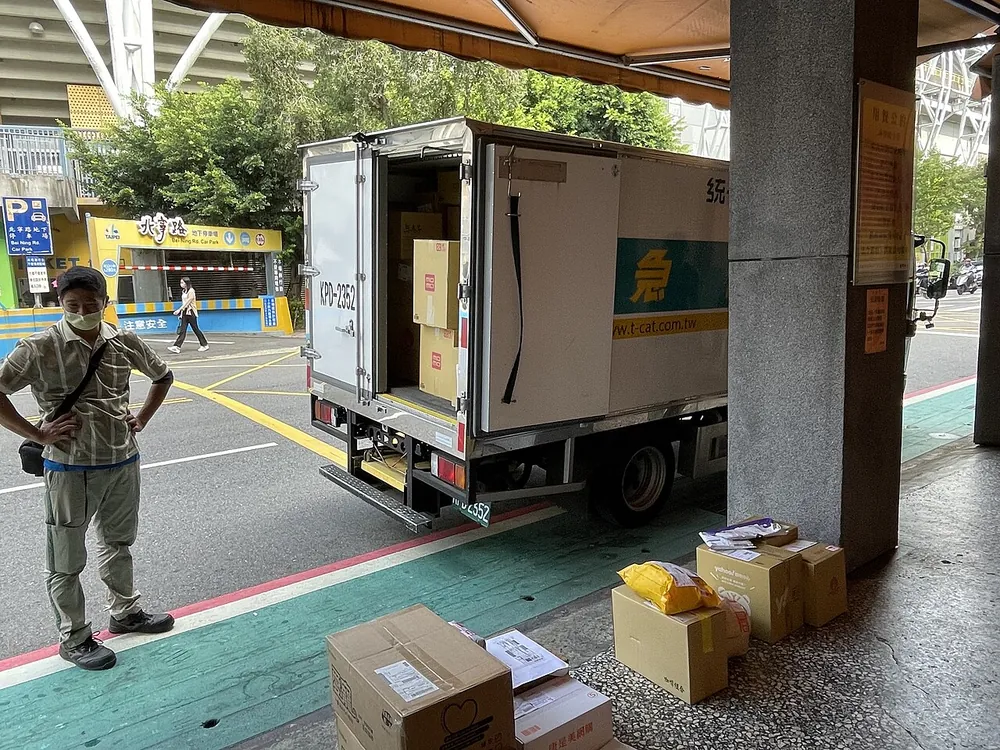
After clearance, a local courier takes over for the last leg. Scans resume, you’ll see “out for delivery,” and then the shipment arrives. This final stage usually has the most frequent updates.
Common Tracking Statuses and What They Mean
Carriers phrase things differently, but the underlying events are the same everywhere. Here’s how to read the statuses you’re most likely to see, and what each one calls for.
| Status | Meaning | What to do |
|---|---|---|
| Label created / shipment information received | Carrier notified, parcel not yet picked up | Wait; confirm the supplier has actually handed the goods over |
| Picked up / in transit | Moving normally | Nothing — this is expected |
| Held / customs / clearance | Going through customs inspection | Provide documents or pay duties if asked; otherwise wait |
| Exception / delivery attempted | A problem: address, signature, or damage | Contact the carrier or your agent promptly |
| Delivered | Received at the destination | Check the condition and report any damage immediately |
“Exception” is the one status that deserves immediate attention. It usually means a failed delivery attempt, a paperwork problem, or a damaged parcel, and acting quickly — same day if possible — is what prevents a small issue from becoming a returned or abandoned shipment.
Where to Track Your Shipment
You have three practical options, and they’re worth using in this order. The carrier’s own website is the most accurate and current, because aggregators sometimes lag or mislabel statuses. Aggregators like 17TRACK and AfterShip are useful when you have a domestic Chinese number that the carrier’s international site doesn’t recognize — they translate many carriers into one timeline. And if you’re using a buying agent, the agent’s own updates are often the most useful of all, because they combine every supplier parcel and the consolidated load into one plain-English summary.
One thing to remember: a 1688 order is tracked inside the platform until it’s exported, then it switches to the international carrier’s number. The two systems don’t always hand off cleanly, which is another reason a door-to-door shipping provider that gives you one consolidated reference is easier to follow.
When Tracking Goes Quiet — and What’s Normal
A tracking page that hasn’t updated in days or weeks is the most common source of anxiety, but it’s usually not a problem. Three situations routinely produce silence.
The first is ocean transit. A container at sea isn’t scanned until it docks, so two weeks with no update on a sea shipment is completely normal. The second is consolidation. When your goods are sitting in a warehouse waiting for the last supplier’s parcel, no carrier is moving anything, so there’s nothing to scan. The third is a handoff gap, where the domestic number stops updating and the international number hasn’t started, because the parcel is between systems.

The right response to silence is to know your shipment’s stage, then escalate in order. Confirm with your agent which stage the goods are in. Then check the carrier directly. If a sea shipment has gone far beyond its expected transit window with no scan, that’s when you ask the carrier to investigate and look at your shipping insurance. A quiet tracker is rarely a lost shipment — but a shipment that’s genuinely overdue deserves a real check.
Why a Buying Agent Makes Tracking Simpler
You don’t strictly need an agent to track a shipment, but the agent removes the two things that make DIY tracking painful: the number-juggling and the language barrier. A buying agent gives you one consolidated tracking number for the whole order, watches every supplier parcel and the combined load, and handles any customs or carrier exception in the local language. Instead of you refreshing four different carriers in two languages, you get a single status in English.
| Factor | DIY tracking | With a China buying agent |
|---|---|---|
| Tracking numbers | Several, across different carriers | One consolidated reference |
| Language | Chinese domestic carriers | Plain-English updates |
| Exceptions | You call the carrier yourself | Agent handles customs and carrier contact |
| Consolidation gap | Looks like a lost parcel | Agent confirms it’s normal holding |
There’s one more thing an agent brings that no tracking page can: context for what “quiet” is normal in your specific lane. A first-time importer sees a sea shipment that hasn’t scanned in ten days and panics; an agent who ships that lane every week knows ten days of silence mid-ocean is routine. That judgment, more than any single status, is what stops good orders from being needlessly escalated or cancelled.
Insurance and Lost Shipments: What Tracking Won’t Tell You
Tracking tells you where a parcel was last scanned, not whether it’s insured or what happens if it never arrives. Two questions are worth settling before you ship: what the carrier’s liability is if the goods are lost or damaged, and whether you want extra insurance on top of it. Carriers limit their liability for loss and damage, and the default coverage is often far below the value of your goods.
A lost shipment — one that genuinely never shows up after an investigation — is a claim against the carrier or your insurance, not something the tracking page resolves. If you’re shipping high-value goods, declare the real value and confirm the coverage before the goods leave China. The honest position is simple: tracking tells you where things are, and insurance is what protects you when the answer is “gone.” How much you recover from a lost shipment depends on the carrier’s terms and your coverage, so confirm both in writing rather than assuming a tracking number is a guarantee.
Frequently Asked Questions
How do I track a package from China?
Use the tracking number on the carrier’s own website first — it’s the most current. For domestic Chinese numbers that an international carrier’s site doesn’t recognize, use an aggregator like 17TRACK or AfterShip. If you’re using a buying agent, their consolidated update is usually the easiest to follow.
Why has my shipment from China stopped updating?
Usually it’s normal. Ocean transit has no scans while the container is at sea, a consolidation warehouse holds goods without scans while waiting for the last parcel, and handoffs between the domestic and international carriers can leave a gap. Only escalate to the carrier if the shipment is far past its expected window.
What does “handed over to carrier” mean?
It means the shipment has cleared export and been given to the international carrier. This is the point where the domestic tracking number stops and the international number takes over, and it’s a normal, expected status rather than a problem.
How long does shipping from China take to track?
It depends on the method. Courier and air shipments update frequently within days; sea freight can go weeks with no scan during ocean transit. Tracking reflects the carrier’s scans, not a continuous live position, so long gaps on slower methods are expected.
Can I track a 1688 order internationally?
Yes, but in two stages. A 1688 order is tracked inside the platform until it’s exported, then it switches to the international carrier’s tracking number. The two systems don’t always hand off cleanly, so a consolidated reference from a shipping provider is easier to follow than juggling both numbers.
What do I do if my shipment from China is lost?
First confirm it’s actually lost, not just quiet — check with your agent or carrier and wait out the expected transit window. If a carrier investigation confirms the loss, file a claim against the carrier’s liability or your shipping insurance. How much you recover depends on the carrier’s terms and whether you declared the goods’ real value and took out coverage before shipping.
Let Someone Else Watch the Tracking
If you’d rather have one person watch every supplier parcel, the consolidation, and each carrier leg for you — and get a single tracking number plus plain-English updates — send us your order details and we’ll handle the freight. See our shipping options or contact us.