Sea Freight from China: LCL, FCL, Costs and Transit Times
Sea freight is the cheapest way to move goods out of China per kilogram, and the slowest. If you can wait roughly three to six weeks for your shipment and you are sending a pallet’s worth of goods or more, sea freight is almost always the right call. If your shipment is small, urgent, or high-value enough that sitting in transit for a month hurts you, air freight or a courier will serve you better. This guide covers the two ways to ship by sea — full container load and less than container load — what each actually costs, how long it realistically takes, and the mistakes that quietly turn an otherwise cheap ocean shipment into an expensive one. All figures are planning ranges, not quotes; your landed cost depends on your route, your cargo, and the rate on the day you book.
Sea freight in one paragraph
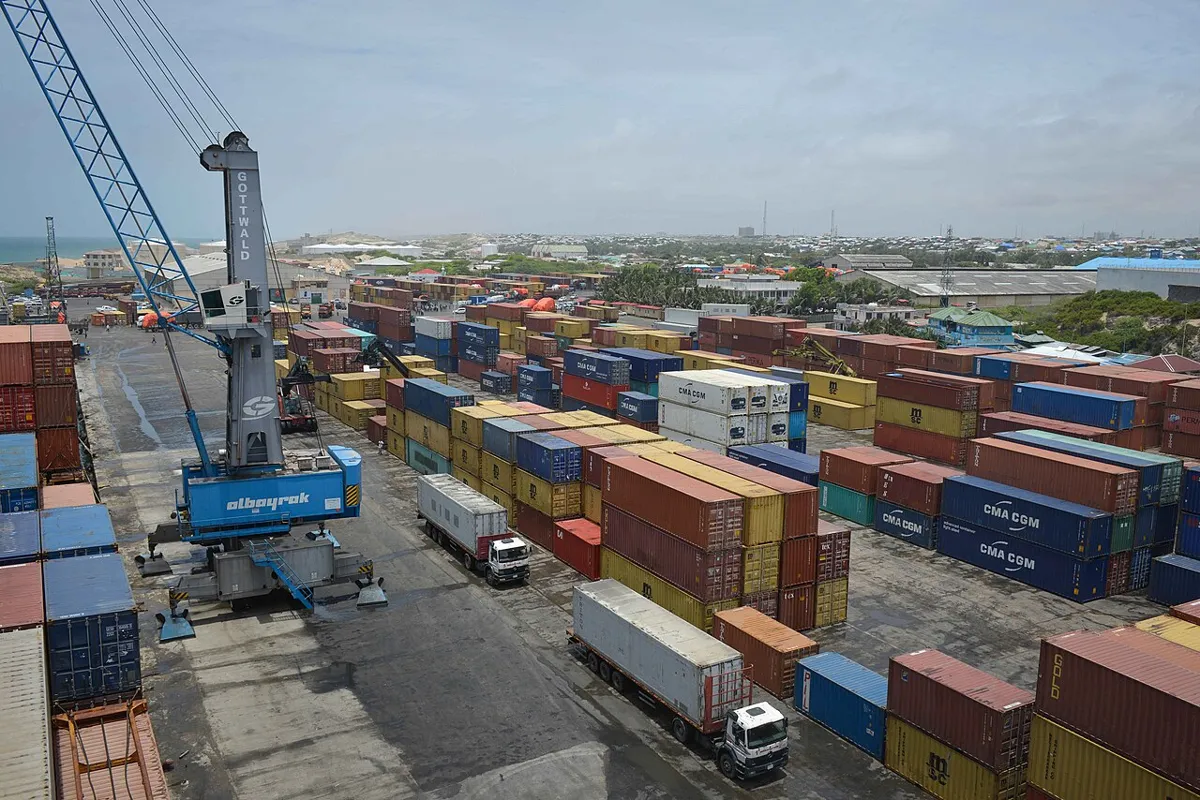
Sea freight means moving goods in shipping containers on ocean vessels between a port in China and a port near your destination. Because a single vessel can carry thousands of containers, the cost per unit of weight is far lower than flying the same goods — which is why ocean is the default for most wholesale and volume imports. The trade-off is time and flexibility: a shipment that flies in five to ten days can take several weeks by sea, and the timeline is affected by port congestion, customs clearance, and the schedule of the vessel you book. Sea freight also has a higher practical minimum: below roughly a cubic meter of cargo, the fixed charges — documentation, handling, and the portion of the container you occupy — often make a courier or a consolidated air option cheaper.
For a B2B buyer ordering from multiple 1688 suppliers, sea freight pairs naturally with consolidation: you gather goods from several sellers into one warehouse, combine them into a single shipment, and only then hand the shipment to the ocean carrier. That is the difference between paying for a few scattered boxes and paying for one efficiently packed load, and it is usually where the real savings come from. We cover that flow in more detail in our guide to 1688 consolidation.
FCL vs LCL: the two ways to ship by sea
The first decision in sea freight is whether you fill a whole container or share one. The answer changes both your cost and your timeline, so it is worth getting right before you request quotes.
FCL — full container load
With FCL you book an entire container, most commonly 20-foot (about 28 cubic meters) or 40-foot (about 58 cubic meters), and it belongs to you from the time it is loaded until it is delivered. FCL is generally cheaper per cubic meter once your cargo is large enough to make real use of the space, and because the container is not being opened and repacked along the way, there is less handling and a lower risk of damage or loss. The downside is the minimum: if you only have a few cubic meters, you are paying for space you do not use.
LCL — less than container load
With LCL you pay only for the space your cargo occupies, shared with other shippers inside a consolidated container. That makes it the right choice for smaller shipments that are still too big or too heavy to sensibly courier. The trade-off is that LCL is slower and more expensive per cubic meter than a full container, because your goods are consolidated and deconsolidated at both ends — which adds handling, a little risk, and a small share of the fixed documentation fees. LCL also tends to have more predictable minimums, which can make it attractive for a first order while you are still testing a supplier.
| Factor | FCL (full container) | LCL (shared container) |
|---|---|---|
| Cost per cubic meter | Lower once you use most of the container | Higher, but you only pay for your space |
| Transit time | Generally faster, fewer handling steps | Slower, consolidation and deconsolidation at both ends |
| Damage / loss risk | Lower, container sealed end to end | Slightly higher, goods handled with others |
| Best for | Large orders, full or near-full containers | Smaller orders, first orders, mixed-cargo loads |
| Practical minimum | Roughly a 20-foot container’s worth of cargo | Usually around one cubic meter and up |
What sea freight from China actually costs
Sea freight pricing is not a single number — it is a stack of line items, and understanding the stack is how you avoid being surprised by the final invoice. The headline “ocean freight” rate is only the charge to move your container between two ports; everything before and after it is separate.
| Cost component | What it covers | What to watch for |
|---|---|---|
| Ocean freight | Port-to-port movement of the container | Rates move with the market and season; confirm it is valid on your sailing date |
| Origin charges | Export handling, documentation, port fees in China | Often bundled as a single origin fee; confirm what is included |
| Destination charges | Terminal handling, documentation, port fees at destination | Larger than many first-time importers expect; ask for it up front |
| Customs clearance | Clearing the goods through destination customs | Duty and tax are separate and paid to your government, not the forwarder |
| Inland trucking | Delivery from the destination port to your door | Can be rolled into a door-to-door quote or quoted separately |
| Insurance | Covers loss or damage in transit | Optional but recommended; typically a small percentage of declared value |
Two rules keep you from overpaying. First, always ask for an all-in or door-to-door quote — the kind that includes origin, ocean freight, destination, and delivery — so you can compare like with like rather than comparing a low port-to-port rate against a higher all-in rate. Second, treat any single number you see online as a planning figure, not a promise: sea freight rates fluctuate with fuel, season, and capacity, and the rate you see today may not be the rate on your sailing date. A detailed breakdown is covered in our guide to shipping cost from China.
Sea freight transit times: what to realistically expect
Sea freight from China to major Western markets typically runs in the range of three to six weeks door to door, but that single band hides a lot of variation. The ocean crossing itself is often two to four weeks depending on the route; the rest of the time is taken up by consolidation, customs, and final delivery. Peak season, port congestion, and whether you are shipping FCL or LCL all move the number.
| Route (illustrative) | Typical ocean transit | Typical door-to-door |
|---|---|---|
| China to US West Coast | Roughly 2–3 weeks | About 3–5 weeks |
| China to US East Coast | Roughly 4–5 weeks | About 5–7 weeks |
| China to UK / Northern Europe | Roughly 4–5 weeks | About 5–7 weeks |
| China to Australia | Roughly 2–3 weeks | About 3–5 weeks |
These are conservative planning ranges, not guarantees — the actual schedule depends on the carrier, the season, and conditions at both ports. If your goods are time-sensitive, this is exactly where air freight earns its premium, and the two should be compared on total cost and lead time together.
How sea freight works, step by step
Step 1: Confirm your cargo and pick FCL or LCL
Know the volume, weight, and value of what you are shipping before you request quotes. Volume, not weight, is what determines most sea freight pricing, so measure and confirm the cubic meters rather than guessing.
Step 2: Consolidate and prepare the goods
If you are buying from several suppliers, the goods should be gathered at a single warehouse first — inspected against your order, repacked if needed, and loaded in a way that protects them and uses the container space efficiently. For many importers this consolidation step is where the biggest practical savings hide, and it is also the natural point to arrange a pre-shipment inspection so a problem is caught before the goods are sealed into a container and gone for a month.
Step 3: Book the shipment and confirm the Incoterm
Choose your terms carefully — FOB, CIF, and DDP each change who pays for and is responsible for what. If you want duties and taxes handled for you through to your door, a DDP shipping arrangement removes the guesswork at the destination. Otherwise, confirm exactly where your forwarder’s responsibility ends.
Step 4: Clear customs and arrange delivery
At the destination, the goods must clear customs, any duty and tax must be paid, and the shipment is trucked from the port to your door. This is the step most likely to surprise a first-time importer with destination charges, so have your forwarder spell them out before the goods sail.
Sea freight vs air freight vs courier
The right mode is rarely a matter of preference and almost always a matter of weight, volume, value, and deadline. Sea freight wins on cost for heavy and bulky cargo that can wait; air freight wins on speed for time-sensitive or high-value goods; and a courier wins for small parcels where the fixed costs of either container or air cargo would dwarf the freight itself.
| Mode | Best for | Typical door-to-door | Cost position |
|---|---|---|---|
| Sea freight | Heavy, bulky, high-volume, deadline-tolerant | Roughly 3–6 weeks | Lowest per kg / per cubic meter |
| Air freight | Time-sensitive, high-value, moderate volume | Roughly 5–10 days | Higher per kg, fast |
| Courier / express | Small parcels, samples, urgent single items | Roughly 3–7 days | Highest per kg on small items |
The honest way to choose is to run your own numbers: get a quote for each mode on the same cargo and compare the total landed cost against the value of getting the goods faster. Sometimes a month of faster cash flow and faster restocking is worth more than the freight savings, and the answer flips from order to order. If you are unsure whether you even need a freight forwarder versus someone who also manages the purchase, our comparison of buying agent vs freight forwarder walks through the difference.
How to lower your sea freight cost
Most sea freight savings do not come from haggling over the headline rate — they come from the way you prepare and structure the shipment. The levers that actually move the number are the ones below.
- Consolidate before you ship. Several small LCL shipments are almost always more expensive per cubic meter than one full, well-packed load. Combine suppliers first, then ship once.
- Fill the container when you can. The closer your cargo gets to a full 20-foot or 40-foot container, the cheaper each cubic meter becomes. A near-full FCL often beats the same volume spread across several LCL consignments.
- Book off-peak when your deadline allows. Rates spike around peak season and before major holidays. If your timing is flexible, shipping just before or after the rush can lower the rate meaningfully.
- Compare all-in quotes. A low ocean rate with heavy destination charges can cost more than a higher rate with everything bundled. Compare door-to-door totals, not port-to-port headlines.
- Question the destination side. Destination charges and inland delivery are where surprise costs usually hide. Ask for them itemized before you book, and confirm exactly what each line covers.
None of this changes the fundamental economics — sea freight is the low-cost mode for heavy and bulky cargo — but it does decide whether you pay the market rate or several percentage points above it.
A note on Incoterms for sea freight
Your Incoterm decides who pays for what between you and the seller, and it matters more on sea freight than on almost any other mode because there are so many moving parts — inland trucking, port fees, ocean freight, insurance, and destination charges. The most common choices for a China sea shipment are FOB, where the seller covers everything to the port of loading and you take over from there, and CIF, where the seller also covers the ocean freight and insurance to the destination port. A DDP term goes further and has the seller or your agent handle duties and taxes through to your door. Whichever you choose, get it in writing before the goods sail, because a mismatch between what you assumed and what the term actually covers is one of the most common sources of surprise cost on ocean shipments.
Common sea freight mistakes that cost you money
- Comparing port-to-port against door-to-door. A low ocean rate is not a low total if the destination charges are loaded on separately. Always compare all-in figures.
- Not measuring your cargo. Volume drives sea freight pricing. Guessing the cubic meters leads to a quote that does not match the invoice.
- Ignoring the destination side. Customs clearance, duty, and inland delivery are real costs. Confirm them before you sail, not after.
- Shipping air when sea would do. For heavy, low-value, deadline-tolerant goods, sea freight can be dramatically cheaper — and the savings compound on every reorder.
- Skipping insurance. Ocean transit is long and involves multiple handling steps. A small insurance premium is cheap protection for a shipment you cannot afford to lose.
Frequently asked questions
How long does sea freight from China take?
Most sea freight from China to major Western destinations arrives door to door in roughly three to six weeks, depending on the route, the season, and whether you ship FCL or LCL. The ocean crossing itself is often two to four weeks, with the rest of the time spent on consolidation, customs, and final delivery.
Is sea freight cheaper than air freight from China?
Yes, per kilogram and per cubic meter, sea freight is substantially cheaper than air freight — which is why it is the default for heavy and bulky volume imports. The caveat is that air freight can win on total value when speed matters, so the two should be compared on landed cost plus lead time for your specific cargo.
Your next step: get a sea freight quote for your cargo
The cheapest sea freight is the one that fits your actual volume, route, and deadline — not the cheapest headline rate. If you are ready to ship from China, share your supplier links, quantities, and destination through the shipping page and we will work up an all-in door-to-door figure, including consolidation if you are buying from several suppliers. That way you can see the full landed cost — and whether sea or air is the better call for this order — before anything is booked.
More on shipping from China
- Shipping from China: Courier, Air and Sea Compared
- Shipping Cost from China: How the Price Is Calculated
- DDP Shipping from China: Door-to-Door with Duties Included
- 1688 Consolidation: Merge Multiple Sellers into One Shipment
What is the difference between FCL and LCL sea freight?
FCL means you book an entire container and pay for the whole space, which is cheaper per cubic meter once your cargo is large enough. LCL means you share a container and pay only for the space you use, which suits smaller shipments but is slower and more expensive per cubic meter because of the extra handling.
How much does sea freight from China cost?
It depends on the volume, the route, and the season, and it is priced as a stack of charges — ocean freight, origin and destination handling, customs, and delivery — rather than one number. The reliable way to budget is to request an all-in door-to-door quote for your specific cargo rather than relying on a generic figure.
Can I combine sea freight with a buying agent and consolidation?
Yes, and for multi-supplier orders it is usually the most economical approach. A buying agent gathers goods from several 1688 sellers, consolidates them into one warehouse, and hands a single efficiently packed shipment to the ocean carrier — which is where much of the real savings on sea freight come from.