
1688 Seasonal Products: Timing the Buy for Holidays
Why Timing Is Everything for Seasonal Products
Seasonal products are the single most profitable category on 1688, and the single most dangerous one to get wrong. Christmas decorations, Halloween costumes, Valentine’s Day gifts, summer beach accessories and back to school items all share one brutal characteristic: they are worth full price for a short window, and worth a fraction of that price the day after the holiday passes. A container of Christmas ornaments that lands in your warehouse on December 20 is not inventory; it is a clearance problem that will sit for ten months and eat storage fees. A container of the same ornaments that lands on September 20 is the foundation of a strong fourth quarter.
The math behind seasonal buying is simple. Because demand is concentrated, retail prices hold up well during the window, so the margin opportunity is larger than in everyday goods. But the supply chain that feeds that window is long: production in China, quality control, consolidation, ocean freight, customs and final mile delivery routinely consume eight to twelve weeks, and around peak season every one of those stages slows down and gets more expensive. Successful seasonal buyers on 1688 plan in months, not weeks. The buyers who lose money are the ones who treat a seasonal order like a normal replenishment order and discover too late that the window has already closed.
This guide explains how to time your 1688 purchases for the holidays that matter, how to account for Chinese factory holidays that can eat a month out of your schedule without warning, and how to use a buying agent to keep your seasonal orders on track. The goal is not to eliminate risk, because seasonal selling always carries risk. The goal is to make sure the risks you take are commercial risks about how much will sell, not avoidable risks about whether the goods will arrive at all.
The 1688 Seasonal Calendar: Key Holidays and Dates
Build your sourcing calendar backwards from the sales peak in your own market. For Christmas, the Western selling window effectively runs from mid October through late December, which means goods should be in your warehouse by late September or early October at the latest. Count backwards from there and you are placing orders in July and August, during what most people consider summer. For Halloween, the shelf window is September and October, so goods should arrive in August, which pushes ordering back to May and June. This counterintuitive rhythm is the entire seasonal game: the earlier you order, the calmer your production and freight schedule, and the better your rates.
Valentine’s Day and Mother’s Day are shorter, sharper windows that favor air freight or fast sea lanes because the volume is smaller and the products are light, such as jewelry, gift boxes and plush items. Easter goods need arrival in February and March. Back to school products, from stationery to lunch boxes, peak in late summer, so ordering happens in April and May. Summer seasonal items like pool accessories, beach mats and outdoor toys should be on the water no later than April so they arrive before the June buying surge. For every one of these, the pattern is identical: identify the shelf window, subtract transit and inspection time, subtract production lead time, and you have your order date. Then add a buffer, because something will slip.
One more layer matters on the supply side: 1688’s own promotional calendar. 1688 runs major sourcing festivals, including the March and September editions of its big annual promotions, when suppliers discount and compete for orders. Buying around these events can improve prices, but factories also get busy right after them, which extends lead times. If your product needs production rather than ready stock, treat the promotional discount as a nice bonus and prioritize locking in the production slot early instead, because a cheap order that ships late is still a late order.
Chinese Factory Holidays That Disrupt Supply
Chinese New Year is the single biggest scheduling event in global sourcing, and it surprises new buyers every year. The holiday is based on the lunar calendar, which means the dates move between late January and late February. Factories begin slowing down one to two weeks before the holiday as workers travel home, close completely for one to three weeks, and then take weeks more to return to full capacity and full quality, because experienced line workers often change jobs during the break. In practice, production out of many factories is unreliable from mid January through early March, and for some supply chains the disruption extends into April.
The rule that experienced buyers follow is simple: get anything that must ship in the first quarter produced before Chinese New Year, because “after the holiday” delivery promises are among the most commonly broken promises in Chinese sourcing. That means a product needed in March should be ordered by November or December so it can be produced in the calm weeks of early January. If you miss the window, expect delays, expect rising prices as demand stacks up against limited capacity, and expect quality variance as new workers come up to speed.
Chinese New Year is not the only disruption. The first week of October is the National Day golden week, when factories close for about a week and logistics slow around it. Labor Day in early May, the Dragon Boat Festival in June and the Mid Autumn Festival in autumn all shave days off production schedules, and because many factories cluster around the same regional holidays, the whole supply base pauses at once. For seasonal planning, the practical approach is to treat every Chinese public holiday as lost production time and to build the buffer in early rather than hoping the factory makes up the days later.
It is also worth knowing that seasonal goods cluster geographically in China, which concentrates both capability and congestion. The bulk of Christmas and Halloween decorations comes from the Yiwu area and the surrounding Zhejiang factories, while many costume and textile items come from Guangdong. When those clusters are busy, every supplier inside them is busy at the same time, so lead times for the whole category move together. Buyers who plan around the cluster calendars, rather than around one factory’s promises, are the ones whose holiday orders arrive on schedule.
When to Order for Each Holiday
Here is a realistic order calendar based on sea freight with a typical eight to ten week total lead time from order to warehouse. For Christmas goods, order no later than early July, with late July as the point where you should seriously consider air freight or accept a thinner margin for a later arrival. For Halloween, order in April or May for an August arrival. For Valentine’s Day, order in September or October and ship by air or fast sea in November and December. For Easter, order in November. For summer seasonal items, order in January and February, remembering to beat the Chinese New Year shutdown. For back to school, order in March and April for a July arrival.
Within each of these windows, production sequencing matters as much as the order date. A factory that produces your 5,000 piece Halloween order in June is relaxed and cheap. The same factory producing it in August, after hundreds of other buyers have placed the identical order, is stressed, slower and more expensive, and quality slips when lines are rushed. That is why the best seasonal buyers are the first to order, not the ones who negotiate the lowest unit price. Paying two percent more in May beats saving two percent in August and missing the shelf window entirely.
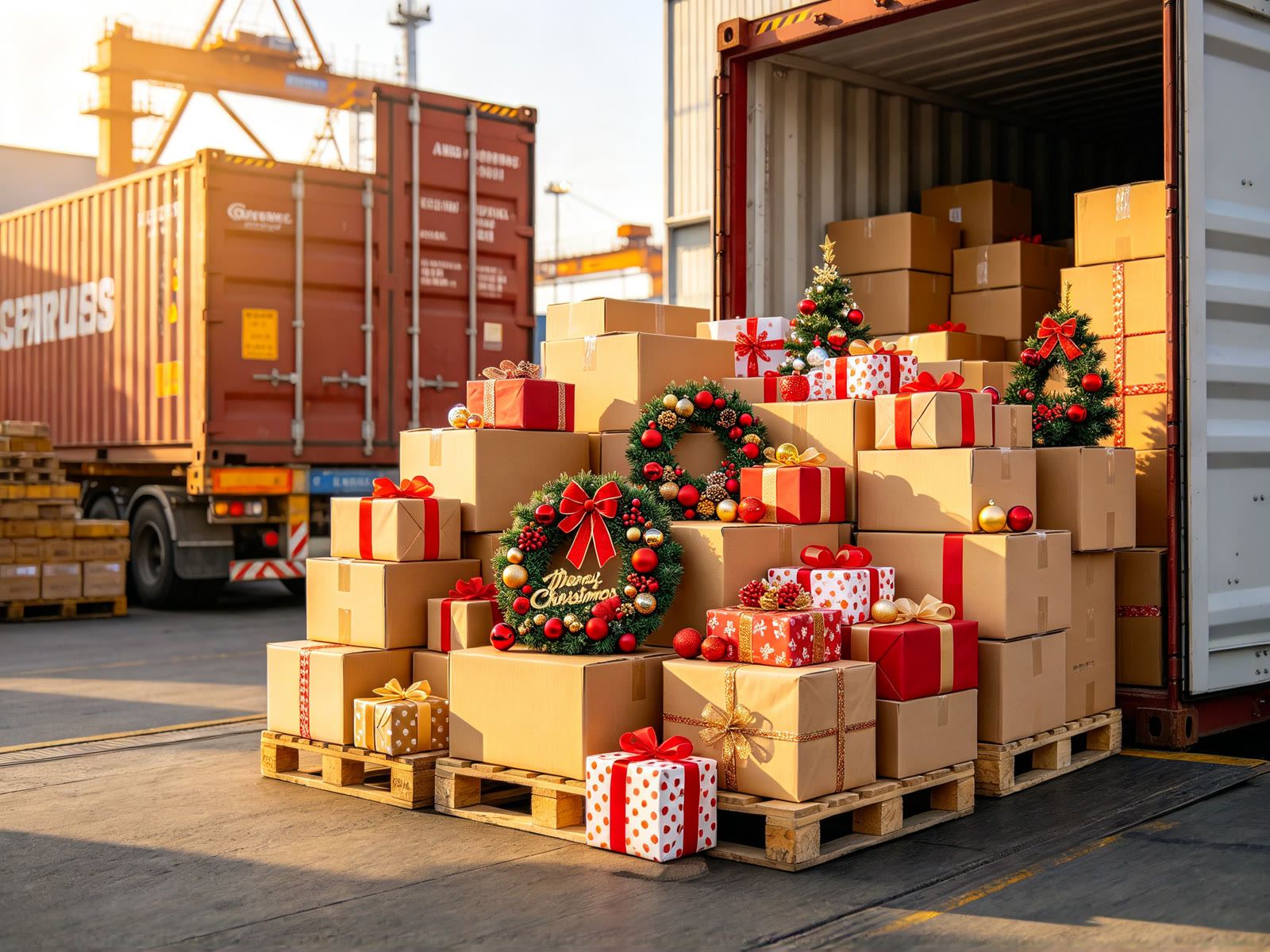
It also helps to think about which products can flex. Trend driven seasonal items such as character themed Halloween costumes or this year’s specific Christmas color story have almost no second chance if they arrive late, because the trend resets next season. Classic evergreen seasonal items such as plain ornaments, solid color gift boxes and generic string lights can absorb some lateness because leftovers carry over to next year with minimal markdown. Put your early ordering discipline into the trend driven items, and give the evergreen items a little more flexibility on price and schedule.
How Lead Times and Shipping Affect Your Deadline
Lead time is where the calendar meets reality, and it has four components you should track separately. Production lead time is the time from order confirmation to finished goods, typically two to five weeks for seasonal products depending on the factory load. Quality control time is the day or two your agent spends inspecting before the balance payment is released, and it can extend if problems are found and rework is needed. Consolidation time is the wait while your goods sit at the agent’s warehouse until enough volume accumulates for a cost effective shipment, which can be days or weeks depending on how you plan the shipment. Finally, transit and customs time covers the ocean crossing, port handling and clearance, typically four to six weeks to the US and Europe, plus local delivery.
Each component has a seasonal multiplier. Around September and October, production lead times stretch because every factory in the decorative goods cluster is running the same holiday orders. Freight rates climb in the late summer and autumn peak season, and vessels fill up, which means a booking that was instant in March can take two weeks to confirm in September. Port congestion and customs clearance also slow at year end. The professional response is to pre book freight and fix the shipment window with your forwarder early, and to use the consolidation shipping approach so your goods move on schedule without waiting for other orders to fill a container.
Air freight is the escape hatch, and it is worth knowing its economics in advance. For light, high value seasonal goods, air freight can compress eight weeks into two, and the extra cost is often justified when it rescues a window. The smart pattern is to pre decide your trigger: if the order is not on the water by a specific date, switch to air, or split the order so a fast air portion covers the early window while the sea portion replenishes later. Deciding this before the crisis happens means the decision is made calmly, on numbers, rather than in a panic with the holiday six weeks away.
Using a Buying Agent to Lock in Seasonal Capacity
A buying agent earns its fee during seasonal peaks more visibly than at any other time of year, because every one of the risks described above becomes more severe under time pressure. The agent can place and chase orders locally, in Chinese, when your suppliers are at their busiest and least responsive to foreign inquiries. The agent can visit the factory before Chinese New Year to verify that production actually completed, rather than trusting a status message. The agent can inspect finished goods quickly so that rework, if needed, happens in October instead of December.
The agent also smooths the logistics side of the peak. Because agents handle many buyers, they ship consolidated volumes year round, which keeps their freight relationships active through peak season and their booking priority better than a one time shipper. They can hold your seasonal stock in a China warehouse and release it at the right moment, which is a useful tool when your own warehouse is small and you want goods on hand early without paying local storage. And when the inevitable problem appears, a late batch, a quality issue, a missing carton, the agent is on the ground to fix it while a buyer sitting in another country is reduced to sending emails.
Finally, a 1688 buying agent helps with the most underrated seasonal skill: supplier management across years. Seasonal sourcing gets dramatically better the second season, because the agent and the supplier have a working relationship, the factory knows your quality standard, and lead times shrink from trust. Buyers who switch suppliers every season to save a few cents restart the learning curve every time, which is exactly how late shipments happen. Pick your seasonal factories, work them consistently through an agent, and by year two the whole calendar runs earlier and cheaper.
Stocking, Overstock and the Markdown Plan
Seasonal buying always ends with the question of what to do with the leftovers, so plan the exit before you place the order. The first tool is conservative ordering: order the quantity you are confident you can sell at full price, then use reorders or air freight top ups to chase upside. It is almost always cheaper to top up a hot item with air freight than to mark down a full container of overstock. The second tool is carryover selection: build your assortment so a share of it, plain ornaments, neutral gift packaging, generic lights, sells acceptably in the next season or in the everyday market, and concentrate your risky spend on trend items only when margins justify the gamble.
The third tool is the discount ladder, decided in advance. If sell through is slow by a certain date, what is the first markdown, the second, and the clearance channel? Many seasonal sellers quietly route leftovers through discount platforms, liquidation buyers or charity auctions, and the ones who plan this in advance recover far more than the ones who decide in January. The fourth tool is storage discipline: leftover seasonal stock that occupies premium warehouse space for ten months effectively costs you twice, so calculate a carrying cost per cubic meter and let that number guide how much you are willing to hold.
None of this eliminates the central seasonal truth: you will occasionally overbuy and occasionally underbuy. The professional target is not perfect forecasting, which does not exist. It is a system where the overbuy is survivable, the underbuy is recoverable, and the schedule is always controlled. Time, more than price, is the real currency of seasonal sourcing on 1688, and the buyers who respect it keep coming back season after season while the buyers who ignore it disappear after their first December disaster.
Your Seasonal Ordering Checklist
Start by writing down the shelf window for each holiday you sell into, with the date goods must be on shelves, then work backwards through customs, transit, consolidation, inspection, production and ordering. Mark every Chinese public holiday on the same calendar, with Chinese New Year in red, and check that your production window does not collide with the shutdown. Place orders before the supplier gets busy, and confirm a written production schedule with dates, not promises, before you pay the deposit. Pre book freight early, and decide your air freight trigger in advance.
Then execute through an agent: factory visit before key holidays, pre shipment inspection against your approved sample, and consolidation that keeps your goods moving without waiting for others. Track each order against its milestone dates weekly, because a seasonal order that is one week late in August becomes three weeks late by October. Finally, record what happened this season, the real lead times, the supplier’s actual performance, the freight delays, so that next year’s calendar is built on your own data instead of optimism. Seasonal sourcing is a repeatable discipline, and the buyers who keep notes are the ones whose December goes according to plan.
How early should I order Christmas products from 1688?
Aim to place orders by early July at the latest for a late September or early October arrival in your warehouse. That assumes production of roughly two to four weeks, consolidation and quality control, and four to six weeks of ocean freight plus customs. Ordering earlier is better: June or May production slots are calmer, cheaper and less likely to be rushed than September production, when the entire decorative goods cluster in China is running the same holiday workload.
What is the best month to buy Halloween stock?
Order Halloween stock in April or May for an August arrival. The shelf window runs through September and October, so August arrival gives you a full season to sell, and May production means your goods are made before the factory’s autumn rush. If you order in August hoping for a quick turnaround, you are paying peak season prices for production and freight on goods that may not arrive until the window is closing.
How does Chinese New Year affect my seasonal orders?
Chinese New Year effectively removes several weeks from the production calendar, usually between mid January and early March, and factories often need additional weeks to return to full capacity and quality. Any goods needed in the first quarter should be produced before the holiday, which means ordering by November or December. Deliveries promised “after the holiday” are the most frequently missed dates in Chinese sourcing, so treat them as risk rather than plan.
Should I use sea freight or air freight for seasonal products?
Sea freight is the default for cost efficiency and is right for the bulk of your seasonal volume when you order early enough. Air freight is the tool for rescuing a window or topping up a hot item: it compresses an eight week timeline into roughly two weeks at a much higher cost per unit. The best practice is to plan the main order by sea and pre decide the conditions under which you will switch a portion to air, such as the order not being on the water by a specific date.
How do I know a 1688 supplier can deliver on time?
Look at the supplier’s production history and capacity signals on their 1688 store, such as transaction volume, factory badges and repeat purchase rate, then confirm a written production schedule with dates before paying a deposit. A buying agent can verify the schedule on site, check that your order is genuinely in the production queue, and confirm completion before the balance payment is released. Under peak season pressure, on the ground verification is far more reliable than chat messages.
What should I do with unsold seasonal stock?
Plan the exit before you order. Order conservatively and use reorders or air freight to chase upside, keep a share of your assortment in evergreen items that carry over to next season, and decide your markdown ladder and clearance channels in advance. Calculate a carrying cost per cubic meter for stock that sits until next year, because storage and capital tied up for ten months can quietly erase the margin you earned on the items that sold.
Why do seasonal products cost more in August and September?
Because the whole world orders them at the same time. As the holiday production and shipping seasons converge, factories stretch lead times and raise prices, and ocean freight rates climb through the autumn peak while space becomes scarce. Ordering in May or June for the same holidays gets you calm production slots, lower freight rates and better factory attention, which is why the best seasonal buyers move first instead of negotiating hardest.