
Buy from China: The Complete Order-to-Door Process
To buy from China as an overseas buyer, you move through a predictable sequence: find a product, order and pay, get the goods to a China address, consolidate anything bought from several suppliers, ship internationally, and clear customs at your door. You can do parts of this yourself or hand it to a buying agent that runs the whole flow for you. This guide walks through the complete order-to-door process, the three main ways to buy, what it realistically costs, and where the risks sit — so you can decide how much to outsource and how much to handle yourself.
The Three Ways to Buy from China
There is no single “right” way to buy from China. The approach you pick depends on how much time you have, how comfortable you are with Chinese platforms, and how large or frequent your orders are. In practice most buyers end up on one of three paths:
| Approach | How it works | Best for | Where it breaks down |
|---|---|---|---|
| Buy direct | You register on 1688, Taobao, or Alibaba and order yourself | Buyers who speak Chinese and can pay in China | Language, payment, and sellers who refuse overseas orders |
| Buying agent | A local partner buys, receives, and ships for you | Most overseas buyers, especially multi-supplier orders | Adds a service fee on top of goods |
| Freight forwarder only | You buy and pay, a forwarder only handles shipping | Buyers who can already source and pay suppliers | No help with purchase, payment, or consolidation |
For most overseas buyers, the buying-agent path is the one that actually works end to end. It covers the two things direct buying does not: a Chinese payment method and a Chinese address — plus the consolidation and export steps in between. This is why a China buying agent is the default choice for anyone who is not already fluent in Chinese platforms and payment.
Step 1: Find and Choose Your Product
Buying well starts with choosing the right product and supplier. The main Chinese platforms each serve a different purpose:
- 1688 — Alibaba’s wholesale marketplace for the domestic market. The place to source products for resale, usually with minimum order quantities.
- Taobao — Alibaba’s retail marketplace. The place for one-off, niche, and hard-to-find retail items.
- Alibaba.com — the international-facing platform, built for overseas buyers with English support and export-oriented sellers.
When you compare options, look at the unit price, the minimum order quantity, the seller’s response time, and whether the listing has real order history. A lower sticker price is not automatically a better deal once freight, duties, and risk are counted.
How to Read a Listing Before You Commit
You do not need to visit a factory to make a decent first judgment — you can learn a lot from the listing itself and the seller’s track record. Before you place any order, check these signals:
- Order history and reviews. A listing with many completed orders and consistent feedback is a better signal than a cheaper listing with none.
- Minimum order quantity (MOQ). On 1688, the MOQ is often the first real filter. If a supplier wants 500 units and you need 50, the price is not actually available to you.
- Specification detail. Clear material, size, weight, and color information in the listing reduces the chance of a mismatch later.
- Response time. A seller who answers questions quickly before the sale is more likely to be responsive after it.
This is basic buyer diligence, not factory auditing — it is about choosing a listing you can order from with confidence. If you want help evaluating listings and negotiating in Chinese, a 1688 buying agent can do that legwork for you.
Step 2: Order and Pay
Payment is where most overseas buyers hit a wall. Chinese platforms settle in renminbi through Alipay or bank transfer, and overseas cards are often not accepted. There are a few ways around it:
- Use a buying agent. The agent pays the supplier locally and you pay the agent one combined invoice in your own currency. This is the simplest route for most buyers.
- Pay by wire transfer. Some suppliers accept international bank transfers, but this is slower and offers less protection than escrow-style payment.
- Use a payment escrow. Certain platforms and services hold funds until you confirm receipt, which adds a layer of protection.
Whatever method you choose, pay in stages where possible — a deposit to start and the balance on shipment — and keep a written record of what was ordered, at what price, and when it will ship. If you are still deciding whether to handle this yourself, our guide on how to buy from 1688 walks through the direct route in detail.
Step 3: Consolidate Multiple Suppliers into One Shipment
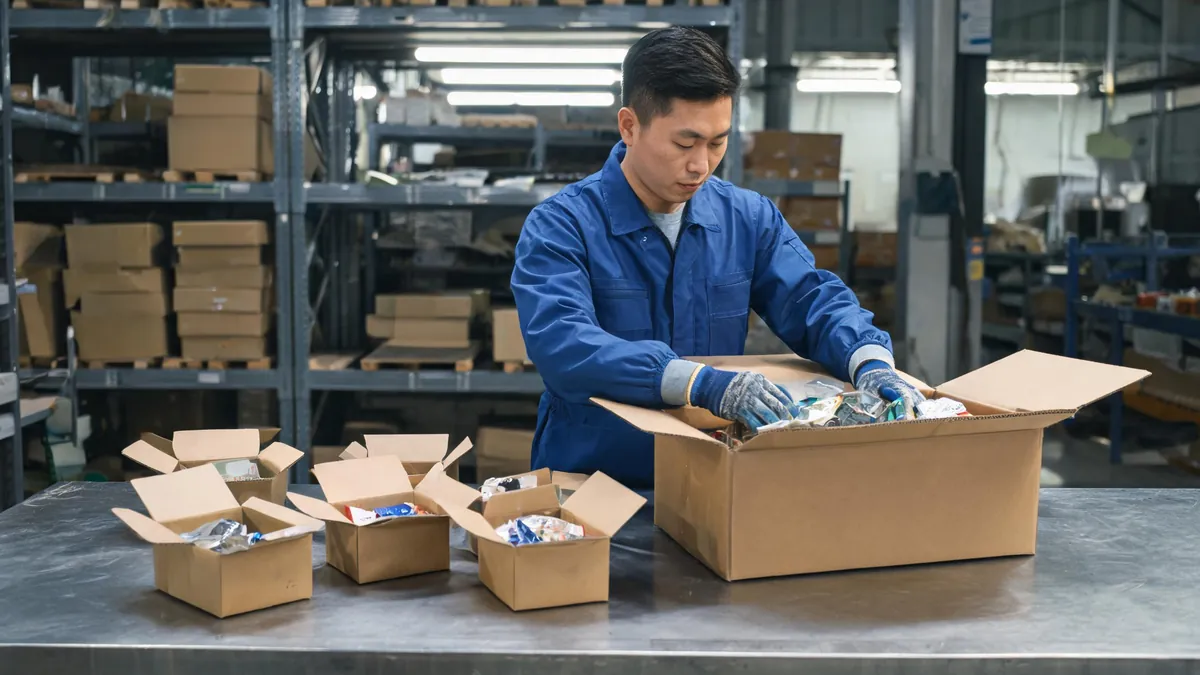
If you buy from several suppliers, you do not want to pay several separate international shipments. Consolidation is the step where all your goods arrive at one China warehouse and are combined into a single parcel or pallet. This is where a buying agent earns its fee, because it lets you:
- Pay one international freight charge instead of several.
- Bundle small orders that would be uneconomical to ship alone.
- Ship heavy and light items together to balance the cost.
Here is why consolidation matters in numbers:
| Scenario | Without consolidation | With consolidation |
|---|---|---|
| 5 suppliers, 5 small parcels | 5 separate international shipments, each with a base charge | 1 combined shipment, one base charge |
| Freight cost | Higher, because base fees repeat | Lower per unit, because weight and volume are pooled |
| Tracking and handling | 5 tracking numbers and 5 delivery windows | 1 tracking number, 1 delivery |
Step 4: Ship — Courier, Air, or Sea
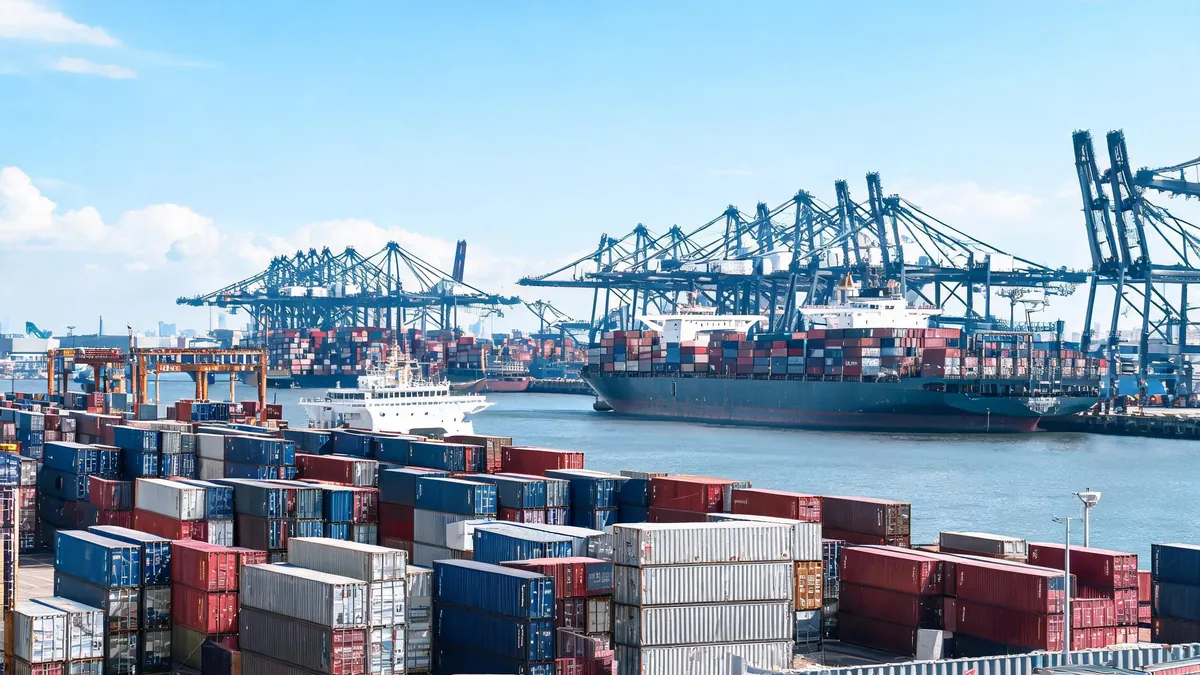
International shipping from China comes in three broad methods, and the right one depends on weight, volume, and how fast you need the goods:
| Method | Speed | Best for | Cost profile |
|---|---|---|---|
| Courier (express) | Fastest, roughly days | Small, light, urgent parcels | Highest per kilogram |
| Air freight | Fast, a few days to a week | Mid-weight, time-sensitive goods | Mid-to-high |
| Sea freight | Slowest, weeks | Heavy or bulky, non-urgent orders | Lowest per kilogram |
Most small-to-medium orders ship by courier or air, while genuinely heavy or bulky orders go by sea. A good agent quotes the method that makes sense for your specific goods rather than defaulting to the cheapest headline rate. For a fuller breakdown, see our guide to shipping from China.
Step 5: Customs, Duties, and Delivery
The final leg is customs and delivery in your country. This is the part nobody can fully control, because it depends on your destination country’s rules, the value of the goods, and how they are classified. Two things to know up front:
- Duties and taxes are separate from freight. Unless you choose door-to-door terms that include duties (often called DDP), you are responsible for destination import charges.
- Compliance is the buyer’s responsibility. Whether a product is allowed into your country, and what documentation it needs, is on you and your importer of record — not the agent or the seller.
For that reason, ask your agent what shipping terms you are being quoted and whether duties are included or collected on delivery. Being clear on this before you pay avoids a surprise bill at the door.
Understanding Shipping Terms: EXW, DAP, and DDP
Three shipping terms come up constantly when buying from China, and they determine who pays for and arranges each leg of the journey. Knowing the difference is how you compare quotes fairly:
| Term | What it means in practice | Who handles import duties |
|---|---|---|
| EXW (Ex Works) | The seller makes the goods available at their premises; you arrange everything else | Buyer |
| DAP (Delivered at Place) | The seller delivers to your named destination, but import clearance and duties are yours | Buyer |
| DDP (Delivered Duty Paid) | The seller handles everything including import duties, to your door | Seller |
For a first order, DDP is often the most predictable choice because it turns a long list of separate charges into one number. The trade-off is that the seller or agent builds a margin into the duty estimate. Whatever you choose, make sure the term is written on the quote so there is no ambiguity about who pays at the border.
What It Costs to Buy from China
The full cost of buying from China is never just the product price. It is a stack of charges, and knowing the stack is how you compare quotes properly:
| Cost component | What it covers |
|---|---|
| Product cost | The goods themselves, in renminbi |
| Domestic shipping | Supplier to the China warehouse or agent |
| Agent service fee | The charge for buying and handling (if you use an agent) |
| Consolidation fee | Combining multiple orders (if applicable) |
| International freight | China to your country, by courier, air, or sea |
| Duties and taxes | Destination import charges, separate from freight |
There is no fixed number we can give you here, because the product, weight, destination, and method all change it. What matters is that any serious quote is itemized, so you can see each charge and compare like for like. Request a line-item quote for your specific order and the real cost will be clear.
Common Mistakes to Avoid
- Comparing only the unit price. Freight, duties, and minimum order quantities change the real cost dramatically.
- Paying a supplier directly before confirming terms. Use staged payment or escrow where possible.
- Ignoring destination duties. A “cheap” sea freight quote is not cheap if you get hit with an unexpected duty bill.
- Skipping consolidation on multi-supplier orders. This is the single easiest way to overpay on shipping.
- Assuming the agent audits factories. Buying agents handle purchase and logistics; factory audits and formal quality control are separate services.
- Not fixing the shipping term. If EXW, DAP, or DDP is not written on the quote, you and the supplier may disagree about who pays at the border.
- Ordering without a written spec. A clear size, material, and quantity note is the cheapest insurance against a wrong shipment.
Choosing Between 1688, Taobao, and Alibaba for Your Order
The three platforms overlap, but each is better at a specific job. Picking the right one up front saves money and avoids rework:
| Platform | Best for | Typical buyer | Why it needs a partner |
|---|---|---|---|
| 1688 | Wholesale, resale stock, bulk orders with MOQs | Importers, ecommerce sellers | Chinese-only, domestic payment and shipping |
| Taobao | Retail, samples, one-off, niche items | Shoppers, small buyers, product testers | Chinese-only, domestic payment and shipping |
| Alibaba.com | Export-oriented wholesale with English support | Overseas buyers who want a simpler start | Higher prices than 1688 for the same goods |
Many buyers use more than one: sample on Taobao, then place the wholesale order on 1688 or Alibaba once the product checks out. A single partner who covers all three means you do not juggle separate accounts and payments.
A Worked Example: How a Typical Order Comes Together
To make the process concrete, imagine a small business that wants to buy several hundred branded products plus custom packaging from two different suppliers, and ship them to one destination. The flow looks like this — the numbers here are illustrative, to show the shape of the process, not a quote:
- Two supplier orders. The main product comes from one supplier, the packaging from another, each with its own price and domestic shipping.
- One consolidation. Both orders arrive at one China warehouse and are combined into a single shipment.
- One international freight charge. Instead of two overseas shipments, the buyer pays one, pooled by weight and volume.
- One customs entry. A single parcel means one set of import paperwork and one duty calculation rather than two.
The point is not the specific figures, which vary, but the structure: two purchases collapse into one shipment, and the buyer pays once for freight and once for customs instead of twice. That is where the savings from consolidation come from.
Payment Protection and Avoiding Common Scams
Buying from China is safe when you follow basic protection habits, and risky when you skip them. The most common problems are avoidable:
- Never pay a supplier directly outside a traceable channel. Wire transfers to personal accounts offer little recourse if something goes wrong.
- Use staged payment. A deposit to start and the balance on shipment keeps both sides honest.
- Prefer escrow where available. Holding funds until you confirm receipt adds a layer of protection.
- Watch for deals that are too good. A price far below market usually means a substitute product, an inflated shipping charge, or no product at all.
A buying agent adds a layer of protection here, because the agent is a local buyer who can verify the item arrived before your money moves further down the chain.
Planning Your Timeline
One of the biggest surprises for first-time buyers is how long the whole thing takes. The timeline is not just the international transit — it is the sum of several legs:
| Stage | What to expect |
|---|---|
| Sourcing and negotiation | Days, depending on how quickly you decide |
| Supplier production and dispatch | Varies widely by product and quantity |
| Domestic shipping to warehouse | Usually a few days within China |
| Consolidation and packing | Days, more if many suppliers are involved |
| International transit | Days (courier/air) to weeks (sea) |
| Customs and final delivery | Varies by destination country |
Build in buffer at every stage, and ask your agent for a realistic total window rather than a best-case transit time. Customs in particular can add days you cannot predict.
Frequently Asked Questions
Do I need a buying agent to buy from China?
No, but most overseas buyers use one. If you can read Chinese, pay in China, and manage domestic delivery, you can buy direct. Otherwise, a China buying agent removes the language, payment, and logistics walls for a service fee.
What is the cheapest way to buy from China?
For heavy or bulky goods, sea freight is cheapest per kilogram; for small urgent parcels, courier is fastest but pricier. The cheapest overall approach usually combines buying at wholesale prices on 1688 with consolidating multiple orders into one shipment.
Getting Started: What to Prepare Before Your First Order
Before you reach out for a quote, a little preparation saves a round of back-and-forth. Gather these pieces:
- Product links or clear descriptions, with quantities and any size, color, or spec choices.
- A target budget, including a buffer for freight and duties.
- A preferred timeline, so the agent can quote the shipping method that fits.
- Your destination country and address, since freight and duties depend on both.
The more complete your request, the faster and more accurate the quote. A good partner will ask for exactly these details and give you an itemized number rather than a vague estimate. Once you have that number, you can compare it fairly against buying direct or through a forwarder, because every charge is visible line by line.
Buy from China Without the Guesswork
We handle the purchase, consolidation, and international shipping as one service, so you move from a product link to a parcel at your door with a single line-item quote. Send us your links and requirements and we will price the full order-to-door flow before you pay anything.
Get a quote to buy from China · or see our shipping options.