
1688 Bags and Accessories: Wholesale Sourcing Guide
Bags and accessories are one of the most forgiving categories for a first-time importer: high margins, steady year-round demand, low regulatory risk, and a supplier base in China that is arguably the deepest in the world. 1688, the domestic wholesale marketplace from Alibaba Group, is where most of those suppliers actually sell — at factory prices that export platforms rarely match.
The catch is that the bag industry is a maze of quality tiers. Two handbags can look identical in a photo and differ completely in materials, hardware, stitching and longevity, and a listing that says “leather” on 1688 usually means synthetic PU. If you do not know how to read listings, request the right samples and specify materials precisely, you can easily end up with a container of bags nobody wants to buy twice.
This guide walks through the main manufacturing clusters, the popular categories, how materials and price tiers work, how to sample and inspect, your branding options, and the bulk order process from quotation to sea freight.
Why Source Bags and Accessories from 1688?
China produces the majority of the world’s bags, and the industry is organized into geographic clusters with deep specialization. By buying on 1688 you deal directly with the factories and first-tier wholesalers in those clusters, which removes several layers of markup compared with export platforms and trade fairs. For a canvas tote that retails at 15 dollars, a landed cost of 2 to 4 dollars is a realistic outcome when you source well.
Bags also have a favorable risk profile. Unlike electronics or toys, handbags, backpacks and wallets rarely need certification for adult use, do not carry batteries, and have no expiry date. Your main risks are quality and consistency, both of which are manageable with disciplined sampling and inspection — the kind of work a professional China buying agent does every day.
The category rewards branding. A generic canvas tote is worth what a canvas tote costs; the same tote with a tasteful logo, better lining and decent packaging can sell for three to five times as much. Because most factories on 1688 accept OEM orders at modest minimums, small brands can build a distinctive product line without owning a factory.
Finally, bags travel well. They are light but bulky, so freight costs per unit stay low even by express courier, and they are hard to damage in transit compared with ceramics, glass or electronics. Return rates for well-inspected bags are among the lowest in general merchandise.
There is also a seasonal rhythm worth exploiting. Backpacks and school bags spike before academic terms, gift-style bags and packaging peak before the holiday season, and summer festivals drive totes and beach accessories. Buying against the calendar — sourcing in the off-season and holding light inventory — routinely improves your margin by 10 to 20 percent on the same products.
The Main Bag Manufacturing Clusters in China
Guangzhou is the epicenter of mid- to high-end fashion bags. The Shiling leather goods district in Huadu and the wholesale malls around Sanyuanli and Zhanxi Road hold tens of thousands of makers and traders of handbags, wallets and small leather goods. This is where you find trend-driven products, fast response to new designs and a wide quality range from mass market to genuine leather goods.
Baigou in Hebei province is known as China’s luggage and bag capital, a sprawling hub of factories making mass-market handbags, luggage, backpacks and school bags at aggressive prices. If your product is a 3-dollar PU handbag or a 5-dollar suitcase, the odds are high that Baigou is where it was made or where the materials came from.
Wenzhou and the Longgang area in Zhejiang are famous for synthetic leather and PVC goods, from women’s fashion bags to cosmetic bags and packaging accessories. The local material supply chain is vertically integrated, which keeps prices low for PU-heavy designs.
Yiwu, also in Zhejiang, is the place for small accessories in bulk: coin purses, keychains, sunglasses, hair accessories, scarves, belts and thousands of gift-ready items with the lowest minimum orders in the country. Yiwu is less about factories and more about an enormous trading ecosystem that aggregates production from all over China.
Quanzhou and Xiamen in Fujian province are the strongholds of sports and outdoor bags — backpacks, waist packs, hiking and cycling bags — built around the region’s sporting goods industry. For rugged nylon products with heavy use of webbing and buckles, Fujian suppliers are usually the best match.
The cluster you choose should match your price point. Guangzhou suits fashion-forward designs and genuine leather, Baigou suits aggressive mass-market pricing, Wenzhou suits PU fashion goods, Yiwu suits low-minimum accessories and Fujian suits functional outdoor products. Many experienced importers split their assortment across two or three clusters rather than forcing everything through one supplier.
Popular Bag and Accessory Categories on 1688
Tote bags and shopping bags, mostly canvas and Oxford cloth, are the classic entry product. They are cheap to make, easy to print with logos, and have a huge B2B promotional market plus a steady retail market. Minimums for printed canvas totes can be as low as 100 to 300 pieces, which makes them ideal for testing a sourcing pipeline.
Women’s fashion handbags — shoulder bags, crossbody bags, clutches, mini bags — are the highest-volume category and the most trend-sensitive. Materials are usually PU or microfiber at the entry level and genuine leather at the top. Trend cycles are short, so buying small quantities often and reading sales data matters more than chasing the lowest unit price.
Backpacks span school bags, laptop backpacks, travel packs and sports packs. This category rewards quality more than almost any other, because buyers use backpacks daily and zippers and straps are the first things to fail. Expect to specify zipper brands, fabric denier and strap construction in detail.
Wallets, cardholders and small leather goods offer high perceived value for low material cost and ship very cheaply. They are also a natural add-on line: a brand that sells bags can easily add matching wallets with the same logo and hardware.
Accessories — belts, caps, scarves, sunglasses, jewelry, hair clips and phone cases — complete the assortment. On 1688 these often come from Yiwu or Guangzhou and are priced to be bought in hundreds or thousands of pieces, making them perfect fillers that share freight with your bag orders.
A useful rule of thumb when choosing your first line: start with a product where mistakes are cheap and demand is broad, such as printed canvas totes or PU crossbody bags, and graduate to backpacks and genuine leather only after you have a working inspection process and a supplier you trust.
Materials and Quality Tiers Explained
Most bags on 1688 are not leather, whatever the listing says. PU leather, a polyurethane-coated fabric, is the workhorse material: cheap, uniform and available in endless colors and embossed textures. Its quality varies enormously, from stiff and peeling-prone to soft and durable. Microfiber leather is a premium synthetic that mimics genuine leather closely at a fraction of the price, while PVC is the cheapest option and is mostly used for promotional items.
Genuine leather — cowhide, sheepskin or goat leather — sits in a separate price band. A listing priced at 30 to 100 RMB for a “genuine leather” handbag is almost certainly synthetic. Real leather bags from Guangzhou factories typically start at several times that price, and you should always request material confirmation, thickness and finishing details when leather is claimed.
Fabric bags use canvas, Oxford cloth, nylon and polyester in various weights measured in denier (D). Heavier fabrics last longer and hold shape better but cost more and weigh more. Nylon is the standard for sports and travel bags; canvas dominates promotional and casual totes.
Hardware is where cheap bags die first. Zippers from YKK or domestic premium brands such as SBS outlast generic zippers many times over, and the difference is a few cents per piece. Zinc alloy hardware with good electroplating resists scratching and tarnishing, while cheap iron hardware rusts. When you specify a bag, name the zipper brand, the plating finish and the lining material explicitly — “same as sample” is the phrase that protects you later.
Lining matters more than most buyers expect. Polyester linings are standard and cheap; cotton linings feel premium but add cost; and a badly sewn lining makes a bag feel flimsy no matter how good the outside looks. Ask for a lining that matches the product’s price point, and check that interior pockets are reinforced where stress concentrates.
How to Read a 1688 Bag Listing and Price
A 1688 bag listing usually shows several prices, each tied to a quantity tier: for example 15 RMB at 100 pieces, 12.5 RMB at 500 pieces and 11 RMB at 2,000 pieces. Those tiers are negotiation starting points, not fixed prices, and the domestic price assumes no export packaging or English labels.
The listing text tells you the material composition, dimensions in centimeters, weight, hardware type and available colors. Read the dimensions carefully and translate them into your market’s expectations — a 20-centimeter mini bag photographed in a model’s hand looks very different from the same bag measured on your desk.
Watch for the words that signal quality tiers: 头层皮 (top-grain leather) versus 二层皮 (split leather) versus 超纤 (microfiber) versus PU (synthetic). If a listing avoids naming the material at all, assume the cheapest possibility and verify with a sample before ordering anything.
Price sanity checks help too. A PU handbag of normal size costs roughly 10 to 40 RMB ex-factory depending on hardware and lining; printed canvas totes run 3 to 15 RMB; basic school backpacks run 15 to 40 RMB; and quality laptop backpacks start around 40 RMB and up. If an offer is dramatically below those ranges, quality has been cut somewhere you will discover at inspection.
Two other fields deserve attention: the weight of the bag and the packaging weight per carton, because freight is charged on volume and both numbers feed your landed cost calculation. And when a listing says the factory accepts customization, ask exactly what that includes — a logo, a color change, or a full design — before you plan your product line around it.
When you message a supplier, ask for real production photos and a short video of the actual bag, not studio renders. Request the full material composition in writing, confirm the tier price for your target quantity, and ask whether a pre-shipment inspection is allowed. Suppliers that answer these questions comfortably are the ones worth sampling; those that dodge them are best removed from your shortlist early.
Sampling and Quality Inspection for Bags
Always buy a sample before a bulk order, and buy it from the exact production line that would make your order, not from a showroom stock. Examine the sample the way a buyer does: open and close every zipper twenty times, feel the lining, smell the material for chemical odor, check symmetry of handles and flaps, inspect stitching density, and scratch the hardware with a fingernail.
For bulk orders, define a clear inspection standard: stitching density, seam allowances, zipper function, hardware plating, color matching against a confirmed sample, dimensions within tolerance, and absence of glue marks, scratches and odors. Professional inspection is normally done against an AQL sampling plan before shipment.
Structure the inspection in two stages. A during-production check, when perhaps 20 percent of the order is finished, lets you catch systematic problems early while the factory can still fix them cheaply. A final random inspection, usually when the goods are packed or nearly packed, confirms the finished order before you pay the balance and release the shipment.
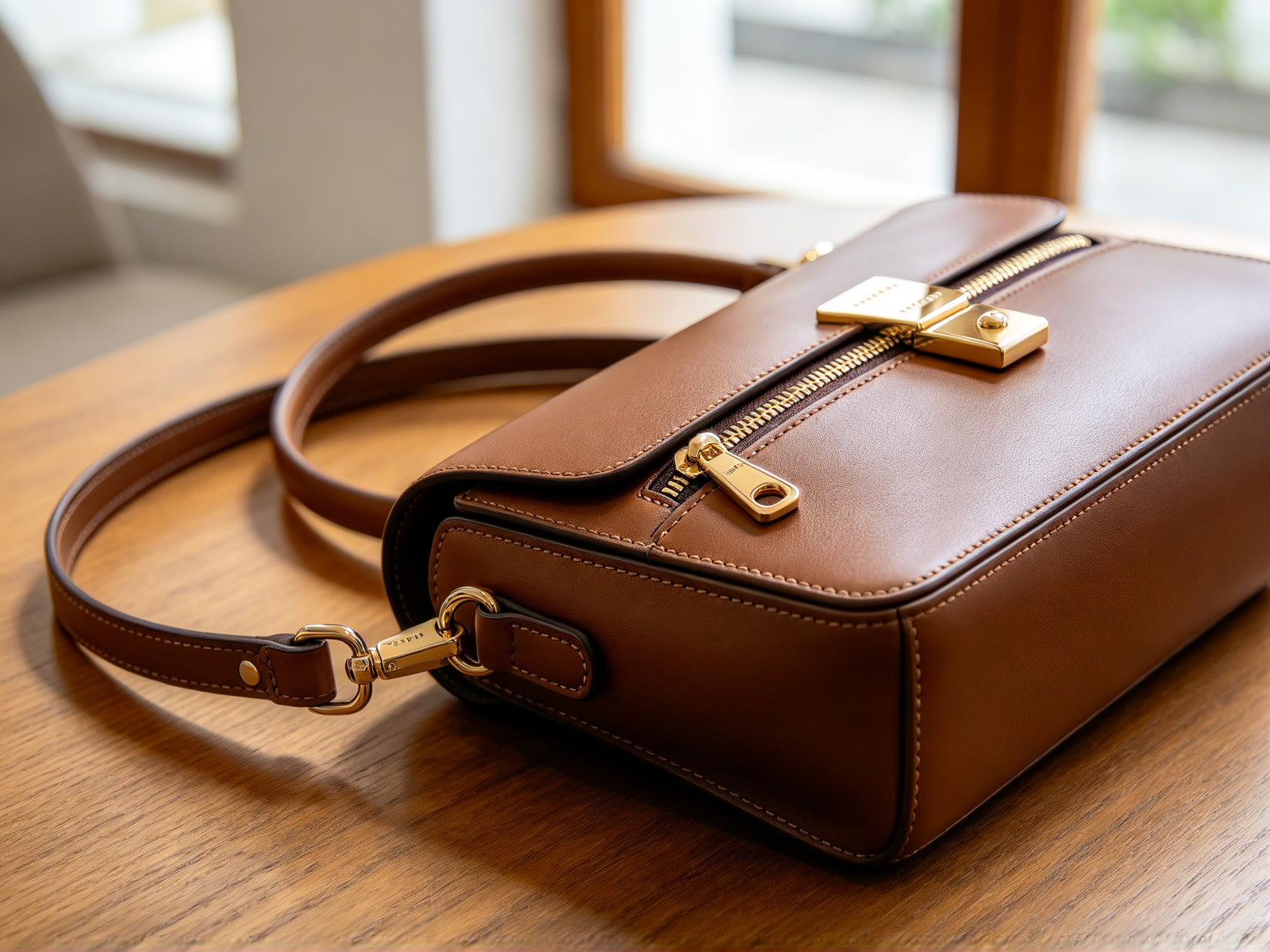
Color is the single most common dispute in bag sourcing. Fabric and leather dye lots vary between production runs, and a color confirmed on a sample made in January may not match a bulk run made in March. Request a color confirmation swatch, define acceptable color difference, and inspect against the approved swatch rather than against photos.
One practical tip: ask the factory to send photos or a video of your actual production order before it is packed, showing the cartons, the color and the workmanship of randomly picked pieces. Factories that refuse this simple request usually have something to hide.
Branding, Customization and Private Label Options
The cheapest form of branding is printing or embossing your logo on a stock bag. Factories charge a small plate or mold fee — typically a few dollars to a few hundred dollars depending on whether it is heat transfer, silk screen, embroidery or a metal mold — and then the logo cost per piece is marginal. Minimums for logo runs usually start around 200 to 500 pieces depending on the factory.
Full OEM production means your design, your materials, your colors and your hardware, produced to your specification. This costs more up front in samples and tooling but gives you a product nobody else sells. A new PU handbag design with custom metal logo plates might require 1,000 to 3,000 pieces to be economical; a modified stock design needs far fewer.
Packaging and labeling are part of branding. Dust bags, hang tags, logo boxes and care cards are cheap in China and transform the perceived value of a bag. Specify them in the order: carton weight limits, inner polybag requirements and any barcode or care-label obligations of your market.
If you plan to sell on Amazon or other marketplaces, decide early whether to register a brand, because brand registry affects listing control and protection. Either way, make sure your logo does not infringe existing trademarks — a logo too close to a famous mark can get your shipment held at customs in many countries.
Design ownership is worth clarifying in writing as well. If a factory develops a new style for you, agree who owns the design and whether the factory may sell it to other buyers. Without a written understanding, “your” exclusive design can appear in another importer’s catalog six months later.
Bulk Order Process, MOQs and Shipping for Bags
The typical flow is: request a quotation with your specification, order a sample, approve or revise, place the bulk order with a deposit, approve pre-production or pre-shipment samples, arrange inspection, pay the balance, and ship. With bags, production lead time is usually two to four weeks for stock items and four to eight weeks for OEM, plus transit time.
Minimum order quantities depend on whether the product is stock or custom. Stock bags can often be bought at 50 to 200 pieces per color; logo runs usually need 200 to 500 pieces; and fully custom designs commonly require 500 to 2,000 pieces depending on tooling. Ask each factory for its tier pricing and let the tiers guide your quantities.
Shipping is dominated by volume rather than weight, because bags are light and bulky. Sea freight LCL (less than container load) is usually the right choice for a few cubic meters, while air courier only makes sense for samples and urgent small batches. A skilled agent can also consolidate your bag order with other goods — the same logic covered in our guide to wholesale clothing sourcing applies to fashion accessories — to share freight costs.
On the compliance side, adult bags face few regulations, but exceptions exist: bags marketed to children must meet children’s product rules such as CPSIA in the US, leather goods sold in the EU must respect REACH chemical restrictions, and California’s Proposition 65 can require warnings for certain hardware and coatings. When in doubt, ask your buying agent or a compliance specialist before the goods are made, not after they arrive.
A final word on payment structure: the standard arrangement on 1688 is a deposit of around 30 percent with the balance due after inspection and before shipment, with platform escrow holding your funds until you confirm receipt. This structure gives you leverage at exactly the two moments that matter — before production starts and after you have seen the finished goods.
Frequently Asked Questions
Is it safe to buy bags wholesale from 1688?
Yes, if you follow the same discipline you would use anywhere: verify the supplier’s business license, buy samples, specify materials in writing, use an escrowed payment path through the platform, and arrange inspection before shipment. Most problems come from skipping these steps, not from the platform itself.
What is the minimum order quantity for bags on 1688?
Stock bags are often available from 50 to 200 pieces per color, printed logo orders usually start around 200 to 500 pieces, and fully custom OEM designs typically require 500 to 2,000 pieces. Yiwu accessory sellers frequently accept even smaller trial orders.
How can I tell if a bag is genuine leather?
Price is the first filter: real leather handbags are rarely sold ex-factory for under 100 RMB. Beyond that, ask for the material composition in writing, check the listing terms (top-grain versus split versus microfiber versus PU), and inspect the sample — genuine leather has natural grain variation, a distinct smell and cut edges that do not show fabric backing.
How much does a PU handbag cost on 1688?
Entry-level PU handbags commonly cost 10 to 40 RMB ex-factory depending on size, hardware and lining, roughly 1.50 to 6 dollars. Microfiber and better-constructed bags run higher, while PVC promotional items can cost less. Your landed cost will add freight, duties and inspection.
Can I put my own logo on bags from 1688?
Yes. Factories offer heat transfer, silk screen, embroidery, embossing and metal logo plates for a small setup fee, with per-piece costs of a few cents. Typical minimums for logo runs are 200 to 500 pieces.
How do I avoid color and quality problems in bulk bag orders?
Approve a physical sample, request a color confirmation swatch before production, define acceptable tolerances in the contract, and book a pre-shipment inspection against an AQL plan. Inspect against the approved sample and swatch, never against photos.
How long does a bag order take from 1688 to delivery?
Stock bags usually take two to four weeks to produce and another one to two weeks of ocean transit within Asia, or four to six weeks to the US or Europe. OEM designs add two to four weeks for sampling and tooling. A realistic first-order timeline is six to ten weeks door to door.
Do bags from 1688 need certifications?
Adult fashion bags generally do not require safety certification. Exceptions include children’s bags under CPSIA rules in the US, REACH restrictions for leather goods sold in the EU, and Proposition 65 warnings in California for certain materials and coatings.