
1688 Beauty and Personal Care Sourcing Guide
Why Source Beauty and Personal Care Products from 1688
Beauty is one of the fastest growing categories for small brands and resellers, and 1688 is where a large share of the world’s cosmetics, skincare and personal care items actually begin. The platform is Alibaba’s domestic wholesale marketplace, which means most suppliers on it are manufacturers or first tier trading companies rather than middlemen. For buyers who want private label options, lower unit costs or simply access to factories that also supply well known brands, 1688 is often the most direct route.
The price gap is the first reason buyers come. A cleanser, serum bottle set or makeup brush bundle that retails for three to five times the factory cost in Western markets can frequently be bought near that factory cost on 1688, especially at wholesale quantities. The second reason is variety: the platform lists hundreds of thousands of beauty SKUs, from everyday bath and body basics to niche tools such as gua sha stones, facial rollers, LED masks and nail art supplies that are hard to source elsewhere at scale. The third reason is customization. Many 1688 factories accept OEM and private label orders with custom packaging, custom formulas and logo printing at minimums far below what comparable factories ask for elsewhere.
However, sourcing beauty products is not like sourcing plastic storage boxes. Cosmetics go on skin, they have expiry dates, they are regulated product categories in almost every country, and ingredient quality varies enormously between factories. The buyers who do well on 1688 are the ones who treat it as a professional sourcing exercise: they verify suppliers, check formulas and documents, order samples, and route orders through a buying agent that inspects before shipping. This guide walks through the entire process so you can source beauty and personal care products from 1688 with your eyes open.
This guide is written for three kinds of buyers. The first is the new brand founder who wants to launch a private label skincare or cosmetics line without paying Western contract manufacturing prices. The second is the established reseller who already sells general goods and wants to add a high margin, repeat purchase category to the catalog. The third is the marketplace seller who needs steady supply of tools, accessories and consumables at prices that survive platform fees. Whichever profile fits you, the sequence in this guide stays the same: research, verify, sample, comply, negotiate, inspect and ship.
Popular Beauty and Personal Care Categories on 1688
1688’s beauty market is organized into several large categories, and each one has its own supplier ecosystem, quality profile and pricing logic. Skincare is the largest segment, covering facial cleansers, toners, serums, moisturizers, sheet masks, eye creams and sunscreens. Guangzhou in particular is a global hub for skincare OEM factories, and many offer ready formulas you can rebrand, plus full private label development if your volume justifies it. Sheet masks deserve special mention: 1688 suppliers sell them by the truckload, with custom sachet printing available at surprisingly low minimums.
Makeup is the second pillar. Foundations, lipsticks, eyeshadow palettes, mascaras and nail polishes are all produced at scale, and the packaging supply chain around them is mature, from magnetic palette cases to airless pumps. Color cosmetics carry more fashion risk because shades fall out of trend quickly, so buyers usually test small runs first. Personal care is the third pillar: shampoo, conditioner, body wash, hand soap, toothpaste and deodorant. These are consumables with repeat purchase behavior, which makes them attractive for subscription boxes and retail refill programs. Bath products such as bath bombs, bath salts and shower steamers are also cheap to produce and have a loyal gift market.
Beauty tools and accessories round out the category. This includes makeup brushes, sponges, eyelash curlers, tweezers, facial rollers, gua sha tools, jade and quartz stones, headbands, LED face masks, ultrasonic skin scrubbers and storage organizers. Hair accessories such as clips, scrunchies and satin pillowcases bridge into this space as well. Tools generally carry lower regulatory burden than leave on cosmetics, which is why many first time importers start here before moving into formulas. Nail supplies, including gel polish, acrylic powders and press on nails, sit between makeup and tools and are one of the fastest moving niches on the platform right now.
How to Find Reliable Beauty Suppliers on 1688
Start with the platform’s built in signals before you contact anyone. Every 1688 supplier page shows the company’s registered business type, years on the platform, transaction volume, and badges such as strength factory, verified manufacturer or depth inspection. A cosmetics factory with a strength factory badge has passed 1688’s on site audit of production capability, while a depth inspection badge means third party inspectors walked the facility. Prefer suppliers that are the actual manufacturer rather than a trading company reselling factory goods, because direct factories give you better pricing, faster customization and a clear chain of custody for your documents.
Then read the listing the way a professional buyer would. Look for complete ingredient lists rather than vague claims, batch numbers and expiry dates in the photos, and evidence of real production such as workshop videos, filling line photos and test reports. Check the return rate, dispute rate and repeat purchase rate shown on the store. A supplier with many transactions but a high dispute rate is a warning sign. Look at how long the store has been operating; factories that have survived five or more years on 1688 have typically kept enough buyers happy to stay solvent.
Finally, run a quick external check. Search the factory’s full Chinese company name to see whether it appears in customs records, trade directories or other export platforms, and cross reference any export registrations it claims. Many serious cosmetics exporters hold ISO 22716 Good Manufacturing Practice certification or a Cosmetic GMP certificate, and those documents can be requested during negotiation. If you are buying from overseas and cannot visit the factory yourself, this is exactly where a reliable buying agent on 1688 earns its fee, because the agent can visit, verify the production line and confirm the business license in person before any money changes hands.
Verifying Product Quality: Formulas, Materials and Production
Quality verification for beauty products happens in layers, and you should not skip any of them. The first layer is documents: request the full ingredient list in INCI format, a Certificate of Analysis for the specific batch you will receive, safety data sheets for any liquid or aerosol products, and stability test or shelf life documentation. Reputable factories supply these as routine paperwork, while suppliers who cannot produce a COA are telling you something about their operation. Compare the INCI list against what is printed on the retail package; mismatches are a red flag for either mislabeling or substitution.
The second layer is the sample. Always order samples before bulk, and not just one unit: order enough to test with real usage over several days, because irritation and stability problems take time to show. Compare the sample against the specification sheet on texture, color, scent, viscosity and packaging quality, and keep one sealed sample as your reference. When the bulk arrives, you or your agent compare it against that reference. The third layer is factory level proof: videos of the filling line, photos of the raw material warehouse, and evidence that production is actually happening in the facility the supplier claims. A 1688 buying agent can perform this kind of pre shipment inspection for you, including a check of the finished goods against your approved sample.
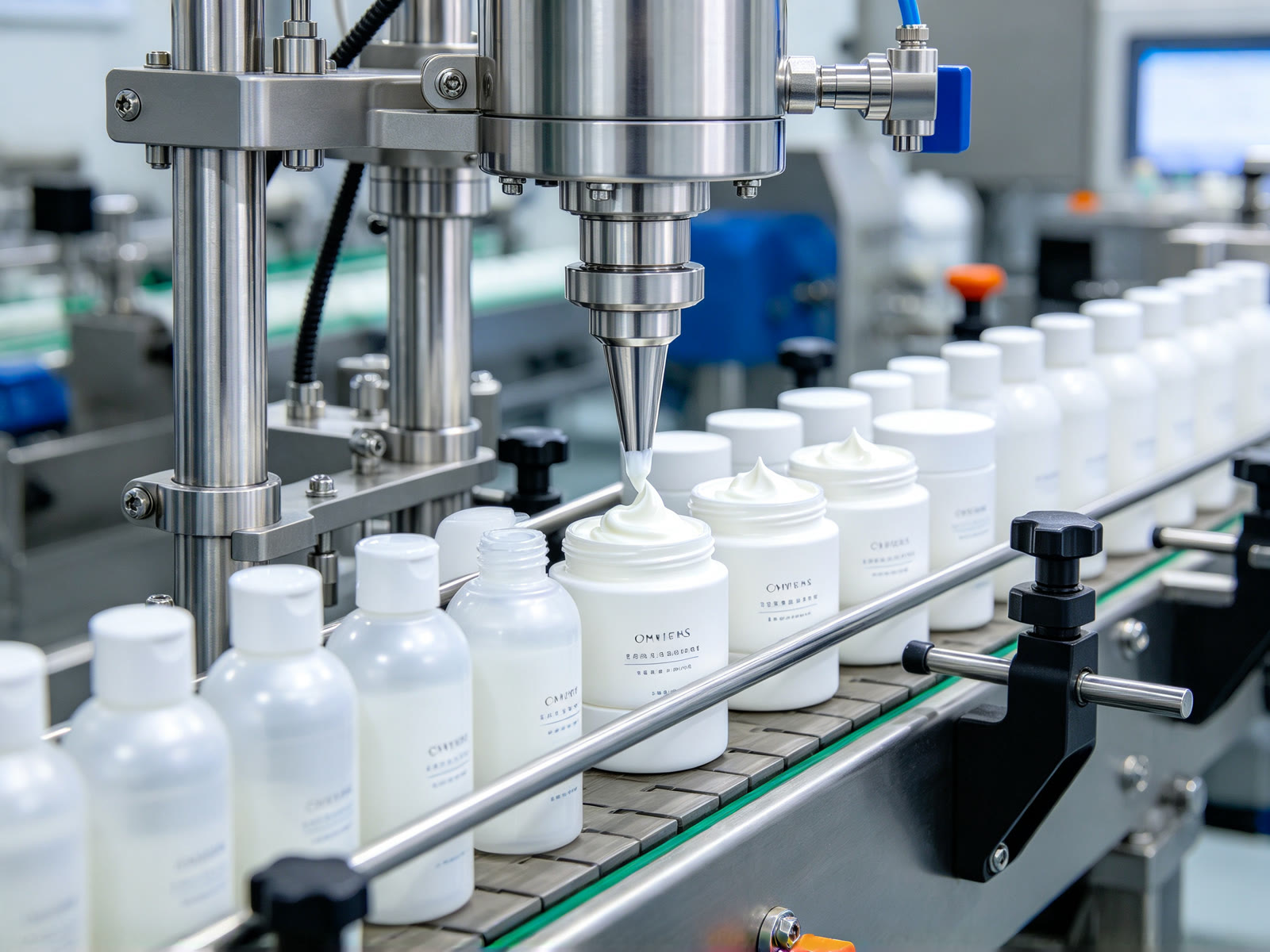
The fourth layer is testing, which matters most for products that stay on skin. For a serious import program you should commission third party lab tests in your destination market, covering microbiology, heavy metals and restricted substances, and you should test again from the actual shipment rather than from the sample. Testing costs money, but it is a fraction of what a recall or a rejected customs entry costs. Beauty products also degrade, so confirm storage and transport conditions with your freight forwarder: many formulas must not freeze, overheat or sit in direct sun inside a container, and that constraint affects which shipping route you choose.
Beauty Regulations and Compliance You Must Know
Compliance is where beauty sourcing gets serious, because cosmetics are a regulated category in every major market and the importer, not the factory, usually carries the legal responsibility. In the United States, cosmetics and personal care products fall under the FDA and, since the Modernization of Cosmetics Regulation Act, facilities and products must be registered, with labeling rules, adverse event reporting and safety substantiation requirements. Your 1688 factory is not responsible for your MoCRA registration; you are. Factor in product listing, label compliance with INCI names and English labeling before you commit to a formula.
The European Union and the United Kingdom run similar but separate regimes. EU cosmetics must comply with Regulation EC 1223/2009: every product needs a Responsible Person established in the EU, a product information file, a safety assessment, notification in the CPNP portal and labels in the language of each member state. The UK mirrors this through the SCPN system and UK Responsible Person. Australia and New Zealand require notification through the respective regulator for certain product types, and many Gulf and Southeast Asian markets have their own registration schemes. If you plan to sell a 1688 sourced beauty product across borders, map the compliance budget for every target market before ordering packaging, because labels are printed per market.
Two more practical points. First, restricted and banned ingredients differ by market: preservatives, UV filters, colorants and fragrance allergens all have country specific limits, and a formula that is fine in China may be non compliant in the EU or US. Second, several markets have animal testing restrictions, and claims such as organic, hypoallergenic, SPF or anti aging are regulated statements you must be able to substantiate. When in doubt, buy a finished formula the factory already exports to your target region, because that formula has usually already cleared the market’s requirements and the paperwork exists.
Pricing, MOQs and Samples for Beauty Products
Beauty pricing on 1688 follows a simple rule: the price you see is a starting offer for the listed minimum order quantity, and it almost always improves as quantity rises. Entry level MOQs vary by product type. Ready made skincare items might start at a few hundred pieces, makeup can start around 500 to 1,000 pieces depending on the item, tools and accessories often start at 100 to 300, and private label with custom packaging typically starts at 1,000 to 3,000 pieces per SKU. Custom formulation with your own base formula raises the minimum again, usually into the several thousand piece range, because the factory has to cover development and dedicated production time.
Samples usually cost more per unit than the bulk price, and that is normal; a sample is a one off with handling and packaging costs. Expect to pay the sample fee plus domestic shipping to your agent’s warehouse, and treat the sample fee as a filter: serious buyers pay it, window shoppers argue about it. When you negotiate, bundle your requests: better unit price, a lower MOQ on the first order, free sample credit against the bulk order, and faster lead time. Do not ask for everything at once in the first message; build the relationship first, then negotiate on the second or third exchange.
Remember that the unit price is not your landed cost. Add domestic shipping to the consolidation warehouse, export carton costs, your agent’s fee, international freight, duties and taxes, and compliance costs such as testing and registration. For low value beauty tools, freight can be the largest single cost line. A good habit is to build a simple landed cost spreadsheet before you order and update it with real quotes, because the difference between factory price and landed price is where inexperienced importers lose money.
Payment terms for beauty orders follow the same pattern as the rest of 1688. First orders from a new supplier usually carry a deposit of 30 to 50 percent with the balance due before dispatch, while repeat orders from a supplier you trust can often move to friendlier terms. Keep the deposit proportionate to the order size, always route payment through traceable channels rather than private transfers, and tie the balance payment to a pre shipment inspection report with photos. If a supplier demands full payment upfront for a first order, treat that as a reason to slow down rather than a reason to say yes.
How a 1688 Buying Agent Improves Beauty Sourcing
A buying agent changes the risk profile of the whole exercise, and for beauty products the change is bigger than for most other categories. The agent can visit the factory to confirm it is real, verify the business license and production capability, and check that the filling line and clean areas match what the supplier claims. That single visit eliminates a large share of the scam risk that exists when you buy from abroad. The agent also negotiates in Chinese, which matters because nuances about formulas, packaging tolerances and delivery dates are easy to lose in machine translated chat.
The agent’s second job is quality control on the physical goods. Before shipment, the agent can open cartons, compare the batch against your approved reference sample, check packaging print quality, weigh and count units, and photograph everything for you. Catching a substitution or a printing error in Guangzhou costs a rework; catching it after the goods arrive in your country costs a return shipment or a destroyed container. The third job is logistics: consolidating orders from several 1688 suppliers into one shipment, arranging export cartons, preparing documents and booking freight, which is exactly the moving parts where beauty orders go wrong because of liquids, batteries and temperature constraints.
Fees for buying agents are usually structured as a percentage of order value or a fixed service fee, and for a category as compliance heavy and as fraud prone as cosmetics, the fee is typically the cheapest insurance you will buy this quarter. The same agent can also hold a stock buffer for reorders, so your second order can ship in days instead of weeks, which is how small beauty brands keep inventory flowing without tying up huge capital.
Your 1688 Beauty Sourcing Checklist
Here is the sequence we recommend, in order. First, define the product: formula type, packaging, target retail price and target market, because every downstream decision depends on these four things. Second, shortlist five to eight suppliers on 1688 using the verification signals described above, and request the same specification and document set from each so you can compare like for like. Third, order samples from your top two or three and test them properly, keeping a sealed reference of the winner. Fourth, lock in compliance: confirm the formula’s status for your market, the INCI labeling, testing requirements and registration steps, and put the responsibilities in writing with your supplier.
Fifth, negotiate the order: quantity, price, MOQ, lead time, packaging and payment terms, and record everything in the contract. Sixth, engage a buying agent for factory verification and pre shipment inspection, and have the agent consolidate and ship. Seventh, receive and quarantine: open the shipment, compare against your reference sample, run your own tests if required, and only then release stock for sale. Finally, keep records of every batch, document and conversation, because if a regulator asks questions six months from now, the answer needs to be in your files, not in your memory.
Is it safe to buy beauty products from 1688?
1688 itself is a legitimate platform, but safety depends on which supplier you choose and how you verify them. Thousands of buyers source cosmetics there successfully every year, while others get burned by factories that substitute ingredients or mislabel products. Your protection comes from the process, not the platform: check business licenses and badges, demand documents, test samples, inspect before shipping through an agent, and never send large deposits to an unverified supplier.
What is the typical MOQ for beauty products on 1688?
It varies widely by product type. Beauty tools and accessories often start between 100 and 300 pieces, ready made skincare and makeup typically start at a few hundred to a thousand pieces, and private label with custom packaging usually starts around 1,000 to 3,000 pieces per SKU. Custom formulated products go higher still. Many suppliers will reduce the MOQ on a first trial order if you accept a slightly higher unit price, so it is always worth asking.
Can I sell 1688 beauty products under my own brand?
Yes, and private label is one of the main reasons buyers come to 1688. Many factories offer white label or OEM services where you pick a ready formula and add your logo, packaging and label design, with the factory handling production. Full custom formulation is also available at higher minimums. Just remember that your brand carries the compliance obligations in your market: registration, safety assessment, labeling and claims substantiation are yours to arrange regardless of who manufactures the product.
Which documents should I request from a beauty supplier?
Request the complete INCI ingredient list, a Certificate of Analysis for your batch, safety data sheets for liquid or aerosol items, stability and shelf life documentation, and the factory’s business license and production qualifications such as ISO 22716 or Cosmetic GMP certificates. If the product already exports to your target region, ask for the existing compliance documents, such as EU CPNP notification or FDA registration records, because reusing them saves time and money.
How do I ship beauty products internationally?
Most buyers ship consolidated orders by sea freight for cost efficiency, or by air when the order is small or urgent. Beauty adds two complications: liquids and gels face carrier restrictions, and some formulas are temperature sensitive, so the container or pallet must be protected from freezing or overheating. A buying agent that handles consolidation can classify the goods correctly, prepare the export documents and pick a route that keeps the product stable in transit.
Can a buying agent inspect beauty products before shipping?
Yes, and this is one of the most valuable services an agent provides. The agent can open cartons, compare the finished goods against your approved reference sample, check packaging print and batch codes, count and weigh units, and photograph everything before the goods leave China. Pre shipment inspection catches substitutions and quality problems while they are still cheap to fix, which is especially valuable for cosmetics because returns and recalls are expensive.
How long does it take from order to delivery?
Count backwards from your need by date. Ready stock usually ships within a few days, while production orders take two to six weeks depending on the product and factory schedule. Sea freight to the US, EU or Australia adds roughly four to six weeks including consolidation and customs, and air freight adds days instead but costs more. A realistic end to end timeline for a first production order is eight to twelve weeks, so start early and build in buffer for inspection and customs.