
How to Find a Reliable Buying Agent on 1688
Every horror story about sourcing from China has the same shape: a seller wired money to someone they met through a chat window, the goods never matched the photos, and the person on the other end stopped replying. None of that is caused by 1688 itself. It is caused by picking the wrong intermediary. The right 1688 buying agent saves you money, catches defective goods before they leave China, and argues with suppliers so you never have to. The wrong one is just another middleman with a nicer logo. This guide explains where reliable agents are found, how to vet them with a real checklist, what questions to ask before you send money, which red flags should end a conversation, and how to prove an agent with a small trial order before you trust them with real volume.
Why the Agent You Pick Decides How Your Order Goes
A buying agent is not a courier. They sit between you and the supplier on every decision that matters: which factory to trust, what price you pay, whether your goods are inspected, how they are packed, and how disputes get resolved. A strong agent negotiates 10 to 20 percent off the sticker price, verifies the supplier’s license, photographs every item before it ships, and wins refunds when something goes wrong. A weak agent copies and pastes supplier quotes, forwards parcels without opening them, and vanishes the moment a problem needs their attention.
The stakes compound with order size. A 300 dollar sample order can survive a mediocre agent. A 15,000 dollar production run cannot. By the time you are ordering real volume, the agent is effectively your procurement department, your quality control team, and your warehouse manager in one. If they are lazy, you pay twice: once for their fee and again for the defects, delays, and reorders their laziness produces.
This is why finding a reliable agent deserves more time than finding the product. The product can be swapped in an afternoon. An agent you have trained, who knows your standards and your suppliers, takes months to replace without damaging your supply chain. Treat the search as a hiring process, because that is exactly what it is.
Where Reliable 1688 Buying Agents Are Found
Reliable agents cluster in a handful of predictable places, and knowing where to look saves you weeks of sifting through junk.
The most common starting point is Google. Searching for 1688 buying agent, China sourcing agent, or buying agent China will surface both the established agencies and plenty of one-person operations with a rented logo. Search results are a starting point, not a recommendation, and everything from this section must still pass the vetting checklist below.
Trade forums and seller communities are usually more useful than search engines. Subreddits like r/dropship, r/AmazonFBA, and r/sourcing, along with Shopify and ecommerce Facebook groups, are full of threads where sellers name the agents they actually use, describe what went wrong, and warn others off the disasters. A referral from a seller with your order profile, even a stranger, is worth more than ten sponsored listings. Ask in those communities for agents with experience in your specific category, because an agent who excels at textiles is not automatically good at electronics.
Agent directories and sourcing marketplaces are another channel, though they require more filtering. Some platforms list verified sourcing companies with customer ratings, response-time metrics, and escrow payment options, which removes the most dangerous failure mode of all: paying an unverified stranger directly. Treat directory badges as hygiene factors rather than endorsements, and still run the full checklist, but a platform that holds funds in escrow until inspection is a meaningful safety net for a first order with a new agent.
WeChat and industry networks inside China are where the agents themselves live. If you already have any business contact in China, ask for introductions. Agents recommended by factories, freight forwarders, or other agents carry a reputation risk for the referrer, which makes those referrals more trustworthy than cold outreach. In Chinese sourcing circles, reputation travels fast in both directions, so an introduction from inside the industry is worth more than any advertisement.
Trade shows are the gold standard if you can reach one. At the Canton Fair or the smaller regional fairs, sourcing companies exhibit openly, hand over business licenses, and sit down for a face-to-face conversation. The cost of the trip is real, but meeting three agents in a day and seeing how they present themselves tells you more than a month of emails.
One caution: the agent industry is full of resellers who market themselves as agents but simply forward your requests to another company and mark up the price. Any agent whose website is vague about their physical location, team, or fee structure deserves extra scrutiny. A real agent can show you their office and their warehouse in ten minutes over a video call.
The 12-Point Vetting Checklist
Run every candidate through this checklist before money moves. A reliable agent clears at least ten of the twelve points without hesitation.
Point one: registered company. The agent should provide their Chinese business license, known as a 营业执照, which you can cross-check on Chinese company registry platforms. If they cannot show a license, they are not a company, they are a person with a chat account.
Point two: operating history. Ask how many years the company has existed and how many years of sourcing experience the founders have. Two years of stability is a reasonable minimum for anyone handling your money.
Point three: physical location. The agent should state their city and street address, and be willing to prove it with a video call from the office. Guangzhou, Yiwu, and Shenzhen are the classic agent hubs because the supplier density is highest there.
Point four: references. Ask for two or three clients you can contact. The best agents volunteer references in your category without being pushed. If no client will speak to you, that is an answer in itself.
Point five: verifiable reviews. Check Trustpilot, Google reviews, and forum mentions. Look specifically for reviews that describe a full order cycle, not five-star one-liners. A pattern of complaints about the same issue, even among good reviews, tells you where the agent is weak.
Point six: team structure. A real agent has roles: a sales or account manager for you, a sourcing staff for suppliers, QC staff for inspections, and warehouse staff for consolidation. A one-person show cannot do all of that well, no matter how responsive they are on chat.
Point seven: communication. During vetting, measure their English, their response time, and whether they answer the question you asked. An agent who takes two days and replies in broken fragments during sales will be worse after you have paid. Time zones are real, but a professional serving overseas clients manages them with defined response windows, not silence.
Point eight: payment methods. They should accept bank transfer, PayPal, or escrow-style services. Western Union, crypto-only, or personal accounts are instant disqualifiers because they offer no traceability or dispute protection.
Point nine: fee structure in writing. The agent should send their fee schedule, including any monthly charges, minimums, and inspection costs, without being asked twice. Vague pricing now means surprise invoices later.
Point ten: warehouse and QC process. Ask for photos or a video tour of their warehouse and a sample QC report format. A serious agent has a standard inspection checklist and can show you what a report looks like before your first order.
Point eleven: contract. The agent should be willing to sign a service agreement covering scope, fees, liability for defects, and confidentiality. The absence of any paperwork is a risk you should not accept for orders beyond sample size.
Point twelve: trial order policy. The agent should actively suggest a small test order before a big one. A good agent wants to earn your volume; a bad one wants your biggest order on day one.
Questions to Ask Before You Send a Cent
Checklists filter out the obvious frauds, but questions separate competent agents from excellent ones. These are the ones that matter, along with what a strong answer sounds like.
Ask: which supplier would you choose for my product and why? A strong agent names two or three candidate factories, explains the trade-offs between them, and mentions suppliers they refuse to use. An agent who says “we will find someone after you pay” has no sourcing depth.
Ask: who owns the supplier relationships and the order accounts? The best answer is that orders are placed in your name, or at minimum that the agent will show you supplier quotes, invoices, and correspondence on request. An agent who hides supplier identity is usually protecting their markup, not you.
Ask: what happens when goods arrive defective? The answer should be specific: inspection before shipment, photographic evidence, the claim process, and who bears the cost when the supplier refuses a refund. If the agent’s liability ends the moment the goods leave China, you are carrying all the risk.
Ask: what are your fees, and where do you make money besides the service fee? Every agent earns something. The honest ones tell you where, whether it is a percentage, a fixed fee, supplier commissions, or freight margin. The dishonest ones answer “just a small service fee” while quietly doubling the freight bill.
Ask: how do you report progress? A professional agent commits to a reporting rhythm: order confirmation within 24 hours, inspection reports with photos before shipment, and weekly status summaries on large orders. Anyone who promises no reporting is promising you will fly blind.
Ask: what happens if the factory closes before delivery? This is the worst-case scenario question, and the answer reveals their real policy. A good agent has a process: deposit recovery, alternative supplier sourcing, and cost sharing rules agreed in advance, in writing.
Red Flags That Should End the Conversation
Some warning signs are subtle, but most are not. Here are the ones that should make you walk away, in order of severity.
Refusing a video call is the biggest one. If the agent will not show their face, their office, or their warehouse on camera, you have no idea who you are paying. There is no legitimate reason for an agent serving overseas clients to refuse a five-minute call.
Pressure tactics come second. “This price is only valid today,” “another client wants the same stock,” “pay the deposit now or the factory moves on.” Legitimate agents do not need manufactured urgency, because their value is in the relationship, not the rush. Pressure is how scammers prevent you from doing exactly what you are doing right now: thinking.
Unexplained discounts are a classic. A quote 40 percent below every other candidate is not a great deal; it is bait. Either the goods will not match the sample, or the price will be “corrected” once the deposit is paid and the supplier has you locked in.
Western Union, crypto, or payments to personal accounts should end things instantly. There is no recovery, no dispute process, and no paper trail. A registered company that cannot take a business payment is not a registered company.
Refusing references or a contract, or getting evasive about their license, means they have something to hide. Maybe the company does not exist, maybe past clients have complaints, or maybe they plan to be gone by the time your goods arrive. Any of those is disqualifying.
Finally, watch for the “factory” disguise. Some trading companies claim to own a factory to justify higher prices or exclusivity. Ask for the factory’s license, address, and a factory-floor video call, and cross-check the factory name against the supplier listings. A trading company that lies about being a factory will lie about everything else.
Proving It with a Small Trial Order
No amount of questioning replaces a live test, and the trial order is the cheapest insurance you will ever buy in this business. Start with a small order, typically 200 to 500 dollars, of exactly the product you plan to scale. Do not test the agent with a product you will never sell; test the real thing.
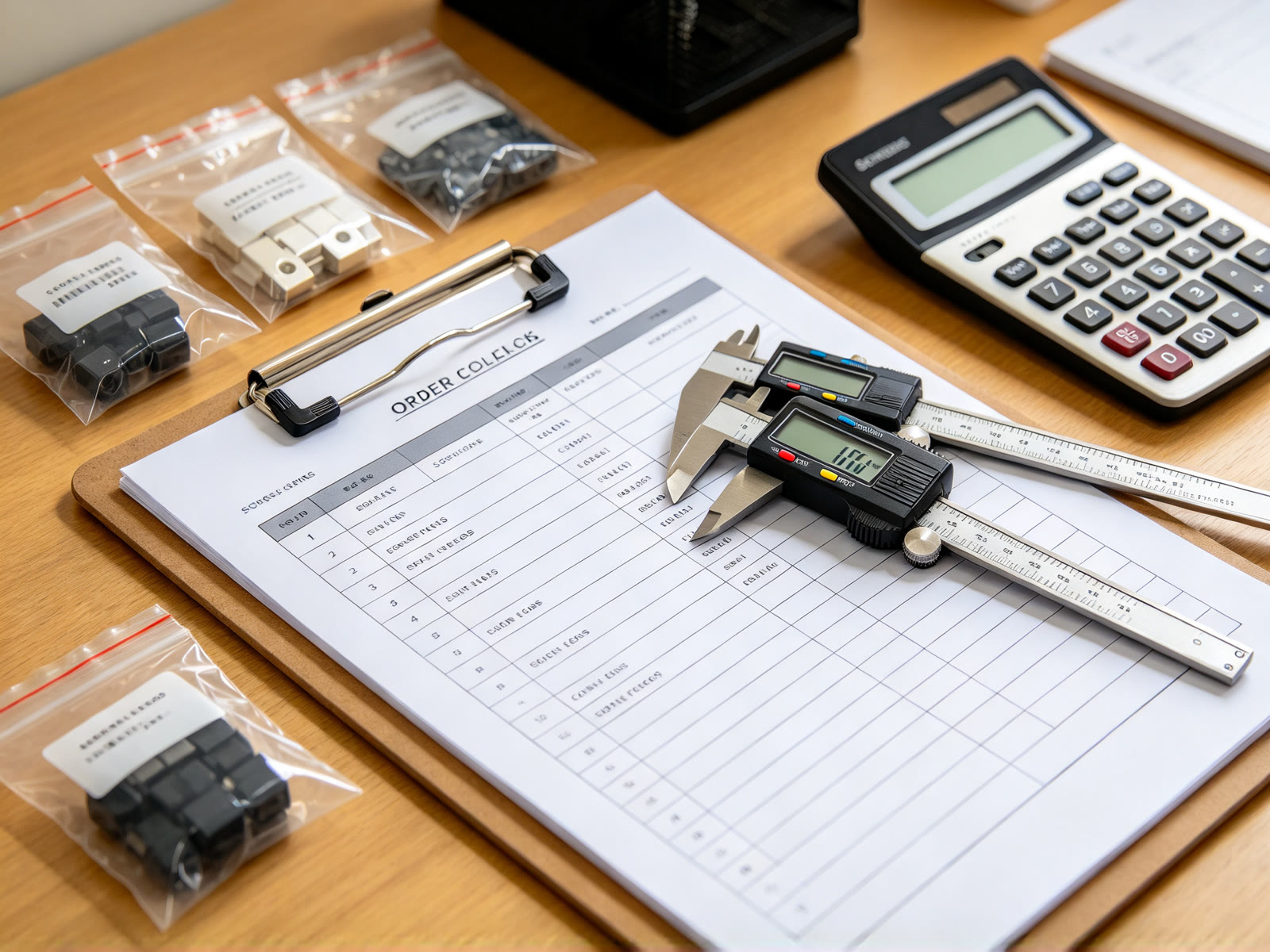
During the trial, measure five things. First, communication: do they confirm receipt of your request the same day, and do they volunteer updates rather than waiting to be chased? Second, sourcing quality: do they present multiple supplier options with real quotes, or one option with no alternatives? Third, negotiation: do they push the supplier on price, minimums, or lead time, and do they show you the before and after? Fourth, inspection: does the QC report arrive before payment of the balance, with photos of your actual goods, and does it catch anything? Fifth, accuracy: does the final invoice match the quote, and does the shipment arrive on the promised timeline?
Run two or three trial orders before committing volume, and make at least one of them deliberately awkward. Ask for a small customization, request a packing change, or question an inspection result and see how they handle friction. How an agent behaves when things go slightly wrong predicts how they will behave when things go badly wrong.
Also test the escalation path. Mid-trial, ask the agent to negotiate a better price on the same product after the first sample arrives. A good agent comes back with a small concession and an explanation. An agent who refuses outright, or agrees instantly with no supplier discussion, is telling you something important about their relationship with both you and the supplier.
Contracts, Fees and What Must Be in Writing
Once an agent passes the checklist and the trial orders, formalize the relationship. The agreement does not need to be thirty pages, but it must cover the things that actually go wrong in practice, and it should mirror what we covered in our guide to what belongs in a China buying agent contract.
Scope of service goes first: sourcing, negotiation, payment handling, inspection, consolidation, shipping, and after-sales, each with a sentence on what is included and what costs extra. Fees come next: the service fee percentage or fixed rate, any monthly charges, inspection fees, storage fees, and the currency and exchange rate used for settlement. Payment milestones matter especially: a typical structure is 30 percent deposit to the supplier, balance after inspection, with your agent fee settled separately, but whatever you agree must be written down.
Liability is the section most agents leave out on purpose. Define what happens with defective goods discovered after arrival, who pays return shipping, the claim process against the supplier, and the agent’s compensation if a supplier fails to deliver. Without this, your 15,000 dollar order is a handshake and a prayer.
Add confidentiality and IP terms if your products are custom or branded, so your designs do not appear in another client’s catalog, and agree on termination: how either side exits, what happens to goods in transit, and how outstanding payments settle. An agent who happily signs all of this is signaling exactly what you want: they intend to be around long enough for the contract to matter.
Frequently Asked Questions
Is it safe to use a 1688 buying agent?
Yes, when the agent is properly vetted. Request their business license, verify references, start with a small trial order, and pay through traceable channels such as bank transfer, PayPal, or escrow. The risk concentrates in unvetted individuals asking for untraceable payments, which the checklist in this guide is designed to filter out.
How much do 1688 buying agents charge?
Common structures are 5 to 10 percent of the product value, a fixed fee per order, or a monthly retainer for large accounts, sometimes combined with freight margins. The agent should disclose every revenue source in writing before you start, and the cheapest fee is rarely the cheapest total cost once quality and negotiation are counted.
Can I find a reliable buying agent without visiting China?
Yes. Most overseas sellers vet agents entirely remotely using the process here: license verification, references, video calls, and trial orders. A video walkthrough of the office and warehouse substitutes for an in-person visit in all but the largest accounts.
What documents should a buying agent show me?
A registered agent should show their Chinese business license, a copy of their service agreement, their fee schedule, a sample QC report format, and references you can contact. For larger orders they should also share supplier quotes and invoices rather than hiding the underlying prices.
How do I test a new buying agent?
Run a 200 to 500 dollar trial order on a real product and score the agent on communication speed, sourcing options, negotiation effort, inspection reporting, and billing accuracy. Repeat two or three times, and include one deliberately awkward request to see how they handle friction before you scale up.
Do buying agents work with Alibaba too?
Most do. Agents built their supplier networks across 1688 and Alibaba, and many also buy from Taobao or directly from factories. If your product only exists on Alibaba, ask the agent whether they work there and what their supplier verification looks like on that platform.
What if my buying agent disappears with my money?
Traceable payment methods and milestone payments keep your exposure low: never pay the full order value upfront, and prefer services with dispute mechanisms. If an agent does disappear, the supplier contract, invoices, and payment records are your evidence for the payment provider or legal action in China.
How do I switch agents if mine underperforms?
Transfer the supplier contacts and open orders first: request copies of supplier agreements, pending order statuses, and goods in the warehouse, then run a small parallel trial with the new agent before routing new orders. A professional handover clause in your contract makes this far easier, which is worth negotiating at the start.
Finding a reliable 1688 buying agent is a process, not a Google search: check the license, talk to references, ask the uncomfortable questions, and prove everything with a trial order before you scale. Done properly, the agent you choose becomes the quiet advantage behind your margins, your quality, and your peace of mind. If you are ready to start the conversation, cnb2bgo provides vetted, transparent 1688 sourcing for overseas buyers, from supplier verification to final delivery.