
Taobao vs 1688: Which to Source From Through an Agent?
Most overseas buyers who start sourcing in China hit the same fork in the road: 1688 or Taobao? Both platforms belong to Alibaba Group, both list millions of products, and both are awkward to buy from directly if you do not have a Chinese payment method and a Chinese delivery address. Yet they are built for completely different buyers, and picking the wrong one for your situation adds cost, slows down orders and breeds disputes. This guide compares Taobao vs 1688 across pricing, minimum order quantities, product range, buyer protection, shipping and the role of a buying agent, so you can decide which platform your next order belongs on.
The short version: 1688 is a wholesale marketplace where factories and wholesalers sell to resellers in volume, while Taobao is a consumer marketplace where sellers ship single items at retail. That one difference drives almost everything else, from tiered prices and MOQs to dispute rules and the kind of agent you need.
The longer version matters more, because the two platforms overlap far more than first-time buyers expect. Plenty of suppliers operate stores on both, some product categories only really exist on one, and a growing share of buyers use both at once: testing ideas on Taobao, then scaling production orders on 1688. By the end of this guide you will know exactly which platform to open first for your order size, your category and your budget.
What 1688 and Taobao Are, and How They Differ
1688 launched in 1999 as Alibaba’s domestic wholesale platform, and it remains the factory gate of Chinese ecommerce. The site connects mainland factories, trading companies and wholesalers with resellers: ecommerce sellers, shop owners, importers and exporters. Listings are written for trade buyers. Prices sit in tier tables by quantity, minimum order quantities are normal, and product pages are full of material specs, carton sizes and per-kilogram freight notes. The interface is Chinese-only, and buyers are assumed to know trade terms like wholesale lots and mixed batches. Sellers commonly advertise three working modes on their store pages: wholesale, mixed wholesale, where you combine several styles to reach one minimum, and one-piece dropshipping, where the supplier ships single units to your customer at a higher per-unit price.
Taobao, launched in 2003, is a consumer marketplace in the purest sense. Millions of individual sellers and brand stores list finished products, and the site is optimized around retail behavior: product photos, live-stream selling, coupons, flash sales, buyer reviews and fast dispatch. You buy one unit at a retail price, and the seller handles consumer-grade packaging and after-sales service. Categories such as fashion, accessories, cosmetics, gadgets and home decor are exceptionally deep on Taobao, and the best-seller rankings double as a free market research feed.
The core difference between the two platforms is wholesale versus retail. A 1688 seller earns margin on volume, so the per-unit price drops as quantity rises. A Taobao seller earns margin on each individual sale, so the price includes marketing, photography, packaging and single-order handling. The same factory frequently runs both a 1688 wholesale store and a Taobao retail store, and the 1688 unit price for the identical product is routinely 30 to 60 percent below the Taobao price at volume. One seller, one product, two business models.
The second difference is the assumed audience, and it shapes everything from product descriptions to dispute outcomes. 1688 assumes you are a business buyer with trade knowledge who will inspect goods and negotiate terms. Taobao assumes you are a consumer who needs convenience, protection and easy returns. Keep that in mind whenever something about a listing or a seller’s attitude feels odd: you are being treated as the buyer the platform expects.
Taobao vs 1688 Pricing: Unit Prices and Tier Discounts
On 1688, price is a function of quantity. Most listings show a tier table rather than a single price. A silicone kitchen mat might be listed at 6.8 yuan for 2 to 99 pieces, 5.2 yuan for 100 to 999 pieces and 4.1 yuan for 1,000 pieces or more. Many factories mark their prices as negotiable, and experienced buyers routinely trim another 5 to 15 percent through chat negotiation, especially when they order above a tier boundary or commit to repeat purchases. Because you are often dealing with the factory itself rather than a chain of distributors, 1688 prices are about as close to manufacturing cost as you can get online.
That headline price is not the landed cost, though. Domestic freight within China is usually charged separately, anywhere from 8 to 30 yuan per carton depending on distance and weight, and some sellers add a small packing fee. If you need a VAT invoice for bookkeeping or import purposes, that usually costs extra percentage points on top of the trade price. Budget for these add-ons before you compare platforms.
Taobao prices are simpler and higher. You see one retail price per item, which already includes packaging and single-order handling, and domestic shipping is frequently free. Promotions like Double 11 in November and the 618 festival in June, plus seller coupons and bundle deals, can cut retail prices sharply for a few days. For a single unit, or a handful of units, Taobao is frequently the cheaper option in absolute terms, because a 1688 seller asked to ship one piece will either refuse or quote a steep single-lot price anyway.
A real-world comparison makes the tradeoff concrete. A basic silicone phone case might cost 13.9 yuan for one unit on Taobao, while the same case sits on 1688 at 2.8 yuan per piece in lots of 100. The reseller buying 100 units pays 280 yuan on 1688 versus 1,390 yuan on Taobao, a difference that becomes gross margin. The individual buying one case is better off on Taobao. The platform choice is really an order-size choice, and pricing is where that shows up first.
For resellers, the margin math is worth doing on every SKU before you commit. Take the 1688 tier price, add domestic freight to the agent’s warehouse, the agent’s fee, and the international freight per unit, then compare that landed cost against the Taobao retail price and your target sale price. If the landed wholesale unit cost does not sit at least 40 to 50 percent below your retail price, the product is marginal as an import. This single calculation, repeated across the 1688 and Taobao listings for the same item, settles more sourcing debates than any platform comparison article ever will.
MOQs, Samples and Order Flexibility Compared
Minimum order quantities are the default on 1688. Depending on the category, a supplier may set a minimum of 2 pieces, 10 pieces, 100 pieces or a full carton. Apparel sellers often ask for 5 to 10 pieces per color and size, hardware and component sellers may want 100 or 500, and many shops let you mix colors and styles in a mixed wholesale lot so you can reach the minimum without buying deep on a single SKU. Some listings support one-piece dropshipping, but the per-unit price rises noticeably to compensate the seller for single-order handling.
Samples work differently on each platform. On 1688, factories expect sample requests and usually sell paid samples at a premium over the bulk price, with the understanding that sample fees are deducted or refunded against your main order. A sample on 1688 is a preview of what that factory produces, which makes it the correct way to validate a supplier before a 500-unit commitment. On Taobao, the single unit you buy is a sample in practice, but it validates a retail listing rather than a factory: the shop may resell stock bought from an unknown upstream source, so the unit you receive tells you little about what a future 500-unit wholesale order would look like.
Order flexibility also tilts differently. Taobao sellers dispatch from ready stock within 24 to 48 hours and accept returns under the platform’s consumer rules, which makes it ideal for quick tests. 1688 sellers may need a few days to produce or pack after payment, and change-of-mind returns are not part of the deal, quality defects are the standard grounds. If your goal is to touch a product before committing, buy the Taobao unit this week and order the 1688 sample the same day; the Taobao unit gets you a fast first look, and the 1688 sample gets you the factory’s actual output.
Product Range: Where Each Platform Wins
1688 is strongest where manufacturing depth matters. Industrial components, hardware, fasteners, tools, packaging materials, textiles by the roll or meter, factory-direct furniture, unbranded electronics, and custom or OEM goods all live naturally on 1688, because the sellers are the producers or their direct wholesalers. If your business needs components, blank products to brand, or raw materials, 1688 is where the supply actually is.
Taobao is strongest where finished consumer goods and retail trends matter. Fashion, accessories, cosmetics, gadgets, hobby supplies, stationery and home decor one-offs are deep, fresh and competitively priced, and the platform’s best-seller rankings show you what Chinese consumers are buying this week, which is valuable free market research for sellers in other countries.
There is plenty of overlap. Phone accessories, storage boxes, kitchen gadgets and simple textiles exist on both, and the right platform is decided by order size rather than category. A practical workflow many buyers converge on: browse Taobao best-seller lists to spot what is trending, find the manufacturing version of the winning product on 1688 using image search, verify the factory with a paid sample, then buy volume at wholesale. One caution: branded goods on Taobao can be grey-market items, while on 1688 unbranded versions of popular styles are the norm and are openly labeled as such.
The image-search loop deserves emphasis because it is the fastest path from a Taobao trend to a 1688 factory. Save the main photo from a trending Taobao listing, upload it into 1688’s search box, and the platform returns near-identical products from wholesale sellers, most of them unbranded and priced by tier. Repeat the search with the supplier’s own photos once you find the first match, and you will usually work your way from the retail reseller down to the factory store in two or three hops. Each hop closer to the source typically lowers the tier price, which is exactly the arbitrage a buying agent can lock in for you.
Payments, Buyer Protection and Disputes
Both platforms run on Alipay escrow. Your money sits with the platform until you confirm receipt of the goods, which gives every buyer a baseline of protection. What differs is how far that protection goes once a problem appears.
Taobao leans heavily toward the buyer. Most categories carry a seven-day no-reason return right, trusted accounts get instant refunds on many claims, and arbitration generally favors the consumer. Taobao sellers know this and behave accordingly, which is one reason retail service on the platform is genuinely good.
1688 protection is built for trade. Listings carry structured assurances such as compensation for damaged goods, penalties for late dispatch and guarantees tied to verified business memberships. Sellers with long-standing verified business status, known as Chengxintong membership, and those awarded the strength merchant badge have passed platform identity checks and pay deposits, which raises the cost of running a bad store. Dispute rules, however, assume a business buyer: claims are evidence-driven, so photos, videos and a written specification decide outcomes, and change-of-mind returns are not protected.
For overseas buyers there is a bigger problem: neither platform natively accepts foreign cards at scale, neither delivers outside mainland China, and the dispute systems are Chinese-only. This is precisely why overseas buyers route through a buying agent. The agent pays suppliers in RMB on your behalf, receives goods at a mainland address, documents what arrives, and files disputes in Chinese with proper evidence. An agent who photographs every delivery before export turns a weak, cross-border dispute position into a strong one.
How a Buying Agent Works on Each Platform
On 1688, a buying agent functions as your remote purchasing department. The agent negotiates tier prices, verifies supplier licenses, orders samples, pays in RMB, receives goods at a China warehouse, inspects what arrived, consolidates orders from several suppliers and exports everything with the customs paperwork handled. Fees typically run 3 to 10 percent of the order value or a flat per-order charge. The agent’s real value is not payment, it is quality control and negotiation in Chinese, at the exact points where overseas buyers are weakest.
On Taobao, an agent works as a shopping proxy. You paste product links into the agent’s order form, the agent quotes a landed price, buys the items at retail, photographs them on arrival at the warehouse and combines many small packages from different shops into one international shipment. A Taobao buying agent solves the two things a foreign buyer cannot do alone: paying in RMB and receiving goods at a mainland address, then adds consolidation on top.
Most established agents cover both platforms, and it is worth confirming this early. A Taobao buying agent who also handles 1688 means one warehouse, one quality standard and one export shipment for your whole order, instead of two vendors and two shipping bills. The value asymmetry is worth remembering: on Taobao, an agent mostly solves payment and logistics; on 1688, the agent additionally solves negotiation and quality, which is where real money is won or lost on a wholesale order.
Shipping, Consolidation and Delivery Times
Neither platform ships internationally as a standard service. Taobao runs an official cross-border program for a limited set of regions, but the coverage is narrow and the per-kilogram rates are premium. The standard route for both platforms runs through an agent: domestic courier to the agent’s mainland warehouse, consolidation and inspection, then export by courier, air freight or sea freight to your door.
The domestic leg is fast and cheap. Sellers dispatch to the warehouse in one to four days, and the domestic freight cost is small compared with the international leg. Consolidation adds another one to five days while the agent waits for all suppliers to deliver, checks the goods and repacks everything into export cartons. The shape of the export step then depends on what you bought: 1688 orders tend to be heavier, cartoned volumes that suit sea freight math, while Taobao orders are small parcels that suit air express lines or being grouped with the rest of your shipment.
Delivery times after the goods leave the warehouse: international express couriers take three to seven days door to door, air freight consolidations take seven to fifteen days, and sea freight runs twenty-five to forty-five days depending on the destination port and inland leg. As a rule of thumb, sea freight becomes economical somewhere around half a cubic meter or one hundred kilograms; below that, a courier or dedicated parcel line is usually cheaper and faster.
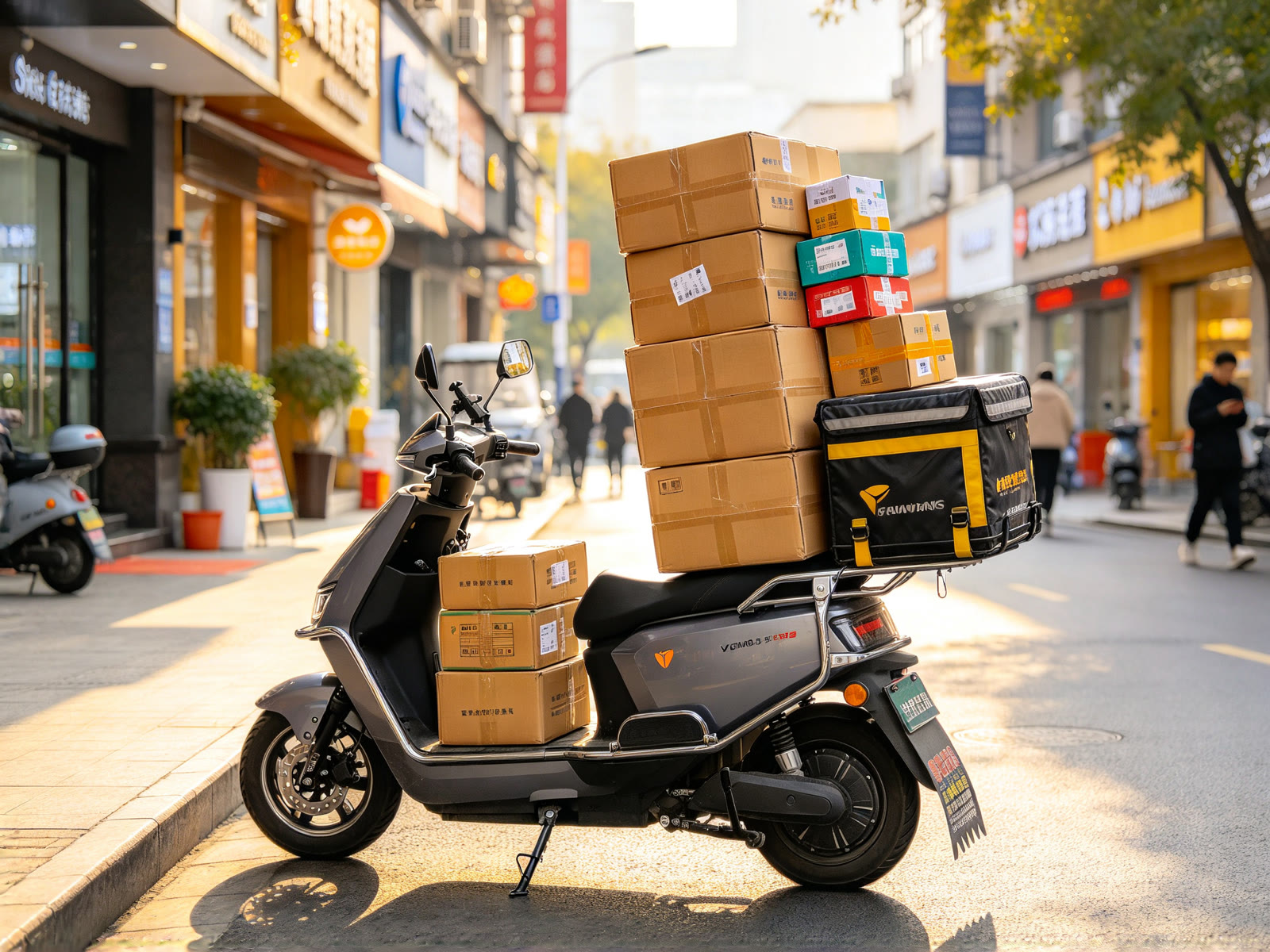
A mixed order illustrates the whole flow: bulk goods bought on 1688 and a few retail items bought on Taobao all travel to the same warehouse, are consolidated into one shipment, clear customs once and arrive together. That single-consignment structure is one of the quiet advantages of running both platforms through one buying agent.
Taobao vs 1688: How to Decide for Your Business
The decision comes down to a short checklist. If you are buying for yourself or need one unit, choose Taobao. If you are testing a product concept, buy one or two Taobao units for speed, then order a 1688 sample from the factory you may scale with. If you are reselling at volume, meaning ten or more pieces per SKU, choose 1688 wholesale pricing and protect your margin. If you need custom manufacturing, OEM work or unbranded goods to label, 1688 is the only real option. If you want branded finished goods, Taobao is where they live, with a caveat to verify authenticity.
Most established buyers stop choosing between the two and run a hybrid instead: Taobao for trend spotting, one-offs and quick tests, 1688 for production orders and margin. The two platforms are complementary legs of one sourcing system rather than competitors for your loyalty, and a single 1688 buying agent can cover both legs so your quality checks, consolidation and shipping stay consistent.
Start small whichever way you go. Compare the landed cost of the same product on both platforms, order the Taobao unit and the 1688 sample in parallel, and let the numbers and the factory’s sample quality make the decision for you.
Frequently Asked Questions
Is Taobao or 1688 cheaper?
For volume, 1688 is almost always cheaper because you buy at factory or wholesale tier prices. For a single unit, Taobao is usually cheaper because 1688 sellers charge premium prices for one-piece lots. Compare landed costs, including domestic and international freight, at your actual order size before deciding.
Can foreigners buy directly from Taobao and 1688?
In practice, rarely. Both platforms expect a Chinese payment method and a mainland delivery address, the interfaces are Chinese-only, and neither ships internationally as a standard service. Overseas buyers typically work through a buying agent who pays, receives, checks and forwards the goods.
Do I need a buying agent for Taobao or 1688?
For small, low-risk Taobao purchases you can sometimes manage through personal shopping services or a friend in China. For 1688 wholesale orders, an agent earns its fee through price negotiation, supplier verification, quality inspection and dispute handling, and most serious buyers consider one essential.
Is 1688 only for businesses?
1688 is built for trade buyers, but individuals can buy there too through mixed wholesale lots and single-lot listings. The tradeoff is service: consumer protections like no-reason returns do not apply, so treat 1688 like a wholesale channel even when your order is small.
Can I buy from Taobao and 1688 in the same order?
Yes. Send purchases from both platforms to the same agent warehouse and they will be consolidated into one international shipment, which saves freight and gives you a single customs clearance and delivery. Many buyers intentionally mix a 1688 bulk order with a few Taobao retail pieces, such as samples, spare parts or accessories, and ship everything as one consignment.
Is it safe to pay Taobao or 1688 suppliers from overseas?
Paying through a buying agent is the safest route, because the agent pays domestically under Alipay escrow and can open disputes in Chinese. Direct international transfers outside the platforms carry no escrow protection and are the most common way overseas buyers lose money.
How long does shipping take from Taobao vs 1688?
The export transit time is the same for both platforms once goods reach the warehouse: three to seven days by express, seven to fifteen by air freight, and twenty-five to forty-five by sea. The practical difference is preparation time, since 1688 orders may need production or packing days before dispatch.
Can one agent handle both platforms?
Most established China buying agents cover both Taobao and 1688. Confirm this before you commit, because one agent across both platforms means one warehouse, one quality standard and one consolidated shipment for your entire order.