
Electronics Sourcing from China: 1688 Buying Guide
China is the world’s electronics factory. Depending on the year you check, somewhere between 30% and 60% of the consumer electronics sold globally — headphones, smartwatches, chargers, smart home gadgets, and the components inside them — are manufactured in China, with a huge share of that production clustered in and around Shenzhen. For overseas buyers, the question is not whether to source electronics from China; it is how to do it without losing money on fake factories, failed certifications, or freight surprises.
That is exactly where 1688 comes in. As the domestic wholesale marketplace operated by Alibaba, 1688 connects you directly with the factories and wholesalers that supply the world’s retail channels, usually at prices far below what you see on international-facing platforms. This electronics sourcing guide walks you through the full process: what to buy, how to find reliable suppliers, which certifications matter, how samples and MOQs really work, and how to ship electronics without getting your cargo stuck. For professional help with the whole flow — supplier vetting, negotiation, consolidation and shipping — CNB2BGO provides a China buying agent service built for exactly this kind of order.
Why 1688 Is the Best Starting Point for Electronics Sourcing
1688 is the wholesale marketplace Chinese factories and trading companies actually sell on. When you buy from an international B2B platform, you are frequently buying from a trading company that first bought on 1688 and then added a margin of anywhere from 15% to 50%. By sourcing directly on 1688, you cut that layer out and pay closer to the true factory price.
For electronics specifically, the advantage is bigger than in almost any other category. Shenzhen’s Huaqiangbei district — the famous electronics market where every imaginable component, accessory and finished device is traded — sits physically next to the supply chain that powers it. Many 1688 electronics sellers are either factories themselves or wholesale dealers working a few blocks from the production lines, which means access to new releases weeks before international platforms list them, and genuine flexibility on customization, packaging and private labeling.
There are trade-offs, and you should go in knowing them. 1688 is a Chinese-language platform designed for domestic buyers, so English support is rare, payments and disputes work differently than on export platforms, and most sellers do not handle international shipping. That is why many overseas electronics buyers use a sourcing agent to bridge the gap while keeping the factory-direct price. Done right, the savings on a mid-size electronics order typically range from 10% to 40% versus buying the same SKU through an export-facing middleman.
What Electronics to Source from 1688 (and What to Avoid)
Not every electronics category is equally smart to import. The products below are the ones where 1688 delivers the strongest combination of price advantage, supplier depth and manageable compliance burden.
Mobile and computer accessories are the classic entry point: chargers, cables, power banks, phone cases, screen protectors, stands, hubs and adapters. The market is enormous, competition among suppliers is fierce, and prices on 1688 are often a third of Western retail. Consumer audio — TWS earbuds, over-ear headphones, Bluetooth speakers — is another deep category, though audio quality varies dramatically, so sampling is non-negotiable. Smart home devices such as smart plugs, bulbs, cameras, sensors and WiFi modules are also widely available, with many factories offering app and firmware customization if you order enough units. Wearables, from basic fitness bands to full smartwatches, round out the mainstream categories, along with LED lighting and power-related products.
Component-level sourcing is a different game: PCBs, connectors, resistors, ICs and batteries are all on 1688, but quality control and authenticity risk are much higher at the component level, and counterfeits are a genuine problem in semiconductors. Unless you have an engineer on staff, keep your first orders in finished consumer products rather than components.
Two things to avoid from the start. First, brand-name products: if a listing offers “original” Apple, Samsung or Sony goods at deep discounts, it is counterfeit, full stop. Customs agencies seize this regularly, and it can get you banned from marketplaces and payment processors. Second, be cautious with lithium batteries in your first shipment. Battery products are entirely possible to import — most gadgets contain them — but they trigger extra documentation, special packaging and restricted shipping classes. Read the shipping section below before committing to a battery-heavy order.
How to Find Reliable Electronics Suppliers on 1688
Supplier selection is where electronics orders live or die. Start with search terms that are specific: product model, material and feature, not just a category word. If you want ANC TWS earbuds with a charging case, search for that, because generic searches return hundreds of thousands of near-identical listings and the sorting is heavily influenced by advertising.
Once you have a shortlist, check four signals on every store page. First, the store’s years in business — electronics sellers that have survived five or more years on the platform have usually done so by keeping quality consistent enough to avoid being delisted. Second, transaction volume and repeat purchase rate, which the platform shows on seller profiles; a high repeat rate is the single strongest quality signal because domestic buyers reorder only when the goods work. Third, the badges: 1688 marks verified factories (实力工厂 / strength factory) and years of operation with platform certifications that are harder to fake than a pretty storefront. Fourth, response behavior — a seller who answers technical questions quickly and precisely in chat before the sale is far more likely to support you after it.
One electronics-specific trick: ask the seller for the product’s full specification sheet, and check whether the numbers survive scrutiny. A Bluetooth speaker seller who cannot tell you the chipset, battery capacity and output power is almost certainly a trader quoting whatever the listing says. A factory will typically have the spec sheet, the test report and sometimes the certificate PDFs ready to send. You can also ask for the export market the product is currently sold into; electronics already shipped to Europe, the US or Japan are much more likely to pass the compliance checks in the next section.
Certifications and Compliance: The Electronics-Specific Checks
Electronics is the most regulated category an importer can touch, and the required documentation depends on your destination market. Getting this wrong is expensive: goods can be destroyed at the border, and online marketplaces routinely suspend listings for products without the right marks.
For the European Union, the baseline is the CE mark backed by a declaration of conformity, which for most consumer electronics means compliance with the EMC (electromagnetic compatibility), LVD (low voltage) and RED (radio equipment) directives, plus RoHS for hazardous substances. For the United States, most devices need FCC certification covering electromagnetic interference, and products with high-capacity batteries or heat elements may need additional safety testing. The UK now operates its own UKCA regime alongside CE, Australia requires RCM marking, and Japan has PSE certification for many electrical appliances.
Here is the practical rule: ask the supplier for the actual certificate documents, not just the logo on the label, then verify the certificate against the issuing body’s database where possible. Reputable electronics factories usually hold CE, FCC and RoHS reports for their core products, sometimes under the name of an associated trading company — that is normal. What should worry you is a supplier who offers to “print any logo on the box” without documents, because that mark will not survive a customs or marketplace audit. If you are selling on Amazon or another major platform, remember the platform will ask for these certificates before you can list, so collecting them during sourcing, not after the goods arrive, saves weeks.
Battery-specific compliance deserves its own line. Products containing lithium batteries generally need UN 38.3 test reports, an MSDS, and, for air freight, documentation showing the batteries comply with transport regulations. Your freight forwarder or buying agent can usually help assemble this, but it must be requested from the factory before booking the shipment.
Samples, MOQs and Price Negotiation for Electronics
Never place a bulk electronics order without samples in hand. A listing photo cannot tell you whether the earbuds’ Bluetooth pairing is stable, whether the plastic feels brittle, or whether the charger gets dangerously hot. Sample costs vary: many sellers charge a per-unit sample price plus shipping, some refund the sample fee against your first bulk order, and a minority ship free samples for hot-listing products to serious buyers. Expect to pay more for a sample than the bulk unit price — that is normal and worth it.
Minimum order quantities for electronics on 1688 are lower than most overseas buyers assume. Finished consumer products often start at 10 to 100 units for off-the-shelf SKUs, while customized products — your logo, your packaging, your firmware — usually require 500 to 2,000 units. The trade-off is real: off-the-shelf means low MOQ but you sell the same unbranded product as everyone else; customization means a real brand but a real commitment, and it is worth modeling both options before you commit to either path.
On negotiation, electronics suppliers expect bargaining, but the margins on consumer electronics are thinner than in most categories — typically 5% to 20% depending on the product. You will get far more from negotiating packaging, accessories and payment terms than from squeezing the last 2% off the unit price, because price pressure without volume usually translates into component substitution on the next order. The sad industry pattern is: order one is perfect, order two quietly uses a cheaper battery. Protect yourself by stating specifications in writing, keeping the approved sample as the reference standard, and making clear that incoming inspection will compare production units against that sample.
Quality Inspection for Electronics Before Shipment
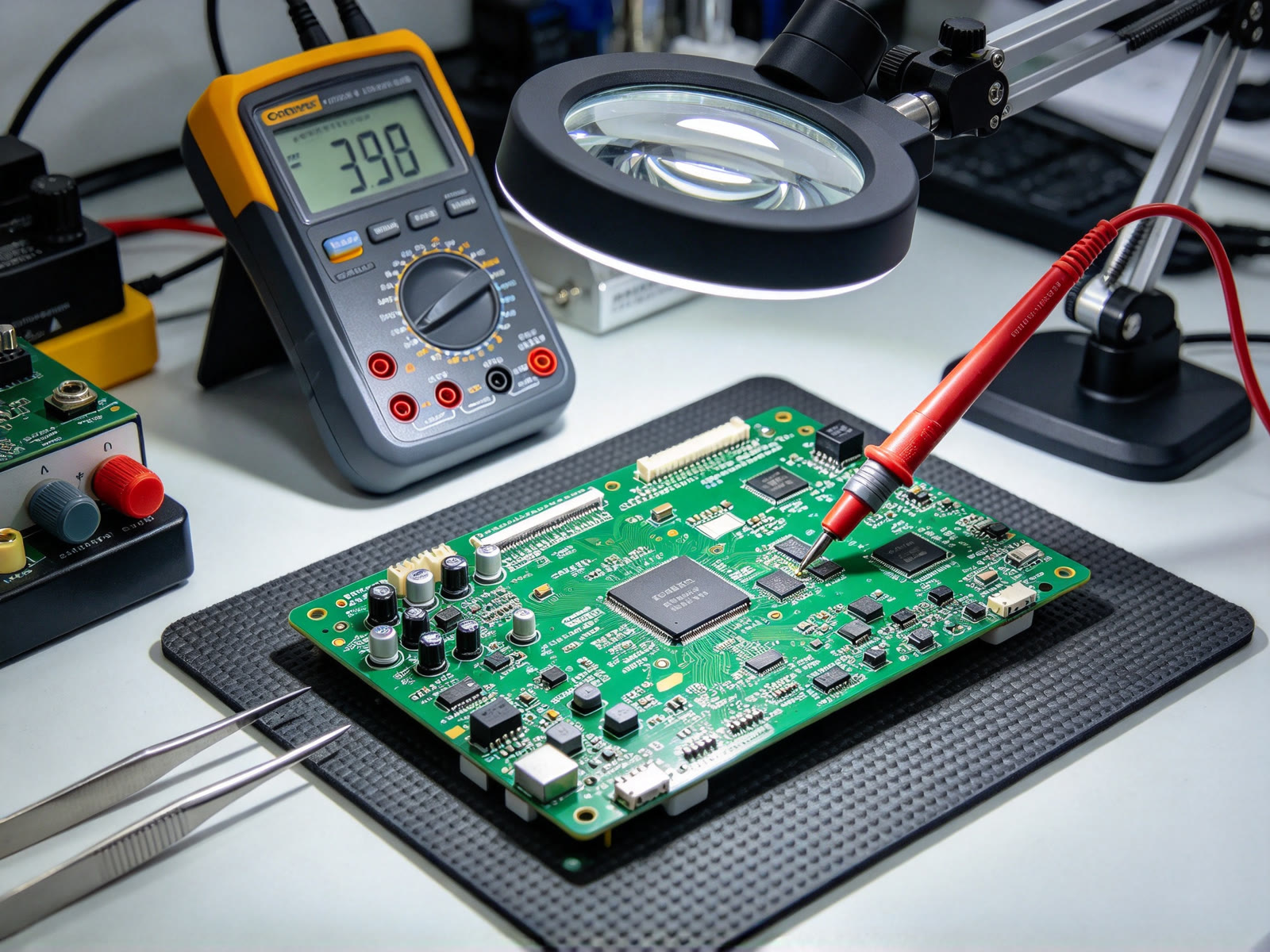
Electronics fail in ways you can see and ways you cannot. A pre-shipment inspection should cover both. The visible checks are straightforward: cosmetics, fit and finish, correct color and packaging, correct logos, and a comparison against your approved sample. But for electronics, the functional testing matters far more, and you should specify exactly what gets tested rather than trusting the inspector’s default checklist.
A sensible functional test plan for, say, 500 earbuds looks like this: power-on test on 100% of units, charging test on 100%, Bluetooth pairing spot-checks on a defined sample size, battery capacity spot-checks, audio output checks, and pull-out or drop tests on a few units. For chargers and power banks, add load testing and a check that output matches the labeled specification — underpowered power banks are one of the most common silent defects in the industry. Also verify the safety marks, labels and serialization match what you ordered, and photograph everything.
You can buy this service from third-party inspection companies operating in Shenzhen and other manufacturing cities; a basic pre-shipment inspection typically costs a few hundred US dollars per day and pays for itself the first time it catches a bad batch. Your buying agent can also run inspections, and — one thing many importers miss — the inspection report doubles as documentation later: it supports claims with your supplier, your payment provider, and marketplaces if customers report defects.
Shipping Electronics from China: Batteries, Documents and Costs
Shipping is where electronics orders most often go wrong, and batteries are the reason. Pure lithium batteries and battery packs face severe restrictions on air freight; products containing small batteries, like earbuds and smartwatches, are easier but still restricted; and most carriers require UN 38.3 documentation, proper inner packaging and watt-hour limits to be respected. Always declare batteries honestly — undeclared batteries can be pulled from the cargo, destroyed, and the fine is your problem, not your supplier’s.
Beyond batteries, expect to provide a commercial invoice, packing list, and the certification documents from earlier in this guide. Some electronics categories require export licenses from the Chinese side, which legitimate factories handle routinely — a seller who hesitates on export paperwork is a red flag. For the goods themselves, use the supplier’s original retail packaging plus an outer carton designed for export; electronics arrive in sellable condition far more often when the carton is sized to the product rather than stuffed with filler.
Costs depend on weight, volume and mode. A few hundred small accessories ship fine by express or air freight; a pallet or more of consumer electronics usually makes sea freight or consolidated air the right choice, with door-to-door options commonly quoted as a single rate. For a full breakdown of the freight modes, what each one costs and realistic transit times, the shipping guides on this site walk through sea, air and express options in detail.
A Realistic Electronics Sourcing Cost Breakdown
Let’s put numbers on a typical first order: 500 units of a mid-range TWS earbud model. On 1688, such a product might be quoted around 35 to 60 RMB per unit from a real factory, which is roughly 5 to 9 US dollars. Five hundred units at that rate is about 2,500 to 4,500 USD in product cost. Add a buying agent fee — commonly 3% to 10% of product value, with many agents charging a minimum — domestic Chinese shipping to the agent’s warehouse, quality inspection at a few hundred dollars, and then the international freight. For a 500-unit earbud shipment of maybe 60 to 80 kilograms, door-to-door delivery to the US or Europe via express or consolidated air typically runs somewhere between 600 and 1,500 USD depending on speed and battery paperwork. Import duties then apply on the landed value at your country’s electronics tariff rate, often a few percent, and a customs broker fee on top if you use one.
The total picture: an order that retails for 20 to 40 USD per unit at Western prices might land in your hands all-in for roughly 10 to 15 USD per unit — enough margin to absorb a modest defect rate and still be profitable. The same math is why so many electronics resellers quietly standardize on this pipeline. The key discipline is to price in the inspection and the sample before you commit, and never to choose the absolute cheapest supplier on a listing page; in electronics, the cheapest quote is usually the one with the substituted battery.
Frequently Asked Questions
Is 1688 safe for buying electronics?
Yes, when you follow the right process. The platform itself is legitimate — it is Alibaba’s domestic wholesale marketplace — and the vast majority of electronics suppliers on it are real businesses. The risk sits in supplier selection and payments, not in the platform. Stick to verified stores with years of history and high repeat-purchase rates, insist on samples before bulk orders, pay through a traceable method, and use a sourcing agent for anything above a small test order. We cover the specific risks and protections in our article Is 1688 safe?.
Can I buy electronics on 1688 without speaking Chinese?
You can, but with friction. A few large sellers have English-speaking staff, and platform tools can translate listings and chat, but the translations are imperfect and technical discussions about chipsets and certificates break down quickly. Most overseas buyers use a bilingual buying agent to handle supplier communication, negotiation and problem resolution, which costs a small percentage but prevents expensive misunderstandings on specification-heavy electronics orders.
What is the minimum order quantity for electronics on 1688?
Off-the-shelf consumer electronics often carry MOQs of 10 to 100 units, and many listings allow single-unit or small-lot trial orders. Customized products with your branding, packaging or firmware typically start at 500 to 2,000 units. MOQs are negotiable, especially when you commit to payment terms the seller likes or agree to a higher price per unit on a smaller quantity.
How do I know an electronics supplier is a real factory and not a trader?
Check the store’s platform verification badges, ask for production-line photos or a short factory video call, and request documentation that only a manufacturer holds: the full spec sheet, test reports and certificate originals. Factories also answer production questions — tooling, lead times, customization — with specifics, while traders give vague answers and forward your questions to someone else. Note that trading companies are not automatically bad; a good trader adds value on consolidation. The problem is only when a trader claims to be a factory.
Do I need CE and FCC certificates to import electronics?
For most destinations, yes in practice. The EU requires CE (and typically RED, EMC, LVD and RoHS compliance) for consumer electronics, while the US requires FCC certification for most devices that emit or use radio frequencies. Marketplaces like Amazon will ask for these documents before you can list, and customs can hold shipments without them. Ask the supplier for the actual certificate documents before you order, and verify them against the issuing body’s database.
How much does shipping electronics from China cost?
It depends on weight, volume, battery content and speed. A 60 to 80 kilogram shipment of consumer electronics to the US or Europe typically costs roughly 600 to 1,500 USD door-to-door by consolidated air or express, while sea freight costs less per kilogram but takes a month or more and favors pallet-sized orders. Battery-containing goods cost more and need UN 38.3 documentation regardless of mode.
Can a China buying agent handle my whole electronics order?
Yes — that is the standard way overseas resellers run this. The agent finds and vets suppliers, negotiates price and MOQ, orders samples, runs or arranges quality inspection, consolidates goods from multiple factories into one shipment, and ships door-to-door with the correct battery documentation. For electronics, the agent’s inspection step is worth the fee by itself, because it is the layer that catches the substituted battery or failed pairing test before the goods leave China.
What happens if my electronics arrive defective?
Start with the pre-shipment inspection report — it is your evidence. If defects escaped inspection, you negotiate with the supplier for a credit, replacement units on the next order, or a partial refund, and 1688’s buyer protection provides some leverage on domestic orders. In practice, prevention beats cure: most electronics defect disputes are avoided entirely by approved samples, a written specification, and a competent inspection before shipping.
Electronics sourcing from China rewards buyers who treat it as a process, not a single transaction. Find the right supplier, lock the specification, test the samples, inspect before shipping, and document everything — and you get factory-direct prices on products the whole world buys anyway. If you would rather have an experienced team run that process for you, a China buying agent service covers supplier vetting, negotiation, inspection, consolidation and door-to-door shipping for electronics orders of any size.