
Cheapest Way to Ship from China: How to Cut Freight Costs
For most international orders, the cheapest way to ship from China is sea freight for heavy or bulky goods, and consolidated courier or air freight for small, light parcels. There is no single cheapest method, because the winner changes with weight, volume, destination and how fast you need the goods. Most of the money you can save comes from matching the right method to your specific package — and from consolidating several parcels into one before they leave China — not from haggling a courier over a few dollars.
The three ways to ship, and what each one really costs
Every route out of China falls into one of three buckets, and each one is cheapest in a different situation. The mistake most first-time buyers make is assuming the fastest option is the only option, or that the slowest option is always the cheapest. Neither is true once you add up the full landed cost.
| Method | Cheapest for | Why it wins | Watch out for |
|---|---|---|---|
| Express courier (DHL, FedEx, UPS and similar) | Small parcels, samples, urgent orders | No consolidation hassle, door-to-door, fast | Priciest per kilogram; surcharges stack up quickly |
| Air freight | Medium orders that need speed but not courier speed | Cheaper per kg than courier above a certain weight | Minimum chargeable weight, customs clearance fees |
| Sea freight (LCL / FCL) | Heavy, bulky or high-volume orders | By far the lowest cost per kilogram | Slowest, and minimums make it wasteful for tiny orders |
There is also rail freight into Europe, which sits between sea and air on both cost and speed, and it is worth considering for mid-weight orders that need to arrive faster than a ship but cheaper than a plane. For a fuller breakdown of each option, see our guide to shipping from China: courier, air and sea compared.
Chargeable weight is why “cheap” quotes mislead you
A carrier does not charge you for the actual weight of your box. It charges for something called chargeable weight, which is the higher of the actual weight and the volumetric weight. Volumetric weight is a formula: length × width × height, divided by a factor (often 5,000 for air and courier). A large, feather-light package can cost far more to ship than a small, dense one of the same real weight.
This single fact is why two quotes for the “same” shipment can be wildly different. One supplier may quote based on a guess, another on the packed dimensions, and a third on the chargeable weight after repacking. When you compare shipping quotes, always ask for the chargeable weight, not just the kilogram count. If you want the exact math, our article on how shipping cost from China is calculated walks through every line item.
The cheapest method by package size
A useful way to think about it is by what you are actually shipping. The table below is a practical starting point, not a price list — actual rates move with fuel, season and route, so treat these as shape, not promise.
| Your shipment | Usually cheapest | Reason |
|---|---|---|
| A single small sample or a few light items | Express courier | Below air-freight minimums, so courier is the only economical door-to-door option |
| 5–50 kg of reasonably dense goods | Air freight | Per-kg rate drops below courier once you clear the minimum chargeable weight |
| 50 kg and up, or bulky/low-value goods | Sea freight (LCL) | Per-kg cost collapses; you share a container with other shippers |
| Full-container volume, or very heavy orders | Sea freight (FCL) | Lowest unit cost at scale; you pay for the whole container |
Consolidation is the single biggest cost lever
If you buy from several 1688 sellers, you do not get one package — you get several, and each one would ship separately at a full courier minimum if left alone. Consolidation solves this: a warehouse in China receives all your parcels, checks them, repacks them into one box, and ships them as a single international shipment. One shipment instead of five is where the real freight saving lives.
The saving is structural, not cosmetic. Five separate 1-kg parcels each pay a courier minimum and five sets of fees. One 5-kg consolidated box pays one set of fees on a better per-kg rate. The heavier and more fragmented your order, the larger the gap. This is covered in depth in our guide to 1688 consolidation and parcel consolidation from China.
Sea and rail: when going slow is the cheapest thing you can do
For anything heavy or bulky, sea freight is almost always the cheapest method by a wide margin, and the gap only grows with weight. The trade-off is time: a sea shipment can take weeks where a courier takes days. If your goods are not urgent and your margins are thin, that trade is usually worth making. LCL lets you pay for only the space you use in a shared container, which keeps small heavy orders affordable; FCL becomes cheapest once you fill most of a container. See our sea freight from China guide for the LCL-versus-FCL decision.
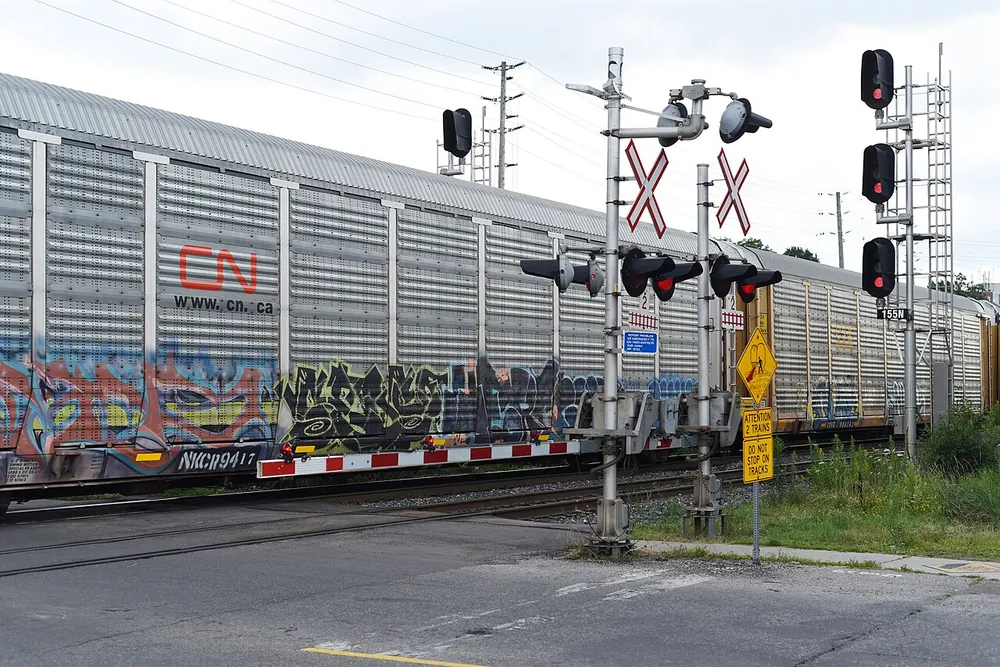
Rail into Europe occupies the useful middle ground. It is faster than sea, cheaper than air, and increasingly common for mid-weight orders that would otherwise sit in a warehouse waiting to fill a container. It is not available to every destination, so whether it helps you depends on where your goods are going.
Hidden costs that turn a cheap quote expensive
A low headline freight rate is easy to quote and easy to lose money on. The items below are where the real bill hides, and none of them shows up in a “per kilogram” teaser number.
- Fuel and peak-season surcharges. Carriers add these on top of the base rate, and they move constantly.
- Remote-area or residential delivery fees. A “door” that is not a commercial address can trigger an extra charge.
- Customs clearance and brokerage. Getting goods through your country’s border is a separate service with its own fee.
- Duties, VAT or GST. Set by your destination country, not the carrier, and not included unless you paid for DDP.
- Storage and demurrage. If goods sit at the port or warehouse past the free period, the clock starts charging.
The fix is the same as with a buying agent quote: ask for the total landed cost to your door, item by item. If a quote will not break down the charges, assume there is a surprise in it. Our guide to DDP shipping from China explains the option that bundles duties into one predictable number.
How to lower your freight cost without changing the method
You can cut the real cost of shipping without switching couriers, and these levers matter more than the headline rate.
- Consolidate suppliers. One box instead of many is the biggest single saving, every time.
- Repack to reduce volume. Removing excess packaging shrinks chargeable weight and the final bill.
- Ship dense, not bulky. If two products do the same job, the one that packs smaller is cheaper to move.
- Order a sensible quantity. Tiny orders pay courier minimums; slightly larger orders unlock air-freight and LCL rates.
- Use DDP when it fits. Bundling duties avoids surprise charges at the door and can be simpler to budget.
A worked example across three shipments
To make the trade-offs concrete, here is how the same logic plays out at three scales. These are illustrative shapes, not quotes — every real shipment depends on the product, its dimensions and the route.
| Scenario | Typical cheapest choice | Where the money concentrates |
|---|---|---|
| A 300-gram sample | Express courier | The courier minimum dominates; the goods are almost irrelevant to the bill |
| A 20-kg order of clothing | Air freight | Chargeable weight and clearance fees; consolidation matters less at one supplier |
| A 400-kg order across five sellers | Sea freight LCL, consolidated | Consolidation and per-kg sea rate beat any courier or air option by a wide margin |
The pattern repeats: at the small end, courier minimums rule; at the large end, sea freight and consolidation win. The buyers who overpay are usually the ones who ship a mid-sized order by courier because it was the default, or who ship five parcels separately because nobody consolidated them.
Common mistakes that inflate freight bills
- Choosing courier by default. It is the easiest option, which is exactly why it is often the most expensive for anything above sample size.
- Ignoring chargeable weight. Comparing quotes on real weight alone is comparing apples to oranges.
- Shipping every parcel separately. Five boxes from five sellers means five minimums and five sets of fees.
- Not asking about duties. Duties are set by your country, but a good agent warns you up front instead of letting a surprise bill arrive with the parcel.
- Optimizing the rate, not the landed cost. A slightly higher rate with fewer surcharges and included duties can be cheaper overall.
How transit time changes your true cost
Freight cost is not the only number that matters. A slower method is cheaper on the invoice, but it ties up your money and your stock for longer, and that has a real cost too. If you are buying goods to resell, every week the goods sit in transit is a week you cannot sell them and cannot recover your cash. For some buyers, paying more for air freight to get goods to market weeks sooner is the cheaper decision overall, because the extra sales and faster cash flow outweigh the higher freight bill.
The useful way to think about it is landed cost plus time. Ask two questions: how much is a week of delay worth to me, and how urgent is the restock. If the answer is “very little” and “not urgent,” take sea freight and bank the saving. If a late shipment means an empty shelf or a missed season, the faster method is the cheaper one in practice, whatever the freight rate says.
Courier, air and sea: how the numbers actually move
It helps to see why the three methods price so differently. A courier charges a premium because it gives you door-to-door service, customs brokerage included, on a single integrated network, with no minimum beyond the first kilogram. Air freight drops the per-kilogram rate because you are buying space on a scheduled cargo plane, but it brings a minimum chargeable weight and you typically handle customs clearance separately. Sea freight drops the rate again because a container spreads the cost over thousands of kilograms, but it is slow and carries terminal, documentation and delivery fees at both ends.
The practical consequence is a set of thresholds. Below a few kilograms, courier wins because the others have minimums. In the tens of kilograms, air freight takes over. Past roughly a few hundred kilograms, sea freight becomes unbeatable on cost. There is no fixed cutoff — the exact threshold shifts with fuel, route and season — but the shape is stable, and knowing it stops you from shipping a 200-kg order by courier out of habit. For the full cost breakdown, see how shipping cost from China is calculated.
A five-step way to price your cheapest route
Rather than guessing, work through this sequence and the cheapest option usually reveals itself.
- Get the packed dimensions and weight. Not the product weight — the packed, boxed dimensions after consolidation. This is what the carrier actually charges on.
- Calculate chargeable weight. Compare actual weight against volumetric weight and take the higher number.
- Confirm how many parcels you have. One shipment or several? If several, consolidation is step one, before you even compare methods.
- Get three like-for-like quotes. Same dimensions, same destination, same door terms — courier, air and sea — each with the surcharges and clearance fees listed.
- Add duties and compare landed cost. The cheapest freight rate is not the cheapest order if the clearance fees and duties differ.
This sequence is exactly what we run for buyers who send us their order details, and it is why our shipping page asks for weight, dimensions and destination up front — those three numbers decide almost everything.
Why a buying agent usually gets a better freight rate than you can
An individual buyer comparing courier prices online is playing a different game from a buying agent that ships hundreds of parcels a day. Agents and consolidators hold negotiated rates with couriers and freight forwarders that a one-off shipper simply cannot access, and they pool many buyers’ parcels into consolidated shipments to reach volume tiers. That is one of the less obvious ways an agent earns its fee: the freight saving alone can exceed what the agent charges.
It also changes the math on consolidation. A buyer who consolidates five sellers through an agent’s warehouse is not just combining boxes — they are unlocking a rate that a single 1-kg parcel could never touch. If you want the cheapest route in practice, not just in theory, this is usually where the saving actually lives. Our order-to-door process and 1688 consolidation guides explain how it fits together.
What “cheapest” should not cost you
There is a version of cheap that is expensive, and it usually looks like a freight quote with no detail. A suspiciously low rate that does not list surcharges, clearance fees or duty status is not a bargain — it is a teaser number designed to close the deal before the real bill arrives. The same goes for a “cheap” method that leaves your goods unprotected: uninsured sea freight on a high-value order can turn a freight saving into a total loss if the shipment is damaged or lost.
The healthy definition of cheapest is the lowest total landed cost that still gets your goods to the right place, intact, on a timeline you can live with. Cut the rate, not the protection, and always ask what a quote leaves out. If a number looks too good, it is probably missing the part that costs money.
Frequently asked questions
These are the questions buyers ask us most when they are trying to spend less on shipping without getting burned.
What is the cheapest way to ship from China?
Sea freight is cheapest for heavy or bulky orders, and consolidated courier or air freight is cheapest for small, light parcels. The right answer depends on your weight, volume, destination and deadline, so match the method to the package rather than chasing one “cheapest” option.
Is sea freight always cheaper than air freight?
For heavy or high-volume shipments, usually yes, and by a large margin. For a very light or urgent shipment, air freight or courier can actually be cheaper once you factor in sea freight’s minimums and clearance fees.
How do I reduce shipping cost from China?
Consolidate multiple sellers into one shipment, repack to cut volume, ship the right quantity, and choose the method that matches your weight and deadline. The single biggest lever is usually consolidation.
What is chargeable weight and why does it matter?
Chargeable weight is the higher of your package’s actual weight and its volumetric weight (length × width × height divided by a factor). Carriers charge on chargeable weight, so a bulky light box can cost far more than a small dense one.
Is courier shipping worth the extra cost?
For samples and small urgent orders, yes — it is the only economical door-to-door option below air-freight minimums. For anything heavy or non-urgent, the extra cost of courier usually is not worth it.
Does DDP shipping make it cheaper?
DDP does not lower the underlying freight, but it bundles duties and taxes into one predictable price, which can save you from surprise clearance charges and makes budgeting simpler. Whether it is cheaper overall depends on your destination and goods.
If you want us to price the cheapest workable route for your specific goods — weight, dimensions, destination and deadline — send us your order details and we will lay out the options side by side.