
1688 Buying Agent Cost: Fees, Minimums and What You Pay
Most 1688 buying agents charge a service fee of roughly 5% to 10% of your order value, on top of the product price, domestic shipping inside China, and the international freight to your door. A smaller order might carry a flat fee of a few dozen dollars instead of a percentage; a large order might negotiate down to 3% to 5%. The honest answer is that there is no single rate, because your total cost is four separate buckets stacked together: the goods, the agent’s fee, domestic delivery to the agent’s warehouse, and international shipping plus any duties. The good news is that all four are predictable once you know what to ask for, and this guide walks through each one so you can compare quotes without getting blindsided.
Where your money actually goes
People talk about a “1688 agent fee” as if it were one number, but it never is. A buying agent is really four services bundled together, and each one has its own cost. Understanding the buckets is the fastest way to tell a fair quote from an inflated one.
- Product cost. The price on the 1688 listing. This is the one number you can see yourself, but the listed price is often for a specific quantity tier and rarely includes packaging upgrades.
- Agent service fee. What the agent charges for finding, negotiating, ordering, tracking, and consolidating your goods. This is the “5% to 10%” people usually mean.
- Domestic shipping. Moving goods from the supplier’s city to the agent’s warehouse in a logistics hub like Shenzhen or Guangzhou. Usually cheap for a single order, but it adds up when you buy from many sellers.
- International shipping and duties. The freight from the warehouse to your address, plus any customs duties, VAT or GST your country charges. This is often the single biggest line item and it is not the agent’s fee.
When someone quotes you “8% all-in,” stop and ask what “all-in” covers. If it excludes international freight, the 8% is meaningless. The freight is usually larger than the fee itself.
How 1688 buying agents charge
Agents use three pricing models, and they matter more than the headline number.
| Model | How it works | Typical range | Best for |
|---|---|---|---|
| Percentage fee | A percentage of the product value, added on top of the goods price | 5%–10% of order value | Medium and large orders where a flat fee would be unfair |
| Flat fee | A fixed amount per order or per shipment, regardless of value | Varies widely; often a few dozen USD minimum | Small or test orders |
| Hybrid / markup | The agent builds its margin into the quoted unit price rather than a separate line | Hidden in the unit price | Buyers who want one clean number, but harder to audit |
The percentage model is the most transparent and the most common for serious orders. A markup model can be fine if you trust the agent and compare final landed costs, but it is the hardest to verify against the 1688 listing, which is exactly why the percentage model is safer for a first-time buyer.
Also ask when the fee is collected, because it changes your cash-flow picture. Most agents take a deposit toward the product cost up front, then settle the service fee and the international freight before the shipment leaves the warehouse. A few collect the whole thing in advance. Neither is wrong, but you want the timing in writing so a fee does not appear out of nowhere at the end.
A realistic cost breakdown
Here is how a typical small-to-medium order can look. The exact numbers shift constantly with exchange rates, fuel surcharges and season, so treat these as structure, not a price promise.
| Cost component | What it is | How it behaves |
|---|---|---|
| Product | The goods at the 1688 unit price for your quantity | Fixed once you lock the supplier and quantity |
| Agent fee | Service fee, often a percentage | Proportional to order value if percentage-based |
| Domestic freight | Supplier to warehouse, often per seller | Rises with the number of sellers you buy from |
| International freight | Warehouse to your door, by air or sea | Dominates for heavy or bulky goods |
| Duties & tax | Customs, VAT or GST at destination | Set by your country, not the agent |
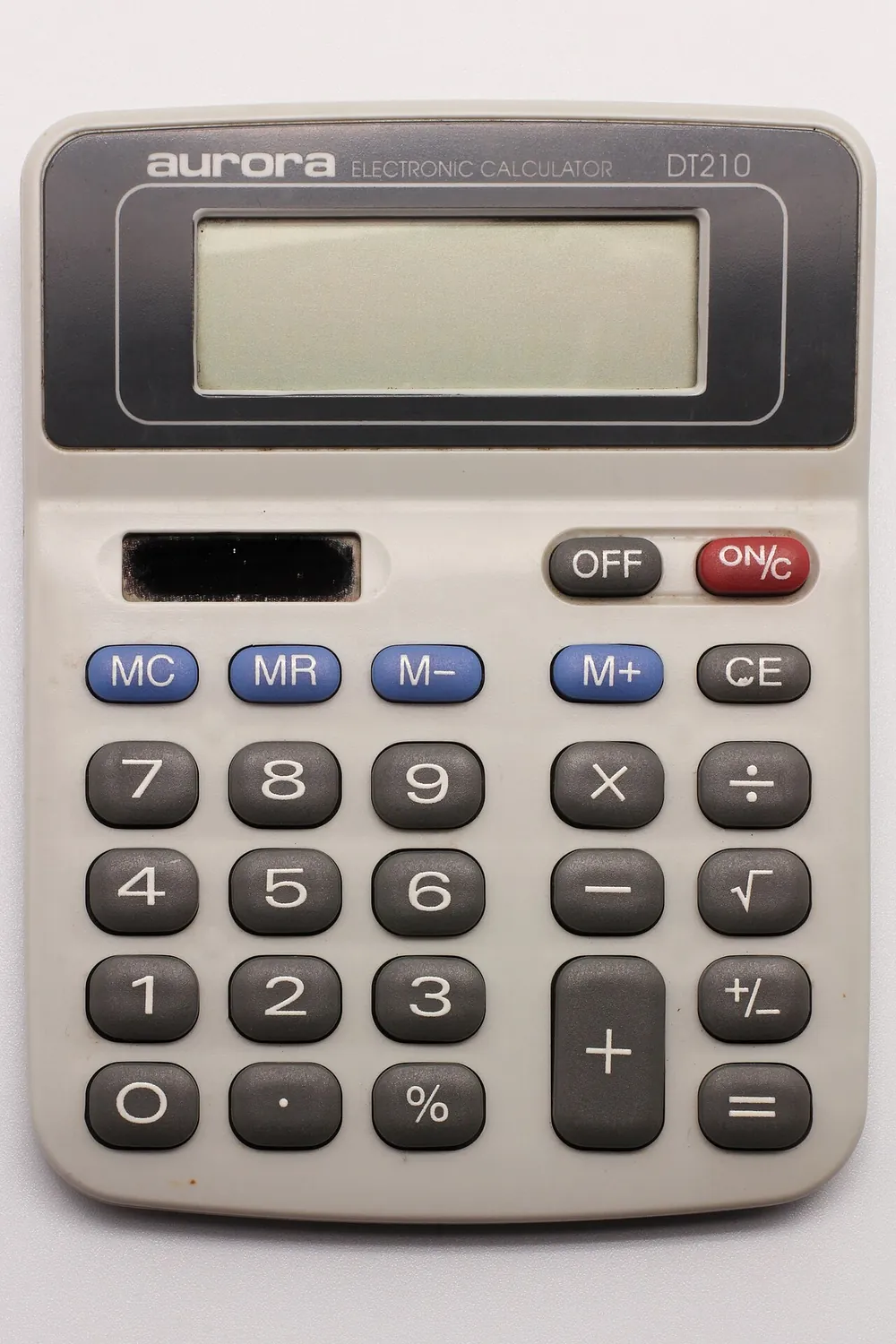
Notice that the agent’s fee is usually not the biggest line. For light, high-value goods, the fee matters more; for heavy, low-value goods, freight swamps everything. That is why the single most important question in any quote is “what is the landed cost per unit” — product plus fee plus freight plus duties, divided by units. Compare agents on landed cost, never on the fee percentage in isolation.
A worked example across three order sizes
Seeing the same fee structure at three different scales is the fastest way to understand where your money actually goes. These are illustrative shapes, not quotes — every real order depends on the product, its weight and the route.
| Order size | Typical fee shape | Where the cost concentrates | What to watch |
|---|---|---|---|
| Small / sample | Flat fee or higher percentage, since there is little value to spread it over | Freight and minimums, not the fee | Courier minimums can exceed the goods value; a sample may cost more to ship than to buy |
| Medium | Percentage fee, roughly 5%–10% | Freight and fee both matter | Consolidation and shipping-mode choice swing the total more than the fee |
| Large / volume | Negotiable, often 3%–5% | Freight per kilogram is lowest, but absolute freight is large | A small fee-percentage difference is real money at scale, so negotiate it |
The pattern is consistent: at small scale, the fee is almost irrelevant next to shipping minimums; at large scale, the fee percentage is worth negotiating hard because a single point on a container-sized order is substantial. Most of the money you can actually save lives in shipping choices and consolidation, not in haggling the fee.
What is usually not included
The fee is not the whole story. A low service fee can hide real costs you only discover later. Ask about these before you commit.
- Bank and transfer fees. Wire transfers, PayPal or card processing fees are usually passed to you. International wires to China routinely carry a sending fee and a receiving fee.
- Currency conversion margin. If the agent quotes in USD but pays suppliers in CNY, a conversion margin may be built in. A few percent here is normal; a wide margin is not.
- Repacking and consolidation. Combining many small parcels into one box is the point of consolidation, but extra packing material, extra boxes or heavy repacking may be itemized.
- Storage. If you are holding goods at the warehouse while you wait to fill a container, storage after a free period is a common surcharge.
- Insurance. Freight insurance is usually optional and separate. Cheap it is not automatic.
- Duties and tax. Almost never included unless you specifically pay for DDP (delivered duty paid) shipping.
The fix is simple: ask for a written quote that lists every line, including who pays the receiving bank fee and whether duties are included. A good agent has no problem showing the math.
How to compare agent quotes fairly
Three agents can quote 5%, 8% and a flat $80, and all three can be reasonable depending on your order. The only way to compare them is to normalize everything to landed cost per unit.
Here is the sequence we recommend:
- Send the same list of product links and quantities to every agent you are considering. If you change the list between quotes, you are not comparing like for like.
- Ask for a line-item quote: product, fee, domestic freight, international freight, duties estimate.
- Ask for the fee model — percentage, flat or markup — and confirm it is fixed for your quantity.
- Ask about the “not included” list above, in writing.
- Divide the true total by units to get landed cost per unit, and compare that number, not the fee percentage.
One more thing worth asking: whether the agent will actually negotiate the supplier price down. The best agents make their fee back by getting you a lower unit price and better shipping rates than you would get alone, which is the entire economic case for using one.
How to spot a padded quote
A handful of warning signs separate a fair quote from one that has hidden margin baked in. None of them is proof of anything by itself, but several together are a reason to slow down.
- No line items. A refusal to break the quote into product, fee, freight and duties is the biggest red flag. There is no legitimate reason to hide the math.
- Below-market exchange rate. If the quoted USD-to-CNY rate is far from the market rate, the margin is being recovered through conversion instead of an honest fee.
- Stacked “handling” fees. A service fee plus a handling fee plus a consolidation fee, each vague, usually means the agent is nickel-and-diming you instead of quoting one clear number.
- No answer on duties. An agent that will not tell you whether the price includes duties is setting you up for a surprise bill at the door.
- A quote far below the 1688 listing. If the unit price is suspiciously lower than what you can see on 1688, treat it as a bait price unless there is a volume explanation.
The antidote to all of these is the same: a written, line-item quote on a fixed product list, with the duty status stated explicitly. Agents who do this comfortably are the ones worth your order.
What the fee does and does not buy
Your fee buys procurement: finding the supplier, verifying they are a real trading company, negotiating, placing the order, tracking it, and consolidating parcels in the warehouse. It does not buy product quality assurance. A buying agent places and moves your order; it is not the same thing as a factory audit or a quality inspection.
If you are buying anything where a defect is expensive — electronics, custom goods, anything you will resell under your own brand — you should plan for a separate pre-shipment inspection by a third party such as ForeignGo. That inspection cost sits on top of the agent’s fee, and budgeting for it up front is cheaper than discovering a defect after the goods have already shipped.
When a 1688 agent is cheaper than going it alone
On paper, cutting out the agent saves the 5% to 10% fee. In practice, doing it yourself usually only wins on very simple, single-supplier orders. Consider where the agent earns its fee:
- Supplier price. Agents who buy in volume and speak the language often secure a lower unit price than a one-off foreign buyer, sometimes recovering the entire fee.
- Shipping. A consolidator ships hundreds of parcels a day and gets courier and freight rates you cannot access as a one-time shipper. The freight saving alone can exceed the fee.
- Mistake prevention. Wrong product, wrong specification, a supplier that never ships — an agent catches these while the goods are still in China and refundable.
- Consolidation. Buying from five sellers means five parcels. An agent combines them into one shipment, cutting your international freight sharply. This is covered in detail in our guide to 1688 consolidation.
The honest rule of thumb: if your order is small, single-supplier and low-risk, DIY can work. If it is multi-supplier, custom, or high-value, the fee usually pays for itself through better rates and fewer mistakes.
How to lower what you actually pay
You can pull down your real landed cost without ever negotiating the agent’s percentage.
- Consolidate suppliers. Fewer parcels, one shipment, far lower freight. This is usually the biggest single lever.
- Choose the right shipping mode. Express courier is fastest but priciest; air freight and sea freight trade speed for cost. For a full comparison, see how shipping cost from China is calculated.
- Order a sensible quantity. The unit price on 1688 drops at quantity tiers, and the fee percentage often drops on larger orders.
- Use DDP when it fits. Bundling duties into one predictable number can be cheaper and simpler than getting hit with surprise charges at the door. See DDP shipping from China.
- Ask for a sample first. A small paid sample order catches specification problems before you sink money into a bulk order.
Common mistakes that inflate the bill
- Chasing the lowest fee percentage. A 3% fee with hidden receiving fees and a padded exchange rate can cost more than a transparent 8%.
- Ignoring the freight. Most buyers lose more on poorly chosen shipping than on any agent fee.
- Skipping the landed-cost calculation. Comparing agents on fee alone is like comparing flights on base fare while ignoring baggage and seat fees.
- Not asking about duties. Duties are set by your country, but a good agent warns you up front instead of letting the courier bill arrive as a surprise.
- Buying heavy goods on air freight. A few heavy items can wipe out any fee savings. That is when consolidation and sea freight pay off.
Frequently asked questions
If you are deciding whether to use an agent and what it should cost, these are the questions buyers ask us most.
How much does a 1688 buying agent cost?
Typically a 5% to 10% service fee on the order value, plus domestic shipping and international freight. Small orders may carry a flat fee instead. The exact number depends on your order size, the number of suppliers, and the freight, so always ask for a landed-cost quote.
Is a 1688 buying agent fee worth it?
Usually yes for multi-supplier, custom or high-value orders, because the agent’s supplier discounts and shipping rates often recover the fee. For a simple, single-supplier, low-risk order, doing it yourself can be cheaper. The trade-off is covered in our guide to what a 1688 buying agent does.
Can I negotiate 1688 buying agent fees?
Often, yes. Fees are more flexible on larger orders, long-term accounts, or when you consolidate many suppliers. Asking for a lower percentage is reasonable; asking to see the full line-item breakdown first is even better, because that is where real savings hide.
Do 1688 buying agents charge per item or per order?
It depends on the model. Percentage fees scale with order value, flat fees are per order or per shipment, and hybrid agents fold it into the unit price. Always confirm the model before you agree.
Does the 1688 buying agent fee include shipping?
Usually not. The service fee covers procurement, negotiation and consolidation; domestic and international shipping are separate line items. Ask for a quote that separates the fee from the freight so you can see both.
What is the minimum order for a 1688 buying agent?
Many agents have no hard minimum on the service, but the economics favor larger orders because a flat minimum fee spreads thin on tiny orders. The practical floor is usually set by what is worth shipping internationally, not by the agent.
If you want a clear, line-item quote on your specific product list — including the landed cost per unit — send us your links and quantities and we will price it out for you.