
China Buying Agent for Importers: Volume Orders, Managed
An importer does not have a single buying problem. You have thirty SKUs spread across six factories, three of them replying in Chinese, two quoting wildly different unit prices, and one promising an MOQ it will forget the moment you pay. A China buying agent for importers exists to collapse that noise into one order, one consolidation, and one shipment you can actually track. This guide explains what the agent does, how the workflow runs, what your import costs really include, how to pay a supplier without losing your money, and when paying for an agent beats doing it yourself.
What an Importer Is Actually Managing
Before you decide whether an agent is worth it, be honest about the workload a volume order creates. An importer placing a container-level or multi-SKU order is not just buying goods. You are coordinating several moving parts at once, each of which can quietly go wrong.
First, sourcing. You need to find suppliers, confirm they can hit your specification, and negotiate a unit price, MOQ, and lead time. On a marketplace like 1688 there are thousands of near-identical listings, and the difference between a genuine factory and a trading company that adds a markup is not always obvious from the outside. Sorting that out takes time you may not have.
Second, ordering. Each supplier has its own payment terms, its own order confirmation, and its own way of going quiet after a deposit. A six-supplier order means six separate conversations, six sets of terms, and six chances for a misunderstanding about what was agreed.
Third, logistics. Goods from different suppliers rarely arrive at the same place at the same time, so someone has to receive, check, and hold them before they ship together. If you ship each order separately you eat six minimum freight charges and track six parcels. If you consolidate, someone has to run the warehouse.
Fourth, documentation. Export paperwork, commercial invoices, packing lists, and the information your freight forwarder and customs broker need have to be correct, or the shipment stalls at the port and you start paying storage. None of this is impossible to do yourself. It is simply a lot of hours, a lot of back-and-forth in a language you may not speak, and a lot of small mistakes that turn into expensive ones. That is exactly the gap a buying agent fills.
What a China Buying Agent Does for Importers
A buying agent is your local purchasing team in China. For an importer, the useful parts are concrete and specific, not a vague promise of access.
The agent sources and shortlists suppliers. Instead of you cold-messaging vendors on a marketplace, the agent works from your specification and returns a shortlist with prices, MOQs, and lead times you can compare side by side. The agent then negotiates on your behalf, but the final decision and the payment stay with you. A good agent does not hide suppliers behind a wall; it shows you the options and lets you choose.
The agent manages the orders. Once you approve a supplier, the agent places the order, tracks production, chases late suppliers, and confirms the goods match what you ordered before they leave the factory. This is the part that is hardest to do from another country and time zone, and it is where an agent’s local presence pays for itself.
The agent consolidates. For a multi-supplier order, the agent receives goods from every factory into one warehouse, holds them, and combines them into a single shipment. Our 1688 consolidation page explains how combining multiple sellers into one shipment cuts your freight cost and simplifies tracking.
The agent arranges shipping. Because the agent already has your consolidated goods in one place, it can hand them to a courier, air freight, or sea freight service, or coordinate with your own forwarder. See our shipping from China comparison to understand the courier, air, and sea trade-offs.
One thing a buying agent does not do is decide for you whether a supplier is trustworthy at the audit level, or perform factory inspections and product testing. If you need independent verification before or after production, that is a separate service. For importers who want a third party to physically check a factory or inspect goods before shipment, you would arrange that independently, for example through a service like pre-shipment inspection from ForeignGo. Our own buying-agent scope covers purchasing, consolidation, and logistics only.
The Importer-Agent Workflow, Step by Step
The process is predictable once you know the sequence. Here is how a typical volume order runs from your first message to delivery.
| Step | What happens | Who decides |
|---|---|---|
| 1. Brief | You share product specs, target quantity, target price, and any packaging or labelling requirements. | You |
| 2. Sourcing | The agent shortlists suppliers and returns comparable quotes with MOQ and lead time. | Agent proposes, you choose |
| 3. Sampling | If you want a sample, the agent arranges it and forwards photos or the physical sample. | You approve |
| 4. Order & payment | The agent places the order; you pay the supplier directly or through an agreed channel. | You |
| 5. Tracking | The agent chases production and reports progress until goods are ready. | Agent executes |
| 6. Consolidation | Goods from all suppliers arrive at one warehouse and are combined into one shipment. | Agent executes |
| 7. Shipping | The agent ships via courier, air, or sea, or hands off to your forwarder. | You choose method |
| 8. Handover | You receive tracking and the documents your customs broker needs. | You clear customs |
Notice where the money and the final call sit: with you, at every step. The agent earns its fee by removing the friction, not by taking the decisions out of your hands. If an agent ever pushes you to approve something you do not understand, that is a warning sign, not normal service.
What Import Costs Really Include
The most common mistake first-time importers make is comparing only the unit price from the supplier. Your landed cost has several layers, and each one moves with your order size and destination. Use the table below as a checklist, not a price list; every figure depends on your actual goods and route.
| Cost component | What drives it |
|---|---|
| Unit price & MOQ | Order quantity, specification, negotiation, and seasonal factory demand. |
| Agent fee | Structure (percentage, flat fee, or both) and the services bundled. |
| Consolidation & handling | Number of suppliers, SKU count, storage time, and repacking needs. |
| Freight | Mode (courier, air, sea), weight, volume, and distance to destination. |
| Duties & taxes | Product classification, value, and the destination country’s rules. |
| Customs broker fees | Local broker charges in your country. |
Duties and destination taxes deserve a separate warning: they are your responsibility as the importer, they vary by product classification, and the final amount is only known when your broker files the entry. Treat any early duty number as an estimate. For a closer look at how freight itself is priced, read how shipping from China is calculated.
Buying Agent vs. Doing It Direct
For some importers, direct buying genuinely works. For others, it is a slow way to overpay. The decision usually comes down to four things: how many suppliers you run, how much time you have, whether you can communicate in Chinese, and how comfortable you are managing payment risk across borders.
| Factor | Buying direct | With a buying agent |
|---|---|---|
| Supplier count | Manageable for one or two suppliers. | Scales cleanly across many suppliers and SKUs. |
| Language | You need Chinese or a translator for negotiation. | Agent negotiates and translates on your behalf. |
| Consolidation | You arrange your own warehouse and freight. | Agent consolidates and ships in one flow. |
| Time | High: you chase every order yourself. | Lower: agent tracks and reports for you. |
| Cost | No agent fee, but more risk of mistakes. | Agent fee, often offset by better prices and fewer errors. |
If your order is one product, one supplier, and a quantity you have bought before, direct buying is worth considering. If you are importing a mixed container or a catalogue of SKUs, the agent is usually the cheaper option once you count the time and the mistakes. Our sourcing agent vs buying direct guide walks through the same trade-off in more detail.
How Importers Pay a Chinese Supplier Safely
Payment is where most cross-border orders go wrong, so it deserves its own section. There is no single safe method that works for every order, but there are patterns worth knowing before you send money.
The most common structure is a deposit followed by a balance payment: you pay a portion up front to start production, and the remainder before or after the goods ship, depending on what you negotiated. This splits your risk, but it also means you are committing money before the goods exist. That is normal for production orders, but it is exactly why you want clarity on what happens if the goods are late, defective, or never ship.
Bank transfer is the standard method for overseas payment to a Chinese supplier, but it offers little built-in protection once the money leaves your account. Letters of credit and trade assurance add a layer of protection but also add cost and paperwork, and they are not always practical for smaller or mixed orders. Whatever method you choose, the important discipline is the same: get the supplier’s terms, the milestone schedule, and the delivery conditions in writing before you pay.
An agent helps here in a practical way. Because the agent is in China, it can confirm the supplier is real and responsive before your money moves, and it can track the order after you pay. It does not eliminate payment risk, but it removes a lot of the blind guessing that turns a normal deposit into a loss.
Briefing Your Agent: What to Send in the First Message
The fastest way to waste a buying agent’s time, and your own, is to send a one-line message like “I want to import phone cases, how much?” A useful brief answers the questions the agent would otherwise have to ask one by one. Here is what to include.
Send a clear product description or, better, a link to the exact product or a close example, plus photos if you have them. State the target quantity and whether it is a trial order or an ongoing volume. Give a target unit price so the agent knows what “cheap” means to you. Specify packaging and labelling requirements if you have them, because that changes the quote. Name your destination country so shipping and duty can be estimated. And state your timeline: when you need goods in hand.
The more complete the brief, the more useful the shortlist the agent returns. A good agent will still ask follow-up questions, but you will start from a productive place instead of a vague one.
Consolidation and Shipping for Importers
Volume orders from multiple suppliers create the exact problem consolidation solves. Six factories in different provinces will not coordinate with each other, and if you ship each order separately you pay six minimum charges and track six parcels. Consolidation puts everything into one warehouse and one shipment.
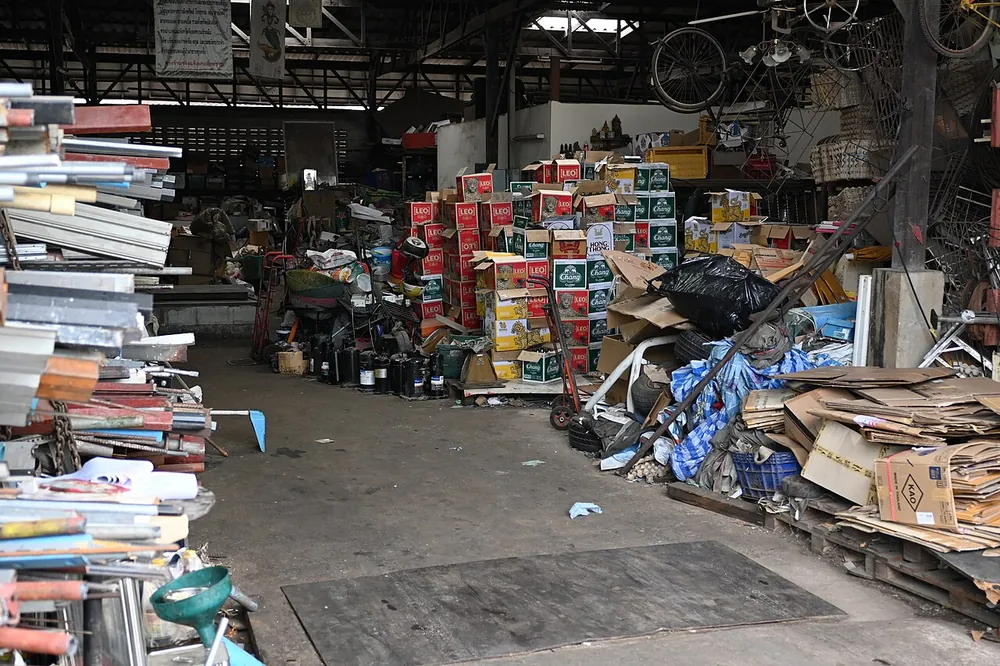
For importers, the benefit is not only cheaper freight. It is also cleaner paperwork, one tracking reference, and fewer chances for a box to go missing. Read our parcel consolidation from China guide to see how the math works, and our 1688 consolidation page if your suppliers are on 1688 specifically.
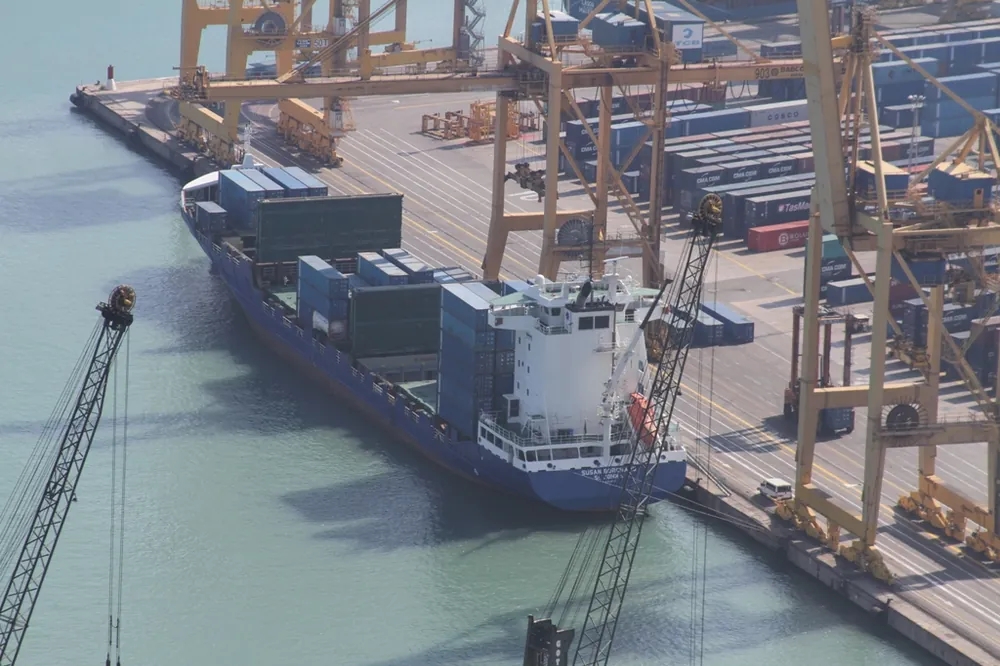
When it comes time to move the goods, you have three broad choices: courier for small and urgent orders, air freight for medium orders that need speed, and sea freight for container-level volume where cost per unit matters most. The full comparison is in our shipping from China guide.
Compliance Is Still Your Job
A buying agent handles the China side of the purchase. It does not make you compliant in your own market. Product regulations, labelling requirements, and import restrictions in your destination country are things you must verify with your own counsel or compliance partner before you commit to a large order.
The same applies to duties and taxes. Your agent will give you the export documents you need, but the destination classification, duty rate, and any additional taxes are resolved at your border by your customs broker. Plan for them conservatively and never assume a quoted landed cost already includes them unless it is stated in writing.
Common Mistakes Importers Make
Most expensive import mistakes are not exotic; they are predictable and avoidable. Here are the ones that come up most often.
Comparing only unit price. Two suppliers can quote the same unit price while one quietly doubles the freight, the MOQ, or the lead time. Compare the landed cost, not the sticker price.
Ignoring the MOQ. A supplier that quotes a great price at 5,000 units may refuse to talk below that, or quietly raise the price at your actual quantity. Confirm the MOQ in writing before you plan around a number.
Skipping consolidation. Shipping every supplier’s order separately is the most common way first-time importers quietly overpay. One consolidated shipment almost always beats several small ones.
No written specification. If your order only exists as a photo and a text message, you have little to point to when the goods arrive different. A short written spec protects both sides.
Forgetting duty. Landed cost is not unit price plus freight. Budget duty and taxes from the start so a customs bill is not a surprise.
When a Buying Agent Makes Sense for You
Use an agent when your order is too fragmented to manage well from abroad. That means multi-SKU catalogues, multiple suppliers, consolidation needs, or a first order in a category you have not imported before. Use an agent when your time is worth more than the fee, which for most growing importers it quickly is.
Skip the agent only when the order is simple and familiar: one product, one known supplier, and a process you have run before. Even then, a light-touch agent can still be worth it for the consolidation and shipping alone.
FAQ
What does a China buying agent do for an importer?
A China buying agent acts as your local purchasing team: sourcing and negotiating suppliers, managing orders and SKUs, consolidating goods from different factories into one shipment, arranging freight, and preparing the export paperwork. You keep control of the money and the final decision.
How much does a China buying agent for importers cost?
Fees are typically a percentage of order value, a flat fee per order, or a combination, sometimes plus freight and handling. The final number depends on order value, SKU count, supplier count, and whether consolidation and shipping are bundled. Ask for a written breakdown before committing.
Does a China buying agent handle customs and import duties?
An agent prepares the outbound side and the documents you need, but destination duties, taxes, and compliance are the importer’s responsibility. Confirm the classification and rate with your own customs broker before ordering.
Get Your Volume Order Managed
If you are importing across multiple suppliers and SKUs, you are already doing the work an agent is built to absorb. Tell us what you need, the quantity, and your target price, and we will return a shortlist you can actually compare, then manage the order, consolidation, and shipping from there.
Send your import list and we will respond with next steps. If your question is about freight and consolidation first, start on our shipping page.
Related guides
Related reading: China buying agent services and more sourcing guides.